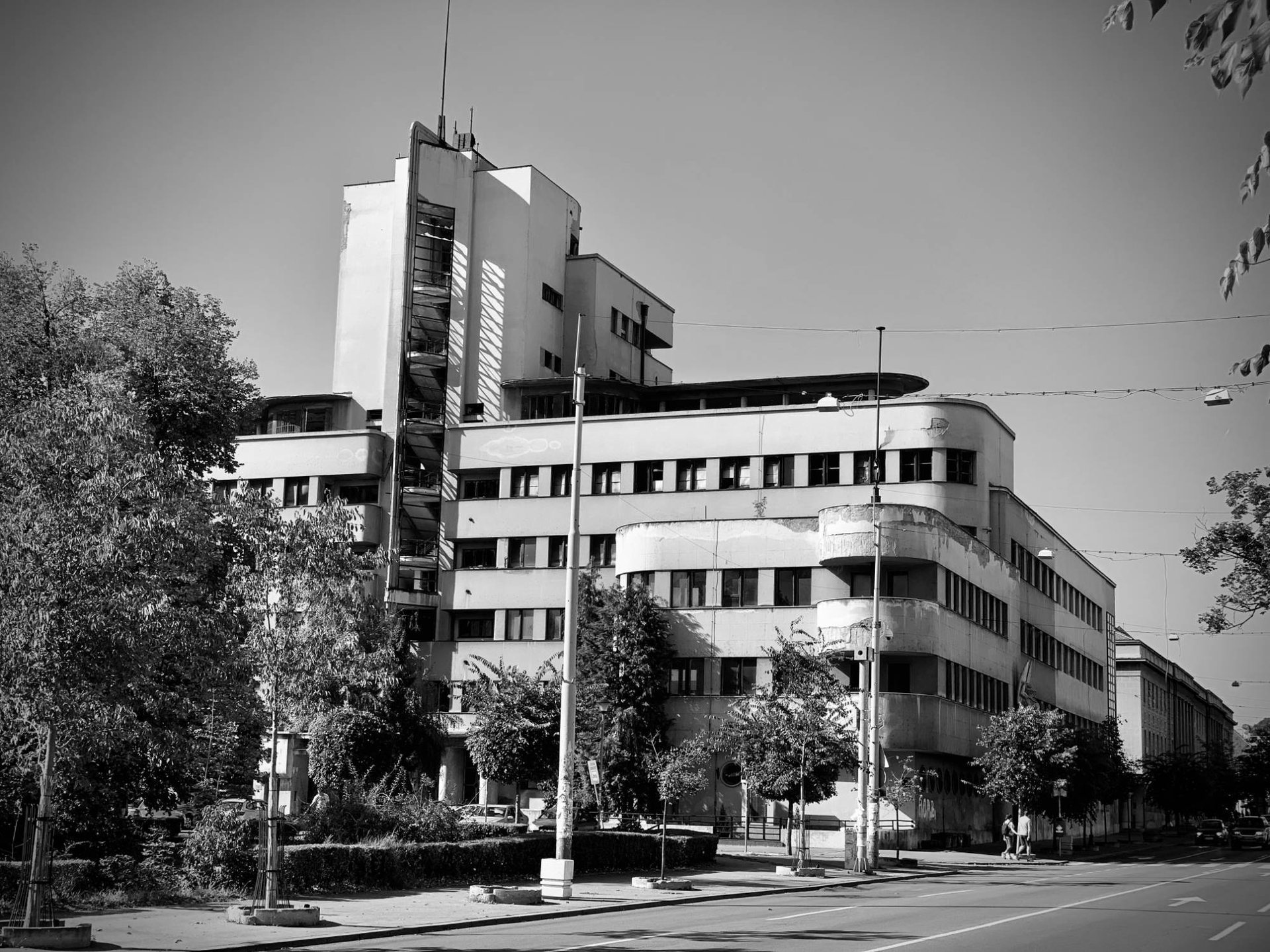
- Branko Žeželj’s IMS system, first used in 1957, joins precast columns and slabs with tensioned steel cables.
- More than half the flats in New Belgrade were built with it.
- It travelled to Cuba, Russia, Georgia, China and beyond, and came through earthquakes unharmed.
Walk through New Belgrade and you are walking through an invention. It is hidden in the walls, and it travelled further than most of the people who live behind them.
Columns, slabs and cables
The IMS system was developed by Professor Branko Žeželj at Belgrade’s Institute for Materials Testing and first used in 1957. Its principle is disarmingly simple: a frame of precast concrete columns and slabs, made in a factory and joined on site by steel cables pulled tight in two directions. One United Nations brochure compared it to the way children build with Lego bricks, which is a fair description of most great engineering, seen from far enough away.
The city it built
Typical IMS buildings rise five to ten storeys, and according to the World Housing Encyclopedia more than half the apartments in New Belgrade were built with the system. The frame leaves the floor plan free, so flats could be arranged and rearranged inside it.
Strong in a tremor
The same report records no damage to IMS buildings in past earthquakes in Yugoslavia, Cuba, Georgia or the Philippines, and several came through the Banja Luka earthquake unscathed. For a housing system, that is the review that matters.
A Belgrade export
The system travelled. The World Housing Encyclopedia lists IMS buildings in Bosnia and Herzegovina, Cuba, Russia, Georgia and China, with later design work in the Philippines and Egypt, and historians now study it as one of Yugoslav engineering’s great exports. When you next see a tidy grid of balconies in New Belgrade, remember that a version of it may be standing in Havana.