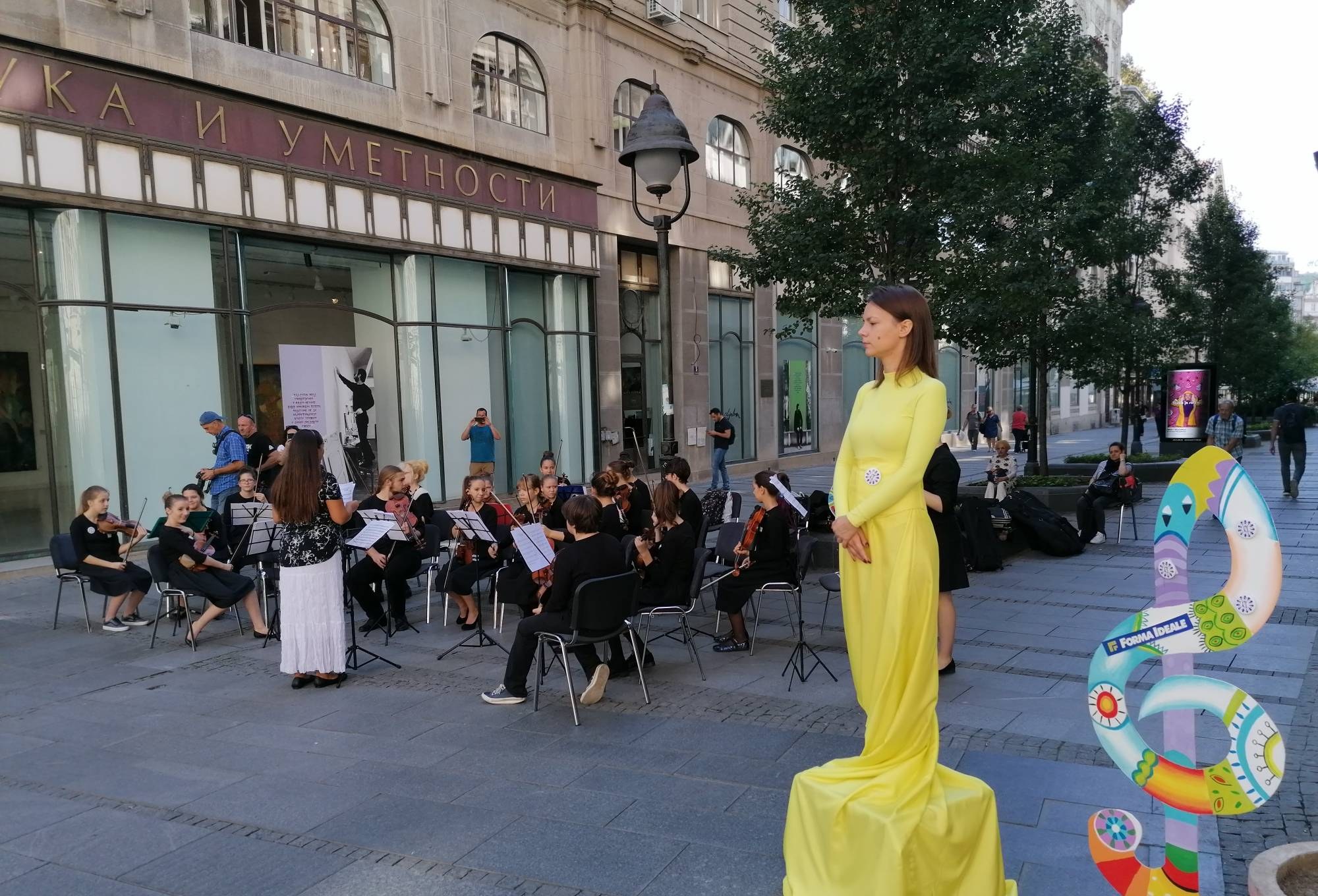
Walk down Knez Mihailova on almost any evening and Belgrade introduces itself with a violin. Sometimes it is an accordion, sometimes a young band, now and then a whole youth string orchestra with its conductor, and a crowd that has forgotten where it was going. This city does not keep its art behind glass. It plays it on the pavement, between the shop windows, as if music were simply part of the street furniture.
What stays
The shop windows on that street will change their names many times over. What stays is above them: the facades of the 19th and early 20th centuries, and at the top Albania Palace, Belgrade’s first skyscraper, opened in 1939 in a skin of marble without a single ornament. Cities are remembered for what they made, rarely for what they sold. Nobody crosses a continent to look at a receipt.
The art everyone owns
Architecture is the one art nobody can avoid. You need no ticket for the Western City Gate; it greets everyone arriving from the airport. When Mihajlo Mitrović proposed it, a newspaper cartoon suggested the gallows beside it were for the architect. Forty years later the towers stood in a MoMA exhibition, and in 2021 they became a cultural monument. Cities do come round to their artists. They simply take their time.
A city that builds for art
Belgrade has a habit of building for art before anyone asks. In 1958 it founded a museum for the art of its own century, with four decades of that century still to run, and gave it Ivan Antić and Ivanka Raspopović’s white crystal at the confluence, opened in 1965. A merchant called Ilija Kolarac left his fortune to culture; the hall that carries his name opened in 1932 and still calls itself the best room in town for music. The will is still paying for the concerts.
A long conversation
Jelisaveta Načić, Serbia’s first woman architect, built a school beside the Cathedral that has been teaching children for well over a century. Ivo Andrić’s flat is kept as he left it. The National Library lost its building and much of its collection in 1941, and opened again on the Vračar plateau in 1973. Art is how a city keeps talking to itself across generations, even after the room has burned.
Why this site
ULTIMATE Art exists to put all of that in one place: where to learn, make and show art, architecture, street art, photography, film, music, writing and fashion in Belgrade, and the people who made it, from the masters to the new wave. Every place is checked before it appears. Nothing here is ranked; good art does not need a scoreboard.
Why The Art Open
The Art Open is the other half of the argument. A city that values art should make room for the art it has not met yet. Fifty works by artists, photographers and film-makers living in Serbia, chosen by public vote and an international jury, will hang in a Belgrade gallery in 2027, unknown names beside established ones. The wall does not ask who you know.
Shops change, as shops must. But the violinist on Knez Mihailova, the crystal at the confluence and the towers at the city’s gates will still be making the case long after this season’s windows have been dressed and undressed again. That is what art does for a city: it gives the place a memory, and the people in it a reason to stay.

