Snow is drifting over the East River, Tilly is tugging at her lead, and the cables of the Brooklyn Bridge rise ahead of us like the strings of a harp. This is one of my favourite walks in the world, from DUMBO into Lower Manhattan, and still the skyline stops me halfway across. But this time I am not here for the towers. I have come to look underneath them, at the art that started on the trains.
New York was my first long look at America. In 1998 I spent a year between Los Angeles and New York, and I have been coming back ever since. I did not know then how much this city’s walls would teach me, or how much of what I have seen on painted walls since began here, underground, in the dark.
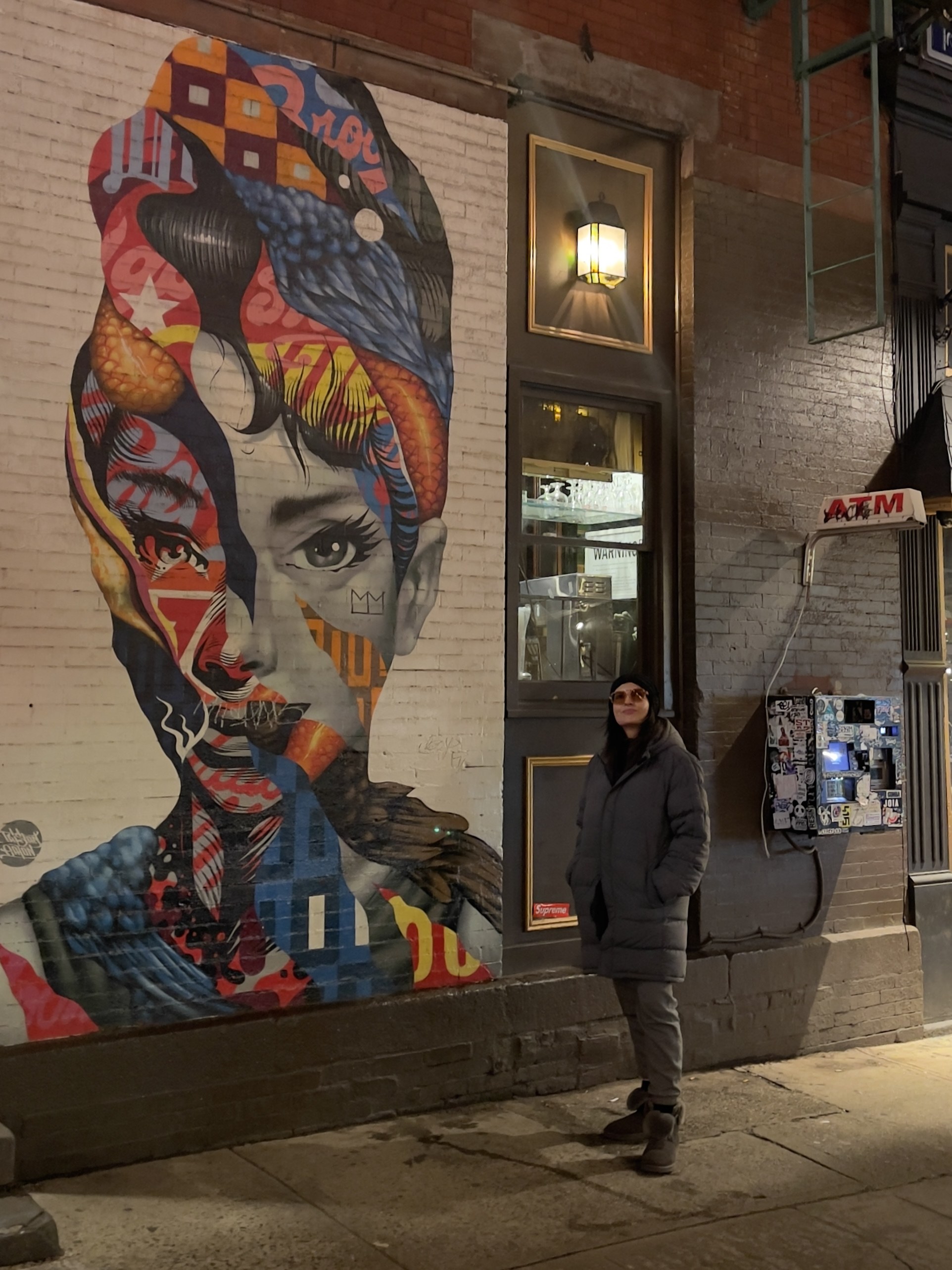 Photo credit© ULTIMATE International Media
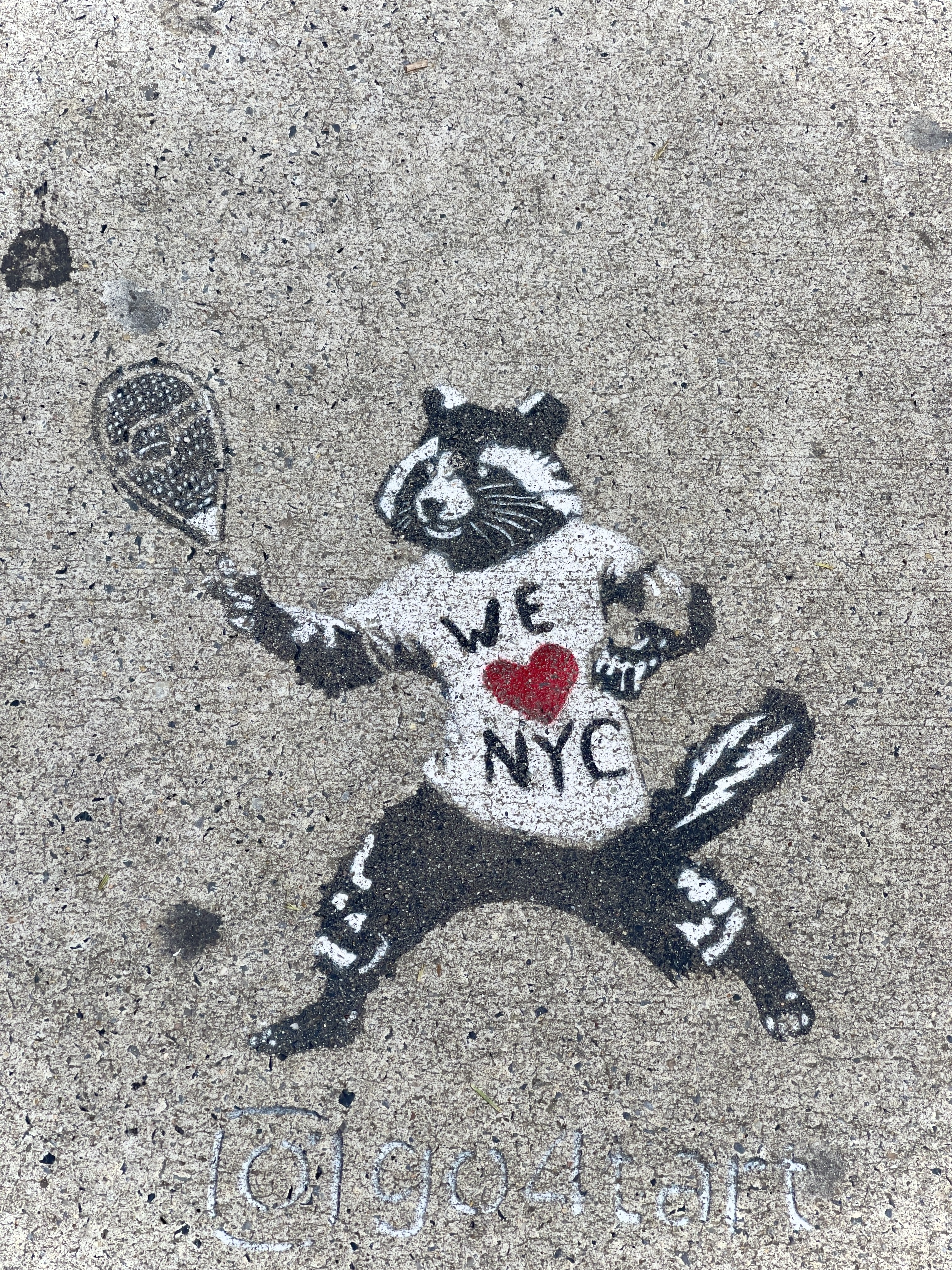 Photo credit© ULTIMATE International Media
A name on a train
On 21 July 1971 The New York Times ran a story under the headline “‘Taki 183’ Spawns Pen Pals”. TAKI was a 17-year-old foot messenger from Washington Heights, and the 183 came from his street. As he crossed the city he wrote his name, and others began to write theirs. A name and a number: the simplest artwork imaginable, and the beginning of everything that followed.
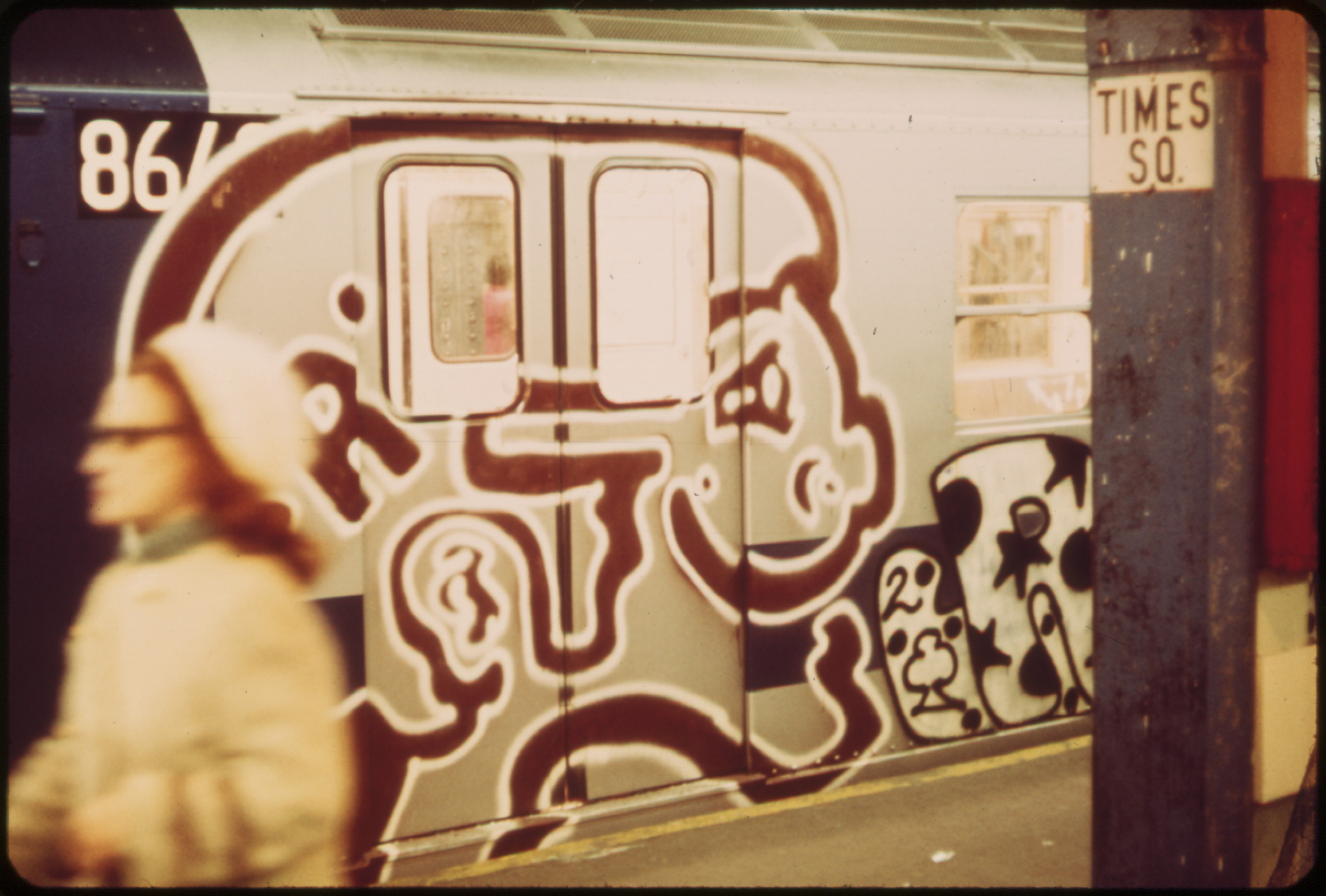 Photo creditErik Calonius, U.S. National Archives (public domain), via Wikimedia Commons
Within a few years the names had grown. The writers, as they called themselves, moved from tags to pieces, from pieces to whole cars, painting at night in the train yards. In December 1977 the Fabulous 5 crew sent out an entire train that read “Merry Christmas”; in 1979 Lee Quiñones painted a whole car, “Year of the Dragon”. Imagine it as a painter: a canvas that leaves the yard at dawn and crosses the city, a moving mural clattering out of the dark, shown to everyone on every platform it passes, then gone.
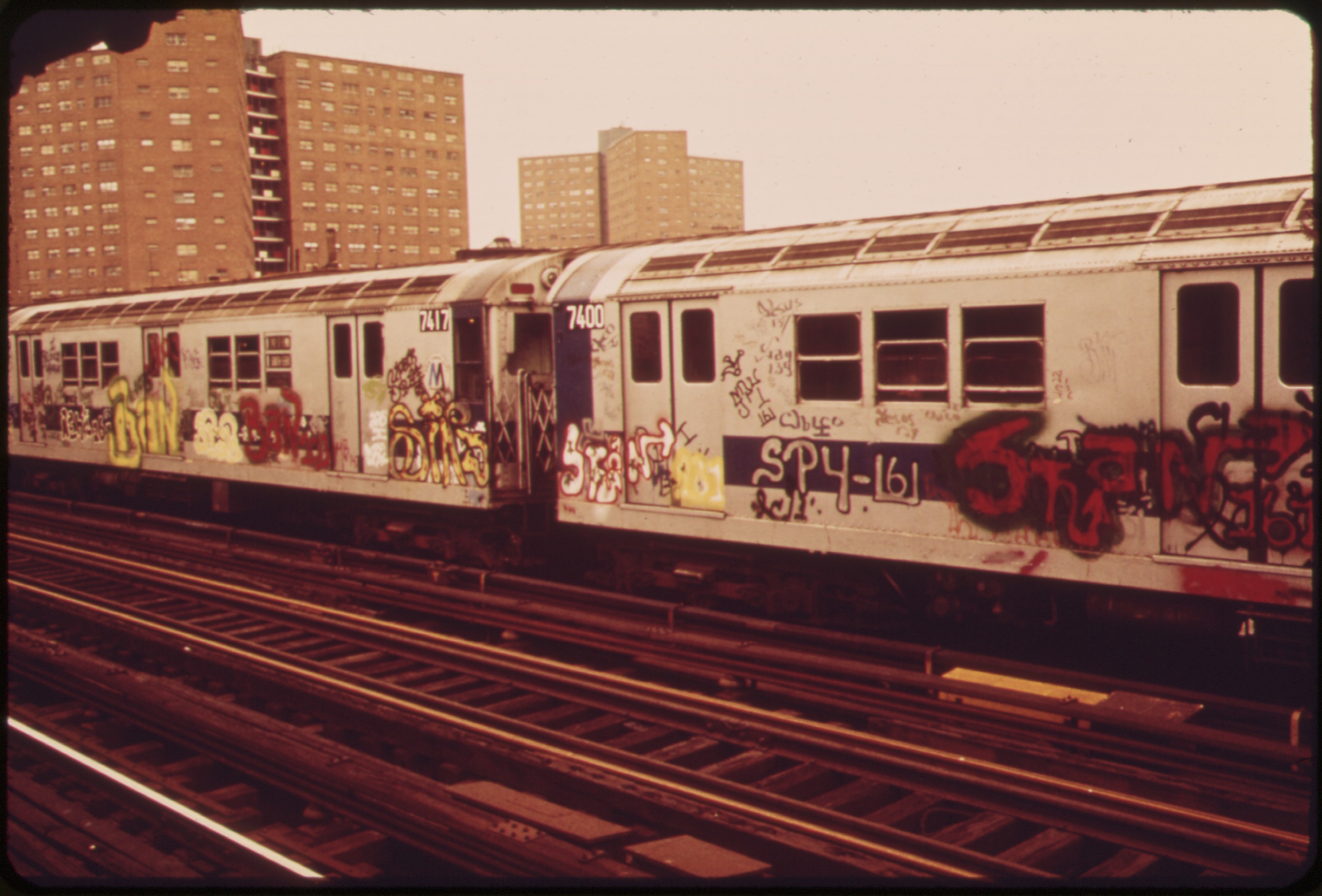 Photo creditErik Calonius, U.S. National Archives (public domain), via Wikimedia Commons
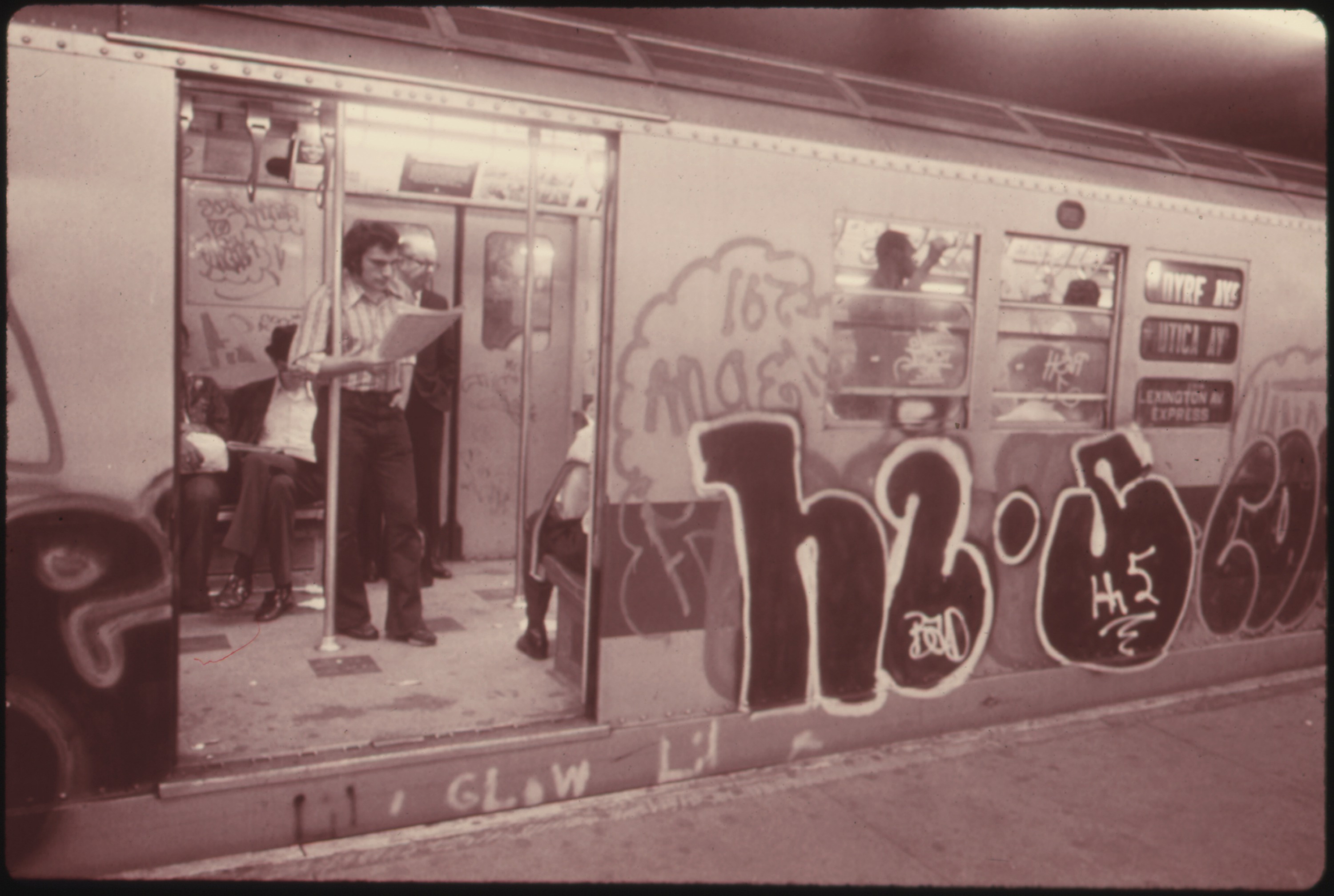 Photo creditJim Pickerell, U.S. National Archives (public domain), via Wikimedia Commons
Letters that learnt to dance
I look at the photographs of those cars as a draughtsman. The writer Phase 2 is credited with the soft, swollen “bubble” letters of the early 1970s, letters that puff up like rising dough, outlined once and then again, shadowed in a second colour so they lift off the steel. Others twisted the alphabet into arrows and knots until a name became a pattern only the initiated could read.
Nobody taught these young people calligraphy. They invented their own, at speed, in the dark. I studied at the Faculty of Fine Arts in Belgrade, where anatomy and line were everything. On those trains I see the same hunger for line, carried out with a spray can instead of a pencil.
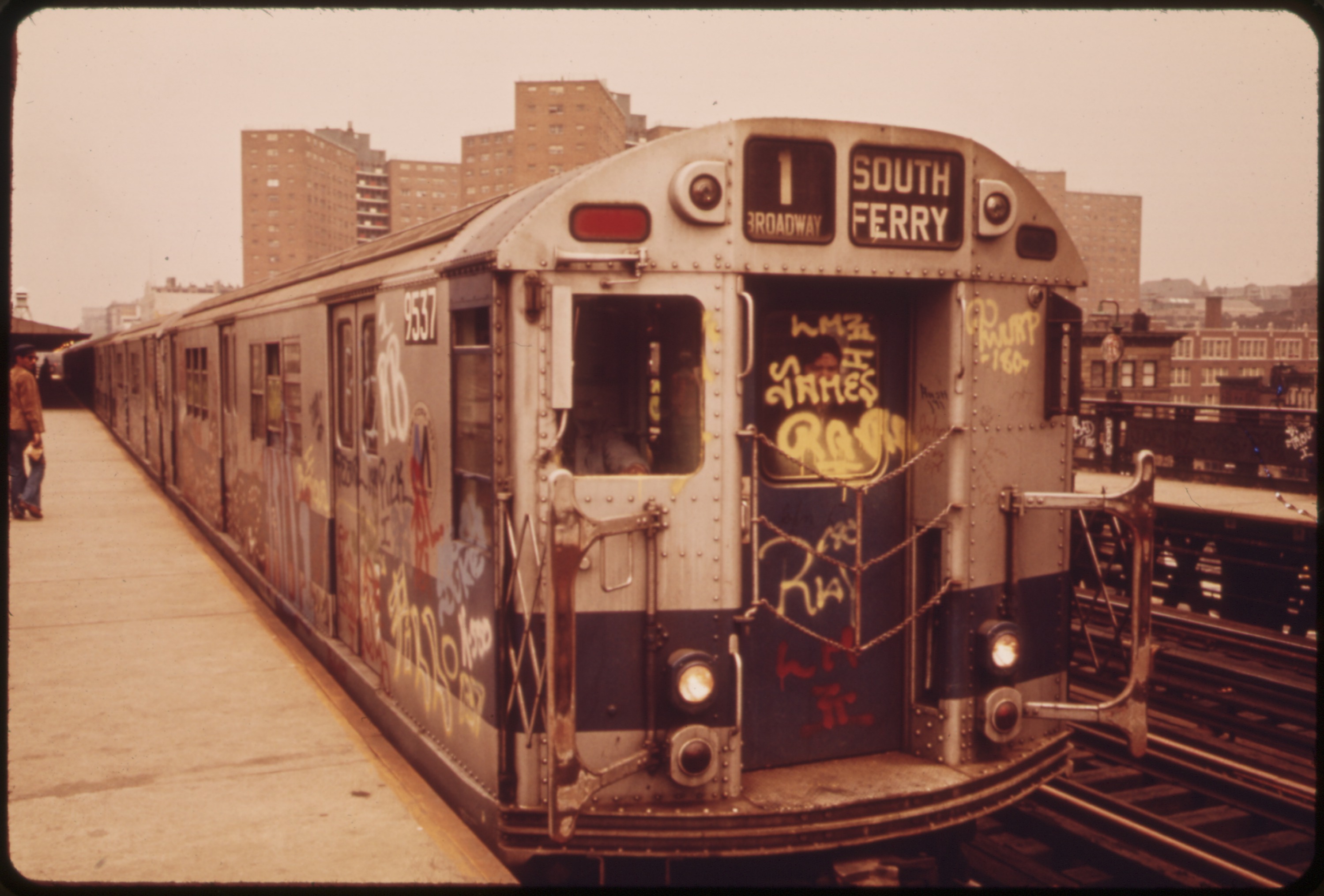 Photo creditErik Calonius, U.S. National Archives (public domain), via Wikimedia Commons
Some of the writers wanted walls as well as trains. In 1972 a City College student, Hugo Martinez, founded United Graffiti Artists, and in September 1973 its members showed at the Razor Gallery in SoHo, often called the first gallery show of graffiti. A year later Norman Mailer published “The Faith of Graffiti”, with photographs by Jon Naar. The writing on the trains had found its first critics.
The party in the rec room
Up in the Bronx, something else was stirring: a beat, a voice, a crowd that would not sit still. On 11 August 1973, in the recreation room of 1520 Sedgwick Avenue, DJ Kool Herc played a back-to-school party for his sister Cindy. That night is where hip hop is usually said to begin. The names were already riding the trains by then, and the two cultures grew up side by side, in the same boroughs and often among the same young people.
The Smithsonian counts four elements of hip hop: DJing, MCing, breakdancing and graffiti. The DJ gave it a heartbeat, the MC a voice, the b-boys and b-girls a body, and the writers gave it a face: a face in fat, bright letters that travelled the whole city on wheels. The Rock Steady Crew of breakers was founded in the Bronx in 1977; before long the writers were painting their backdrops.
They drew the parties into being, too. Cornell University Library keeps the largest known collection of early hip-hop party flyers, from 1976 to 1984, made by hand with markers, stick-on letters and drawings. Phase 2 designed flyers; so did Buddy Esquire, remembered as “The Flyer King”. Look at them today and you see graphic design being born on a photocopier: bold, crowded, irresistible, every sheet humming like a speaker turned up too loud.
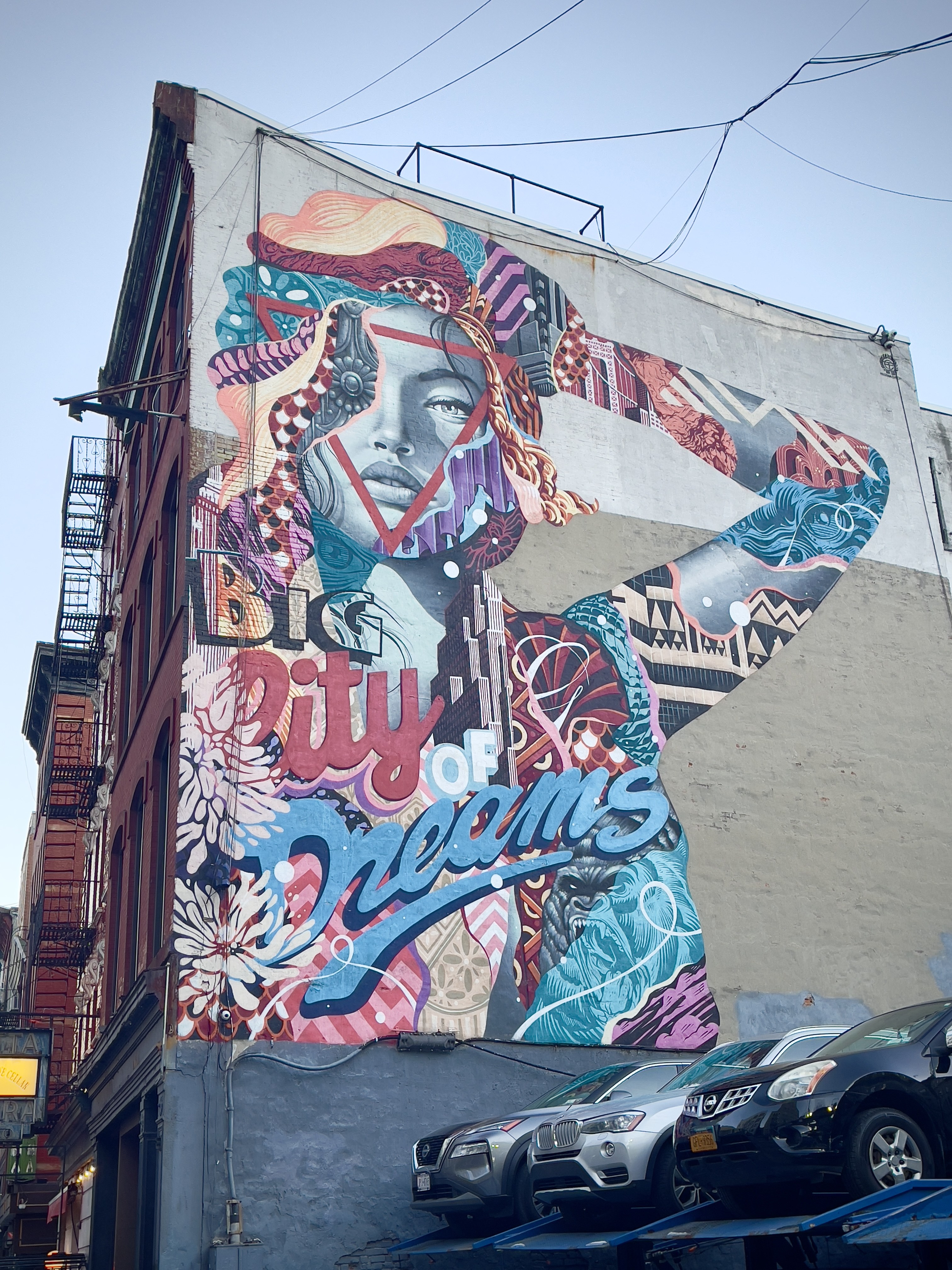 Photo credit© ULTIMATE International Media
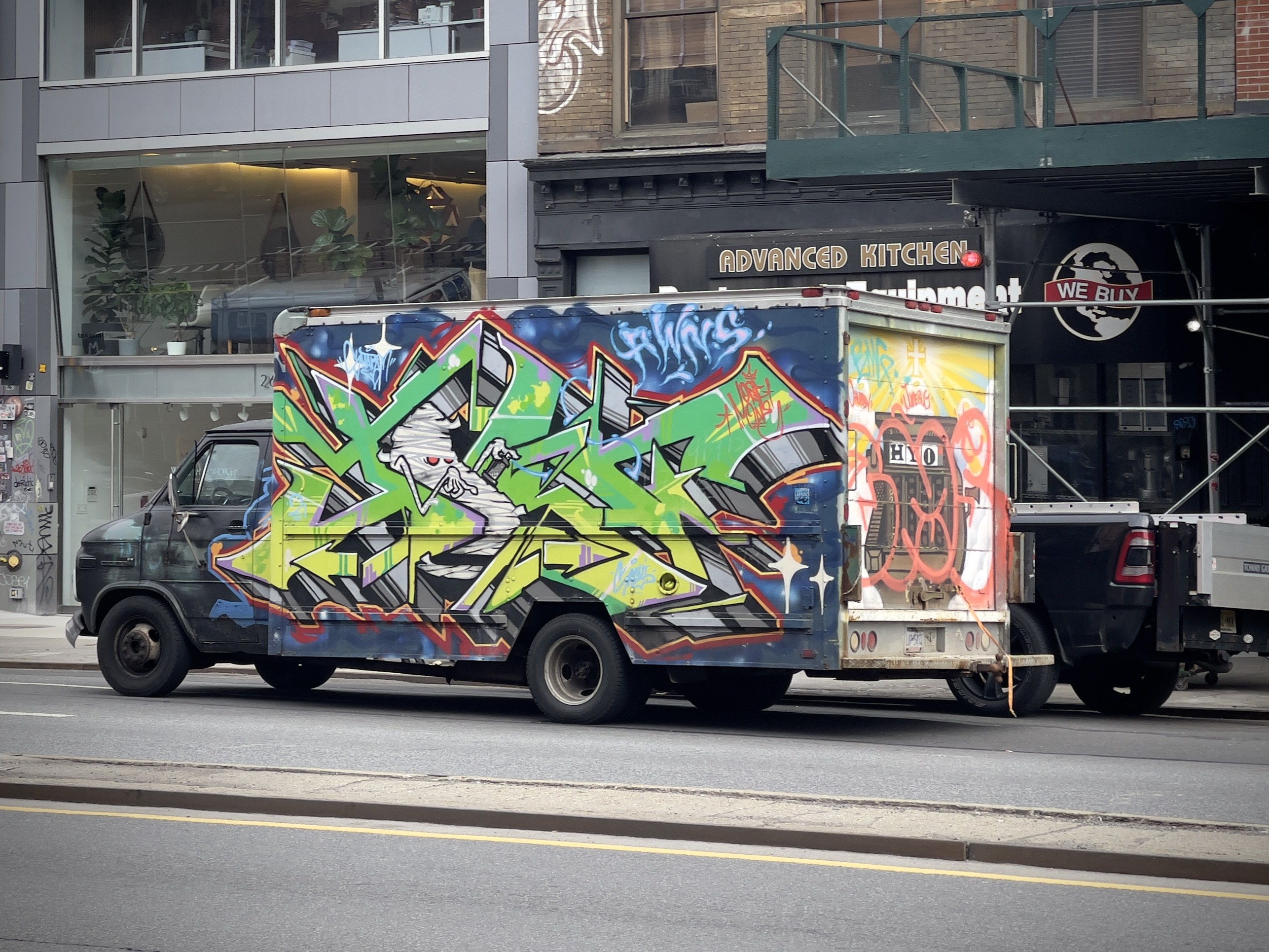 Photo credit© ULTIMATE International Media
Uptown meets downtown
Then the two halves of the city found each other, uptown rhythm and downtown nerve, the train yard and the white cube. In June 1980 Lee Quiñones and Fab 5 Freddy showed at the Times Square Show, in an empty building near 41st Street, and there they met the film-maker Charlie Ahearn. The year before, a gallery in Rome, La Medusa, had already given the pair a show. That autumn Fashion Moda, an art space in the South Bronx opened by Stefan Eins in 1978, held a graffiti exhibition curated by the writer Crash.
In 1981 Patti Astor and Bill Stelling opened the Fun Gallery in the East Village and showed Fab 5 Freddy, Futura 2000, Lee Quiñones, Lady Pink, Dondi and Zephyr. Lady Pink, born in Ecuador, had begun painting trains around 1979, one of very few women on the subway; her work is now in the Whitney. That same year Blondie’s “Rapture” went to No. 1 in America and name-checked Fab 5 Freddy.
From June 1982 Kool Lady Blue’s Wheels of Steel nights at the Roxy put DJs, MCs, breakers and graffiti in one room, downtown. In 1983 Charlie Ahearn’s film “Wild Style”, with titles designed by Zephyr, starred Lee Quiñones and Fab 5 Freddy, and the documentary “Style Wars”, by Tony Silver with Henry Chalfant, brought subway writing and breaking to television. Dondi, whose 1980 whole car “Children of the Grave Part 3” Martha Cooper photographed from start to finish, is in it.
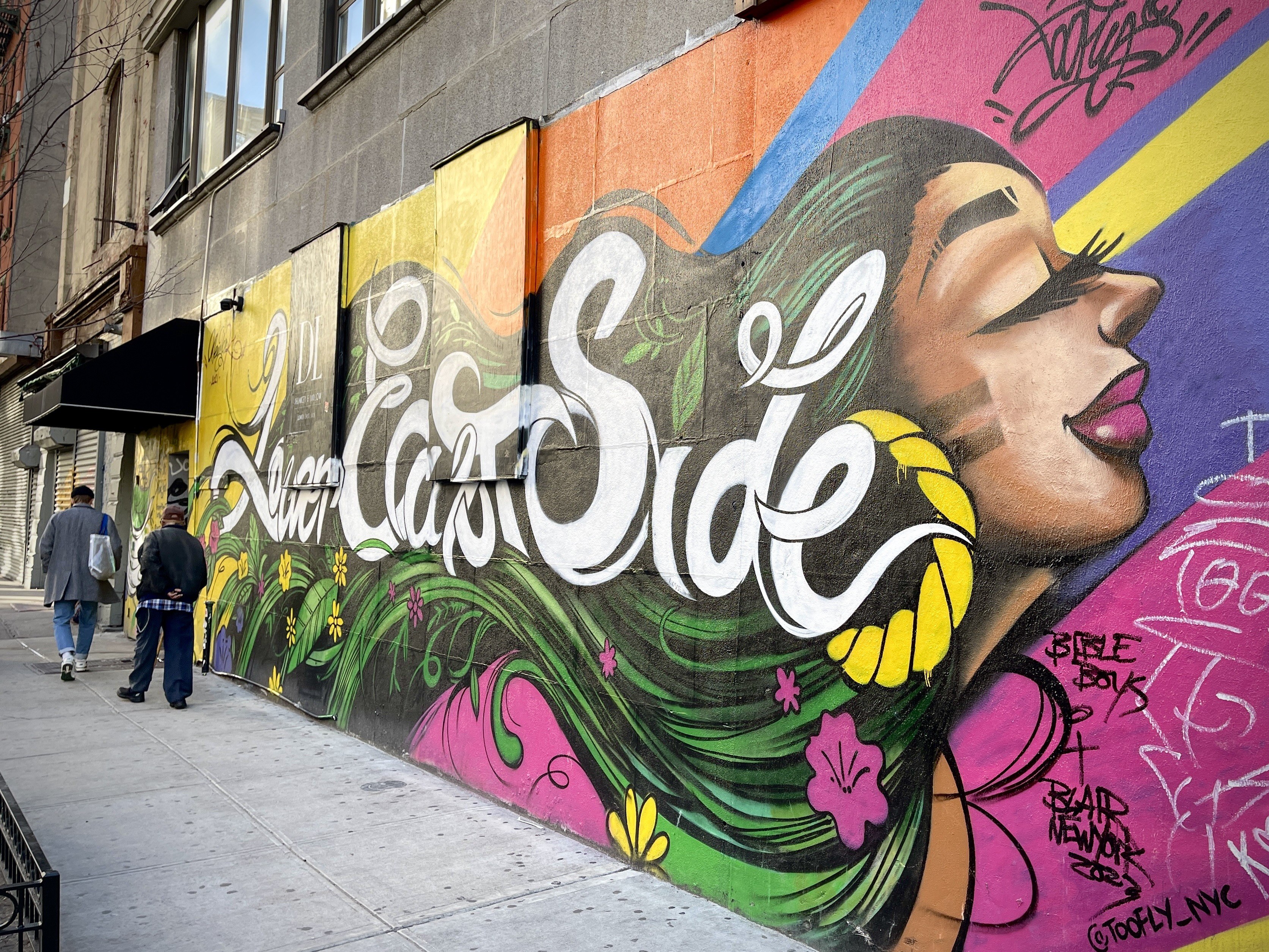 Photo credit© ULTIMATE International Media
In 1984 Futura painted backdrops for the Rock Steady Crew on the first international hip-hop tour, and Martha Cooper and Henry Chalfant’s book “Subway Art” carried the painted trains around the world. A culture that began with a name on a wall had become an export.
Downtown, in chalk
Downtown, meanwhile, the writing had turned conceptual. From May 1978 Jean-Michel Basquiat and Al Diaz spread the tag “SAMO©” across SoHo and the Villages. And from 1980 Keith Haring drew in white chalk on unused advertising panels in the subway, covered in matte black paper: hundreds of drawings between 1980 and 1985.
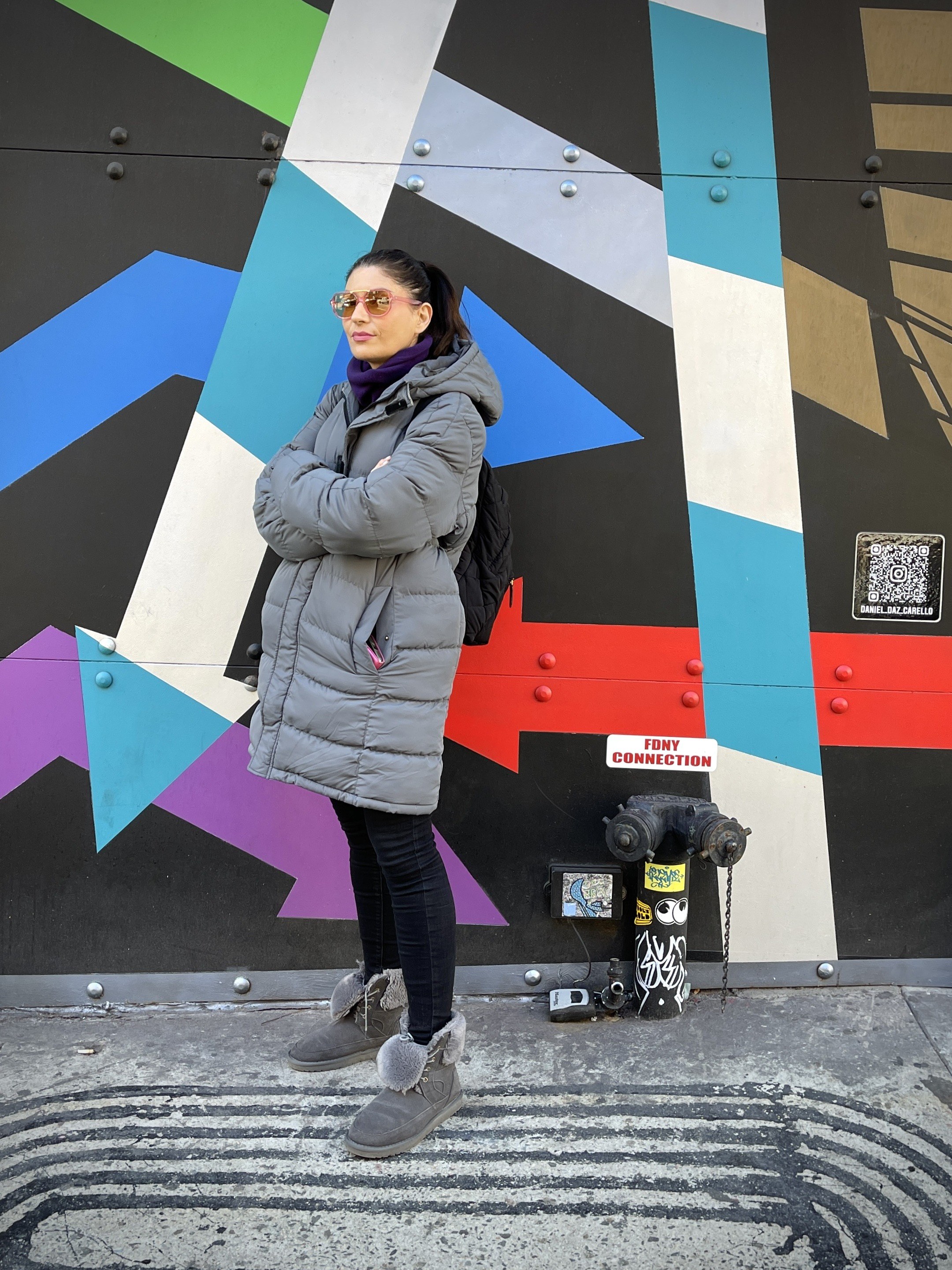 Photo credit© ULTIMATE International Media
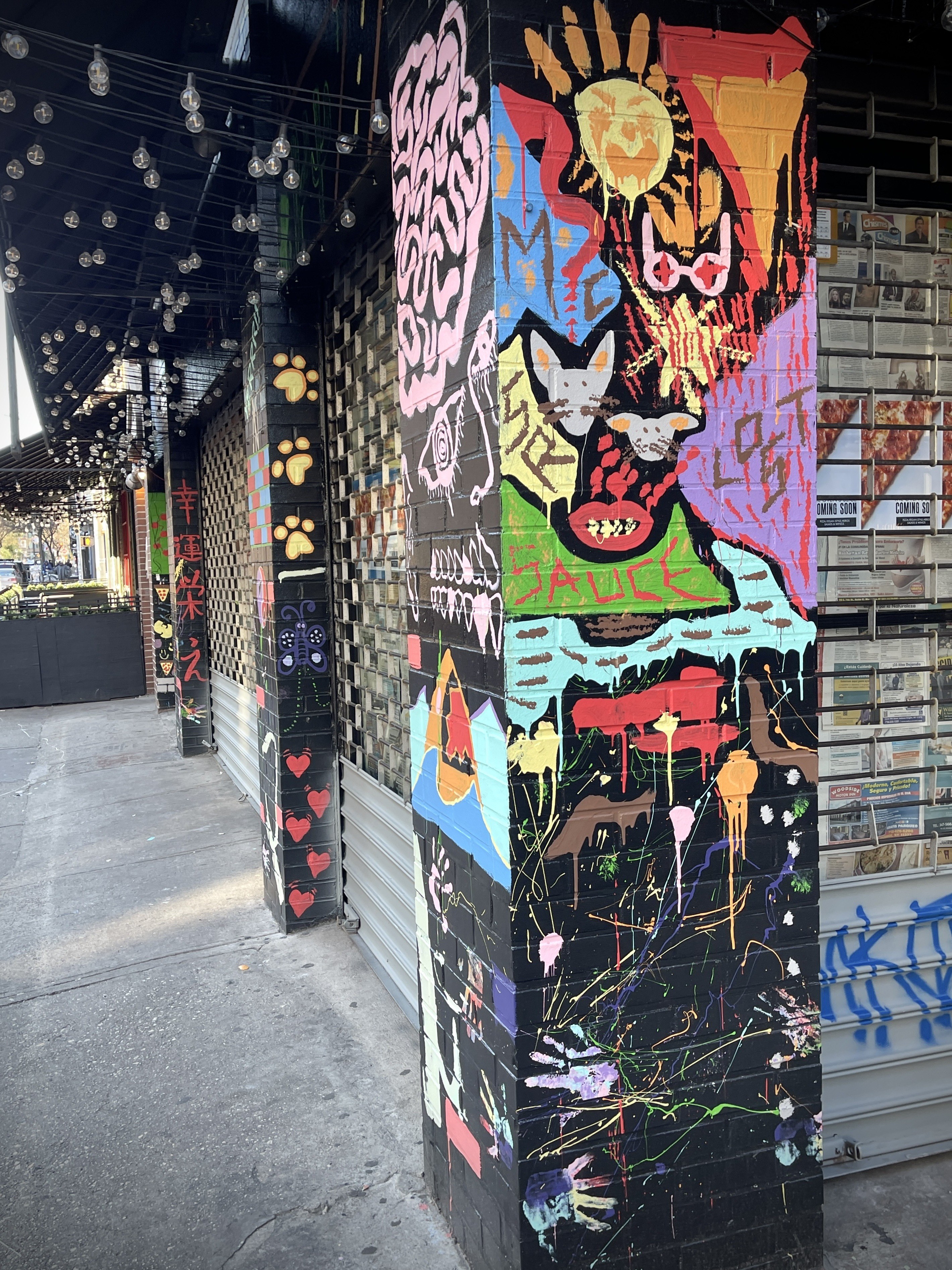 Photo credit© ULTIMATE International Media
White chalk on black: some of my own earliest drawings were made that way, back home in Belgrade, conjuring bodies out of darkness with the barest line. When I first read how Haring worked, I felt a small jolt of recognition. Chalk on black is the most honest medium there is. Every line shows, and there is nowhere to hide.
The trains come clean
In 1984 the transit system began its Clean Car Program, and on 12 May 1989 the last graffiti-covered car was taken out of service. The trains ran silver and silent again. But you cannot paint over an idea: the writing simply stepped off the platform and climbed the walls. In East Harlem, Ray “Sting Ray” Rodriguez had already started the Graffiti Hall of Fame in a schoolyard on East 106th Street in 1980. In Long Island City, a warehouse complex called 5Pointz became a famous canvas for aerosol art, until it was painted over in a single night in November 2013 and demolished the following year.
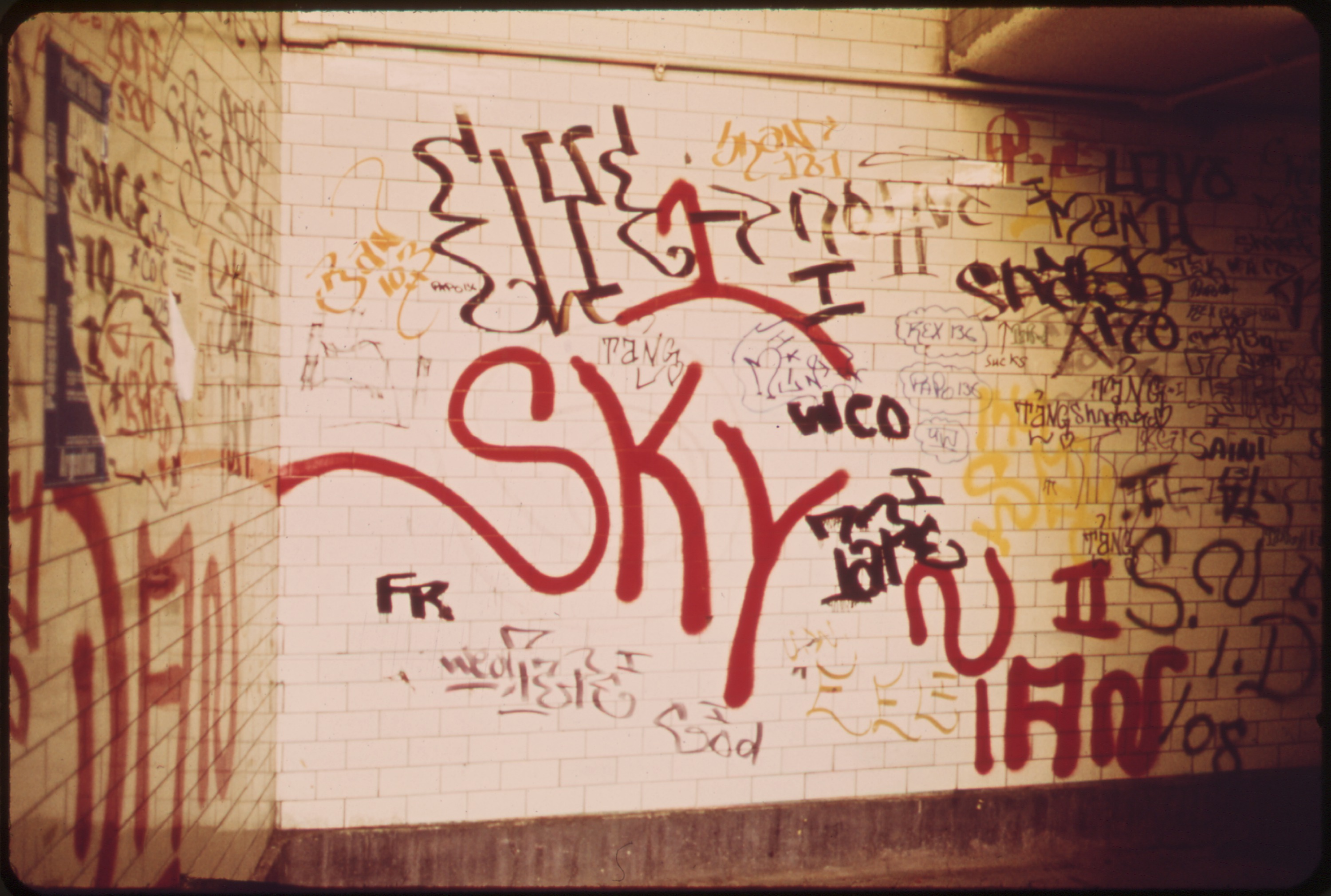 Photo creditErik Calonius, U.S. National Archives (public domain), via Wikimedia Commons
The museums came round. In 2006 the Brooklyn Museum gave the writers a show of their own, “Graffiti”, and in 2014 the Museum of the City of New York showed “City as Canvas”, from the Martin Wong collection, with Haring, Lee Quiñones, Lady Pink and Futura. Names once scrubbed off the trains now hang on gallery walls.
From the yard to the brand
And then the brands. In 1986 Absolut asked Keith Haring for an advertisement, and he became the second artist in its collection, after Andy Warhol, who had recommended him. That same year he opened his Pop Shop in SoHo, where a set of his Swatch watches was sold. In 2001 Louis Vuitton let the designer Stephen Sprouse scrawl graffiti across its famous monogram; the Victoria and Albert Museum in London now keeps one of the bags.
Futura, who painted subway trains in the 1970s, has had a long run of Nike SB Dunks, and in 2024 Futura designed breaking kits for the American, Korean and Japanese teams. Think of that journey: from a train yard in the dark to the kit of national teams. The writers took the long way round, but they arrived.
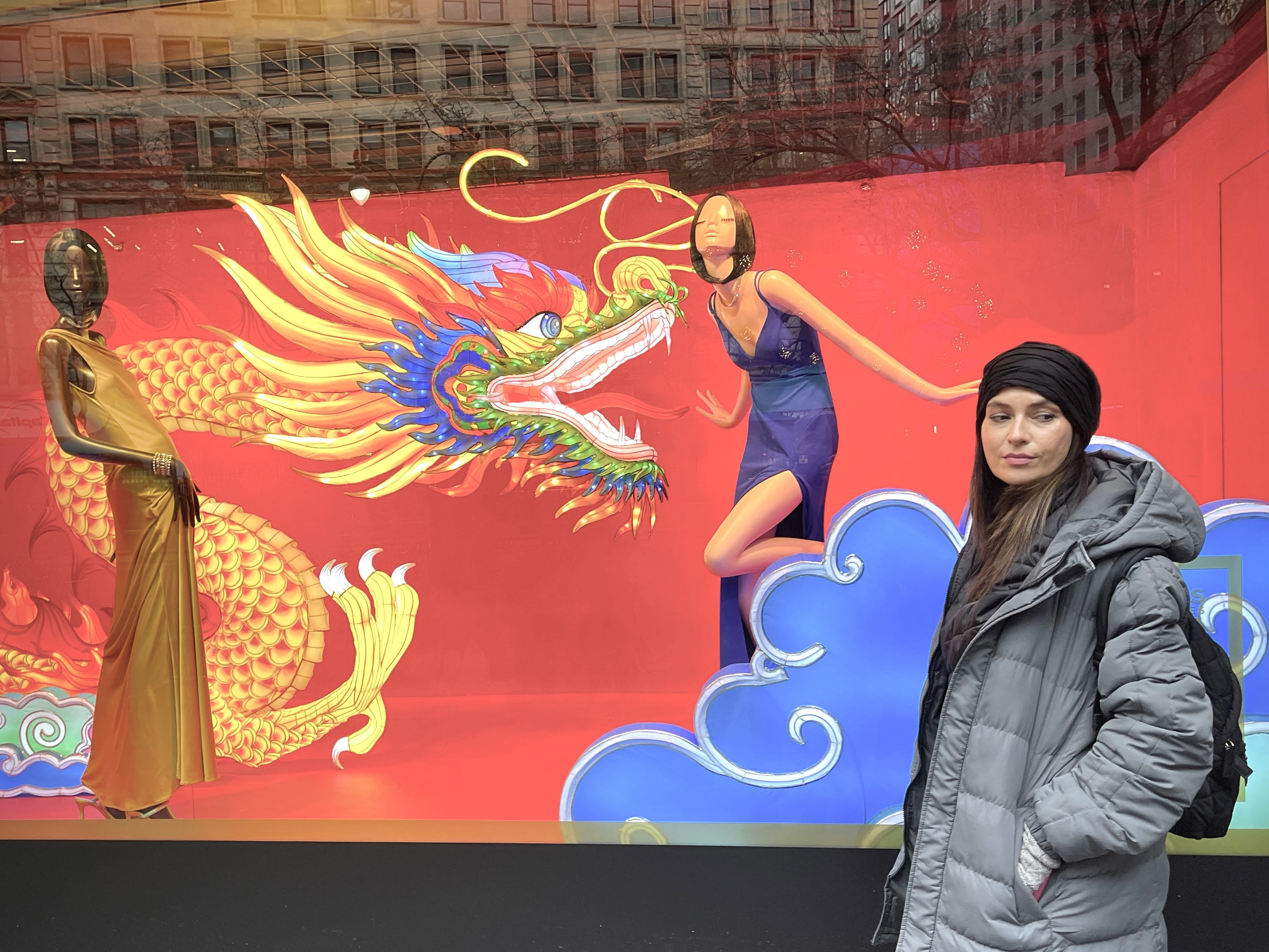 Photo credit© ULTIMATE International Media
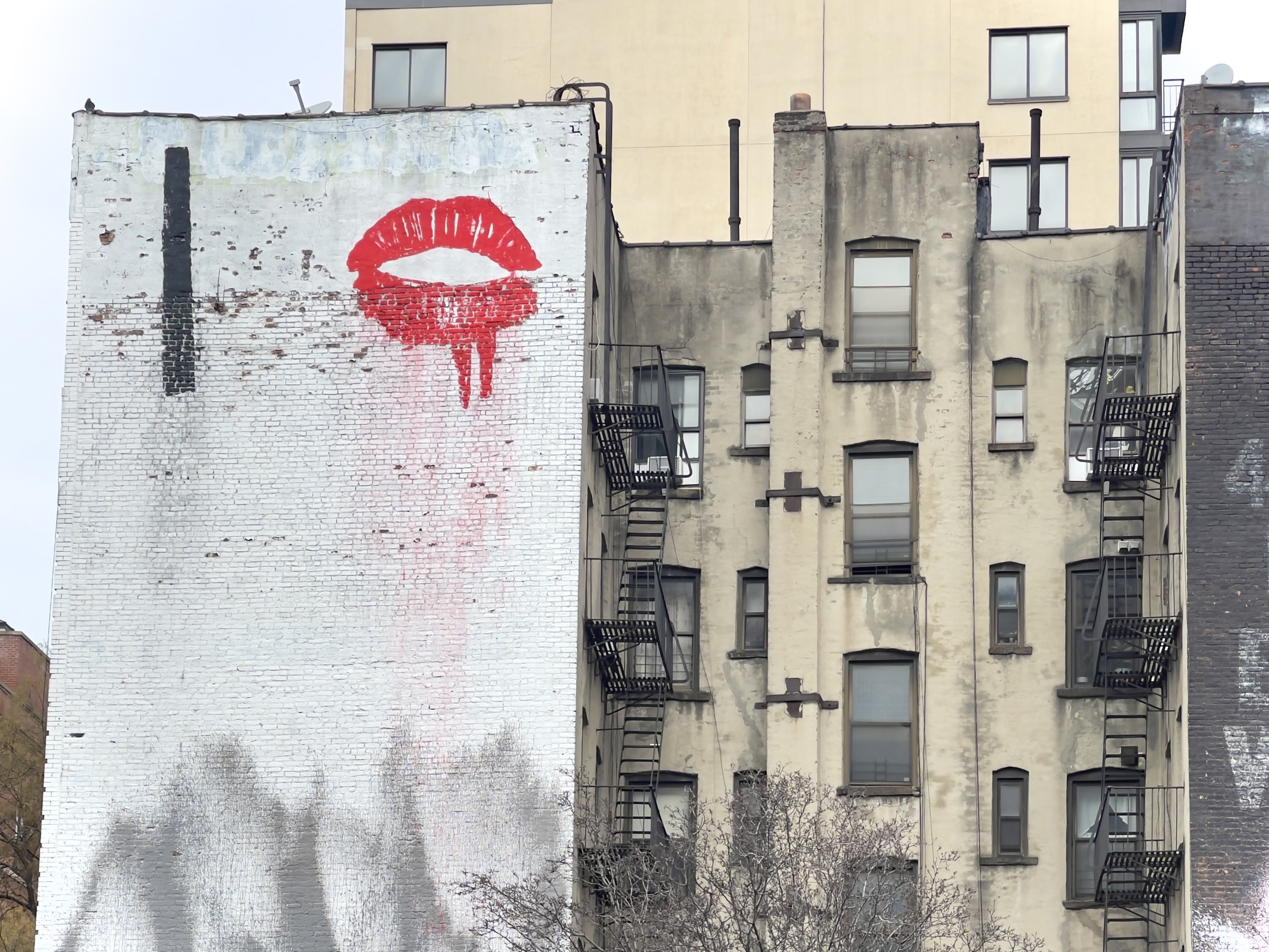 Photo credit© ULTIMATE International Media
What the walls give back
Why does any of it matter to someone who has never held a spray can? Because most people in a city never choose to look at art. They hurry, they wait, they stare at their phones. A painted wall reaches them anyway, on the way to work, at the bus stop, from the window of a train. It turns a grey commute into a small daily surprise, and a neighbourhood into a place with a face of its own.
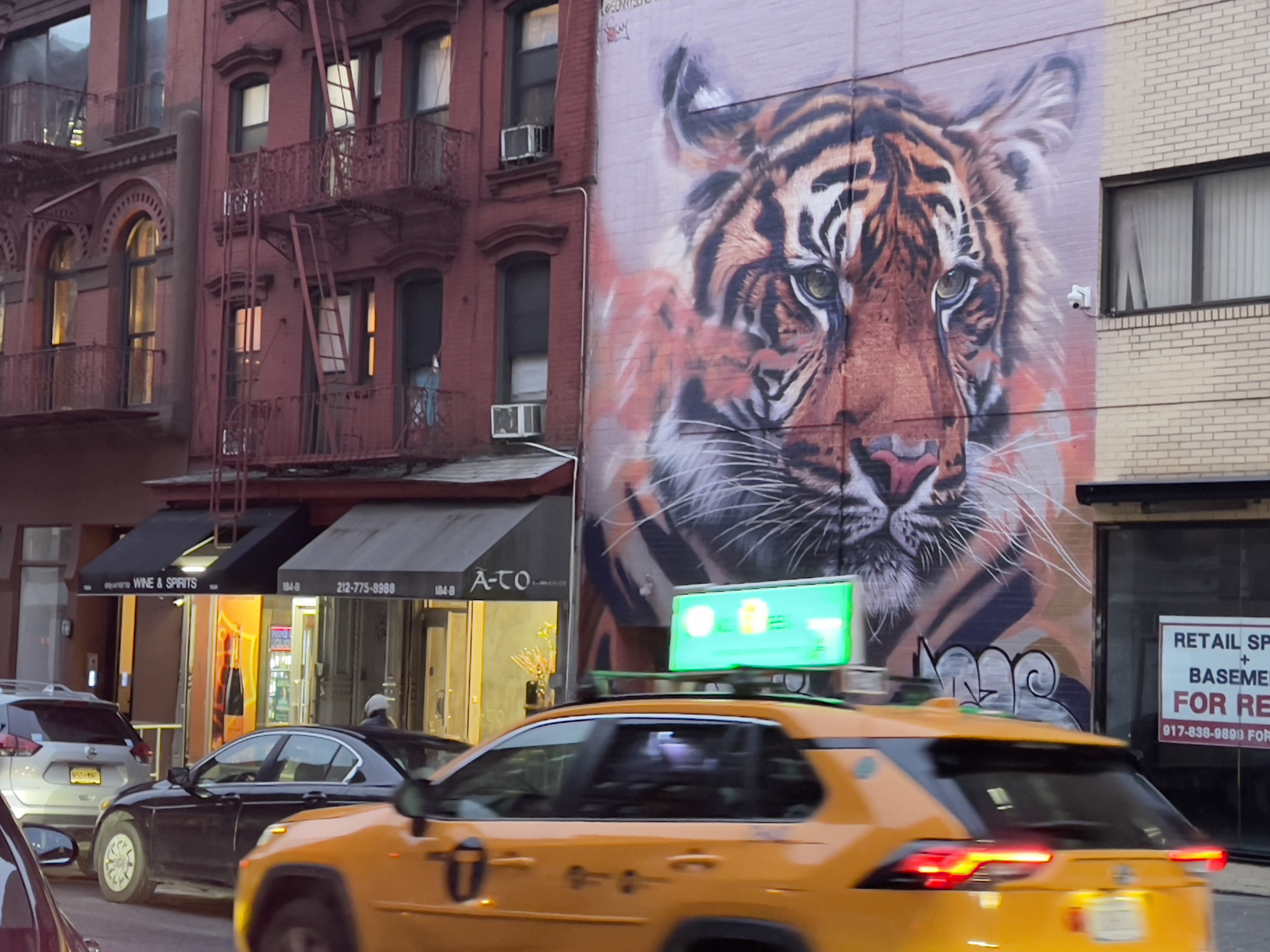 Photo credit© ULTIMATE International Media
Where to see it now
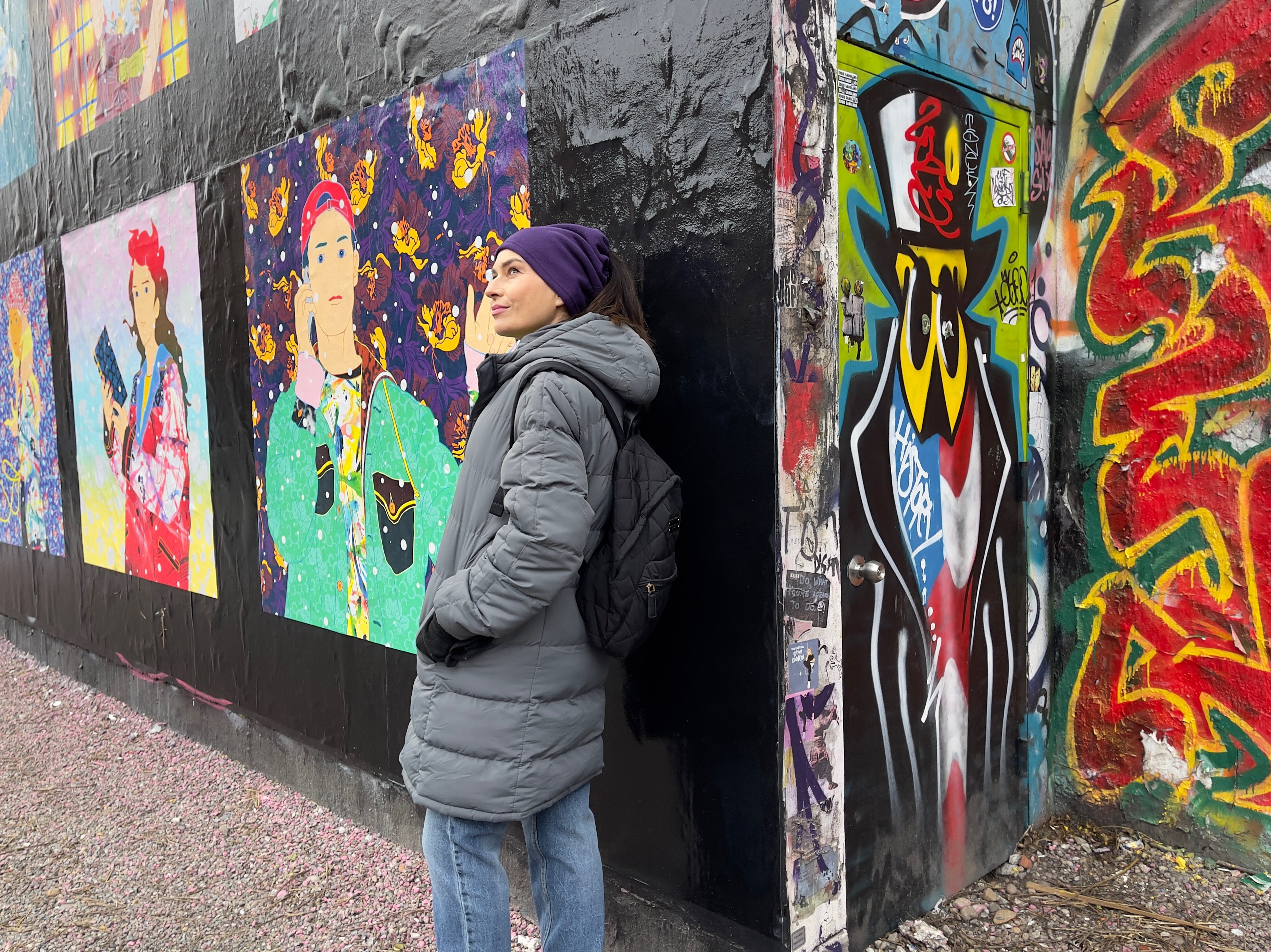
In Brooklyn, the Bushwick Collective, founded by the Bushwick native Joe Ficalora in 2012, has turned the streets around Troutman Street and St Nicholas Avenue into an outdoor gallery whose walls keep changing. In the Bronx, where it all began, The Hip Hop Museum is taking shape beside the Harlem River and plans to open in 2027.
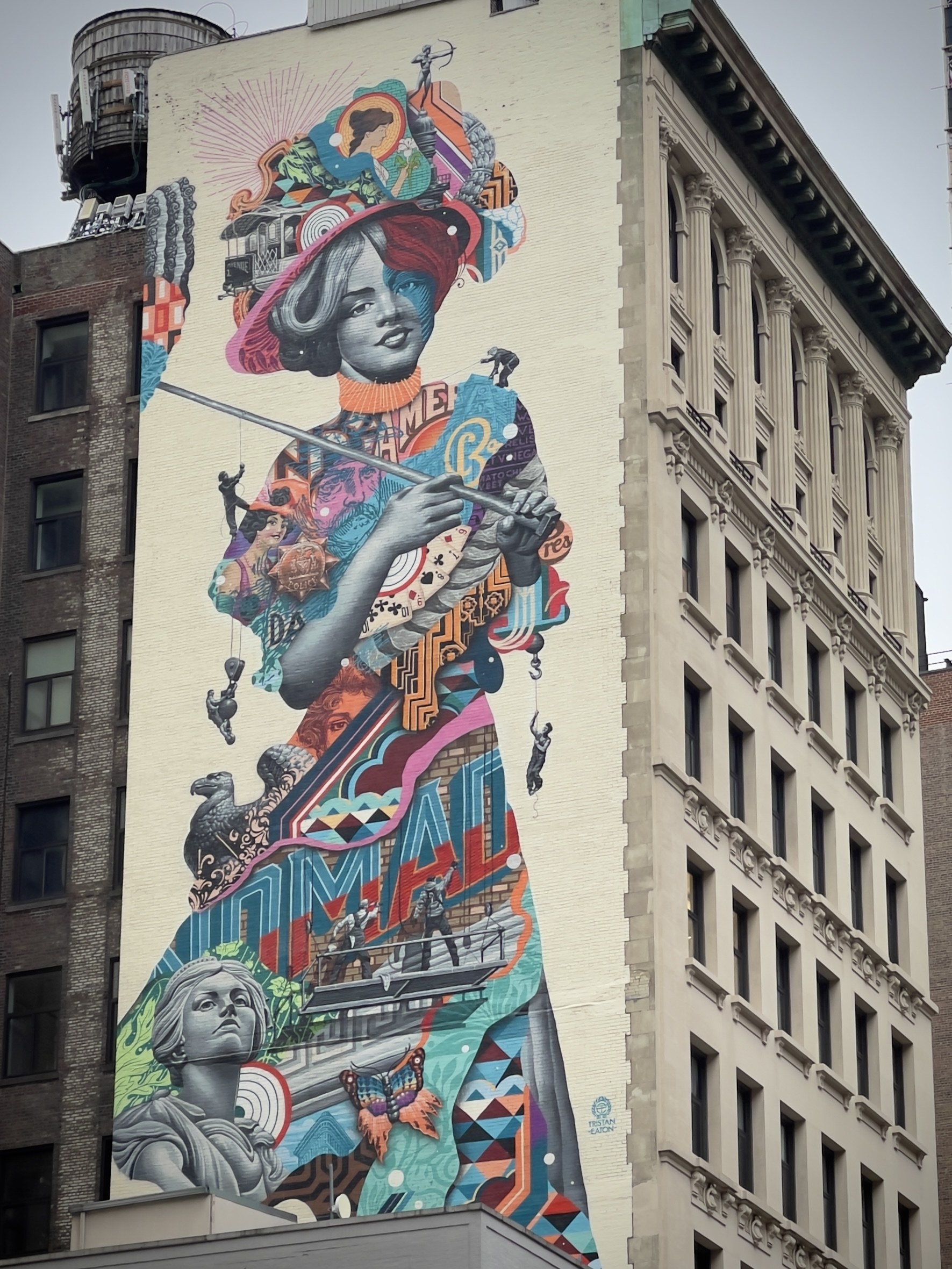 Photo credit© ULTIMATE International Media
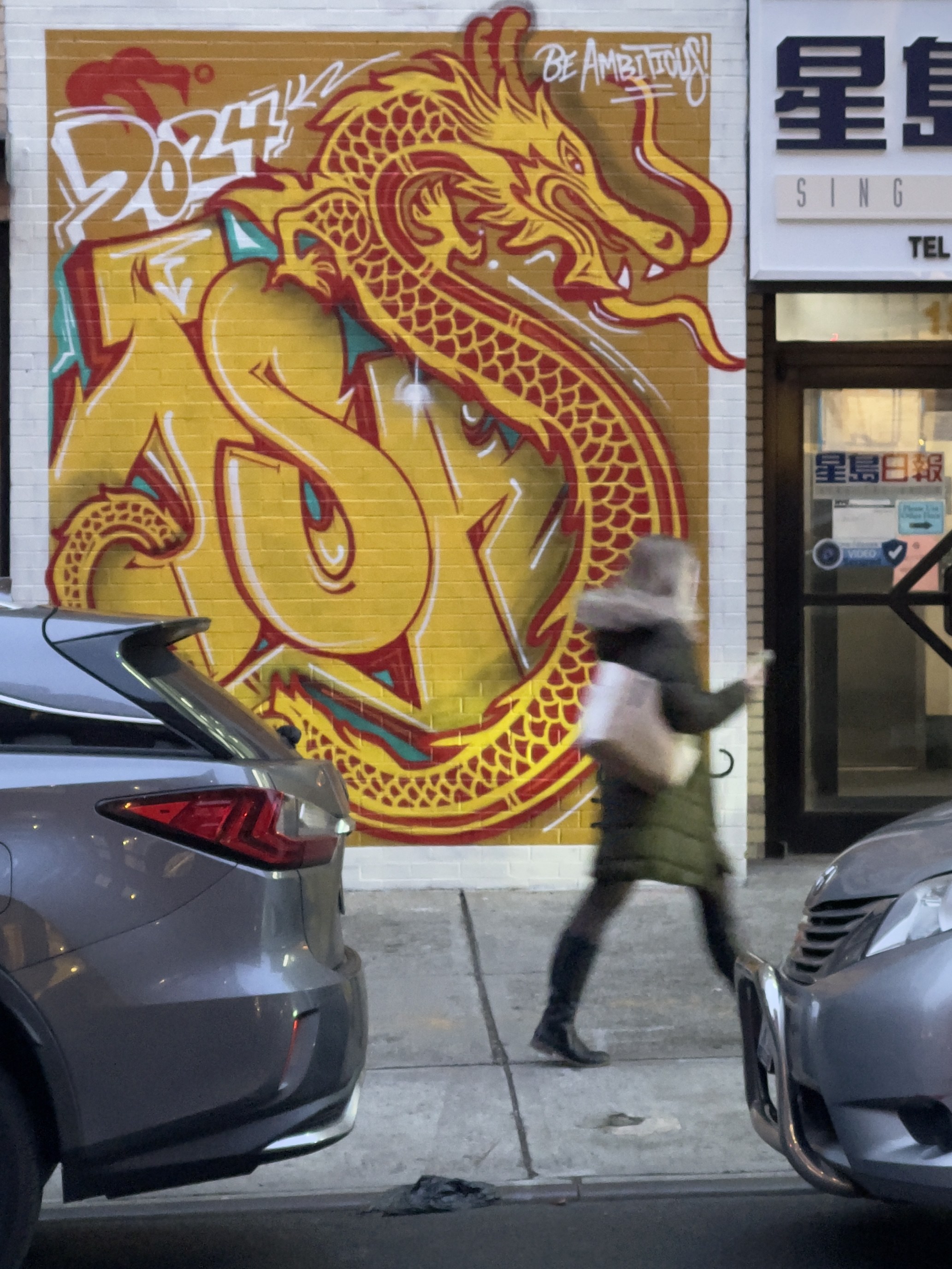 Photo credit© ULTIMATE International Media
Walls are repainted, pieces appear and disappear, so walk with your eyes open rather than a checklist. On my own winter walks I found a tiger staring down the yellow cabs, a golden dragon for 2024 with the words “Be Ambitious!”, and a stencilled raccoon on the pavement playing tennis in a “We ❤ NYC” shirt.
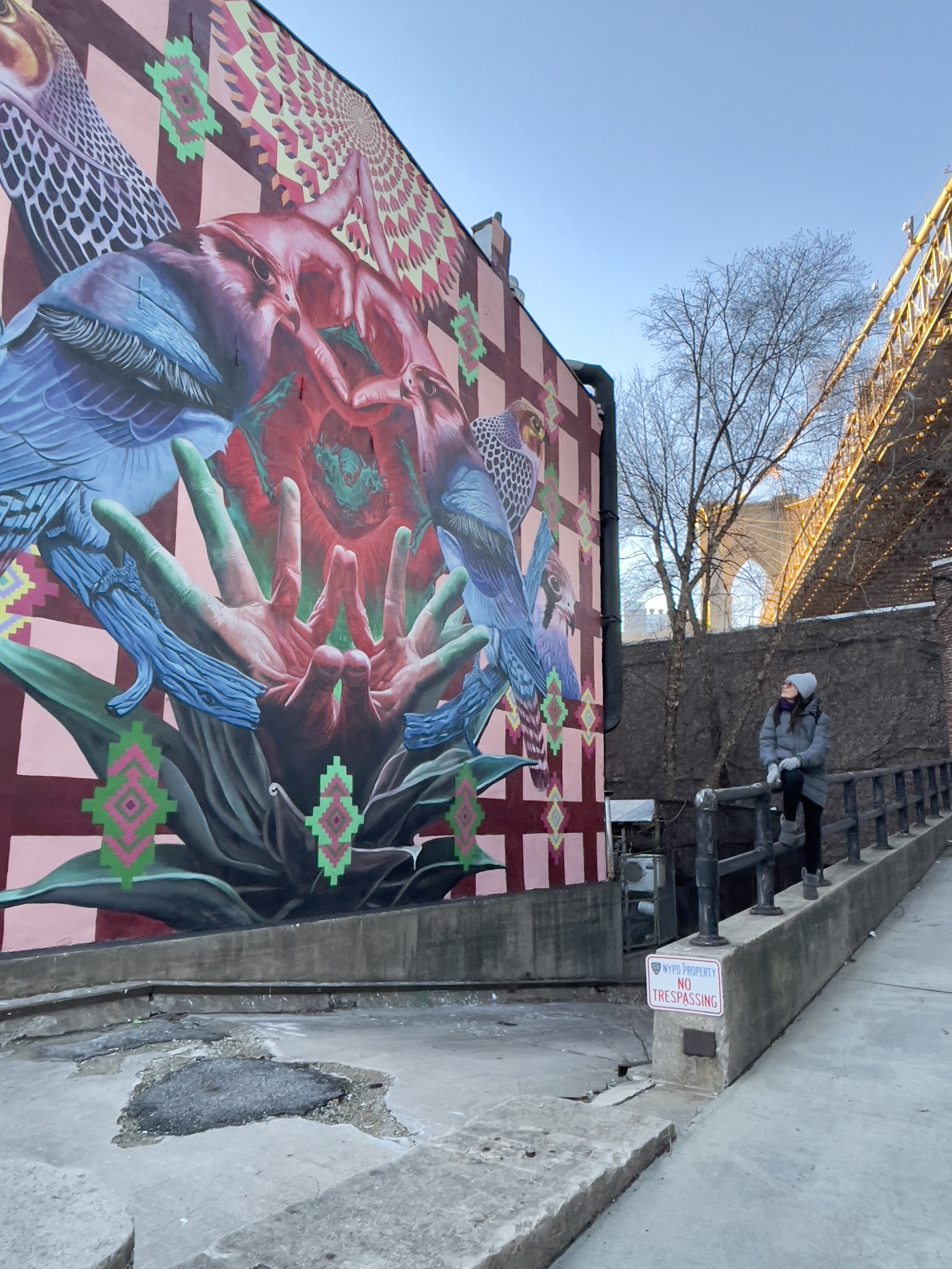 Photo credit© ULTIMATE International Media
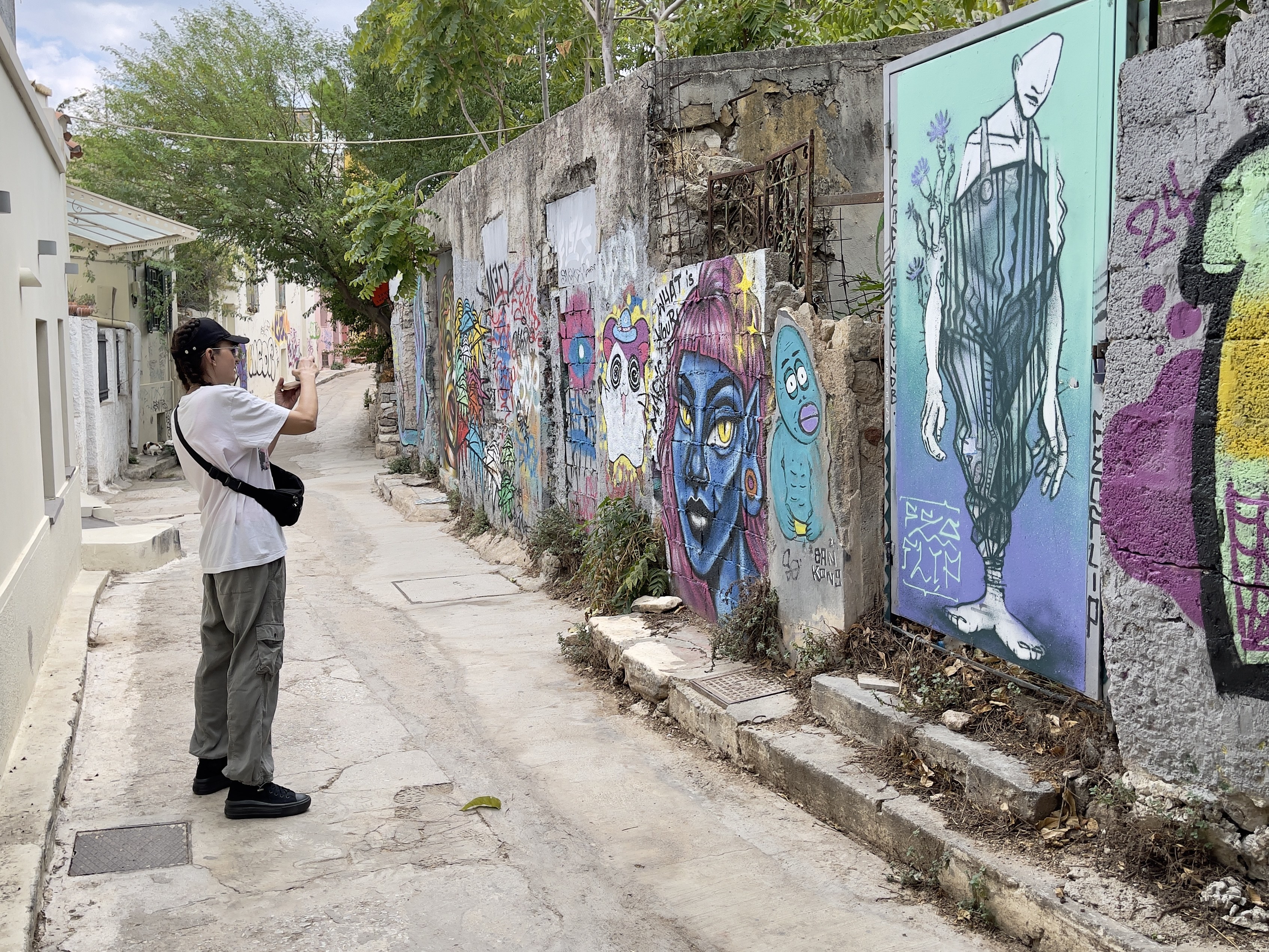
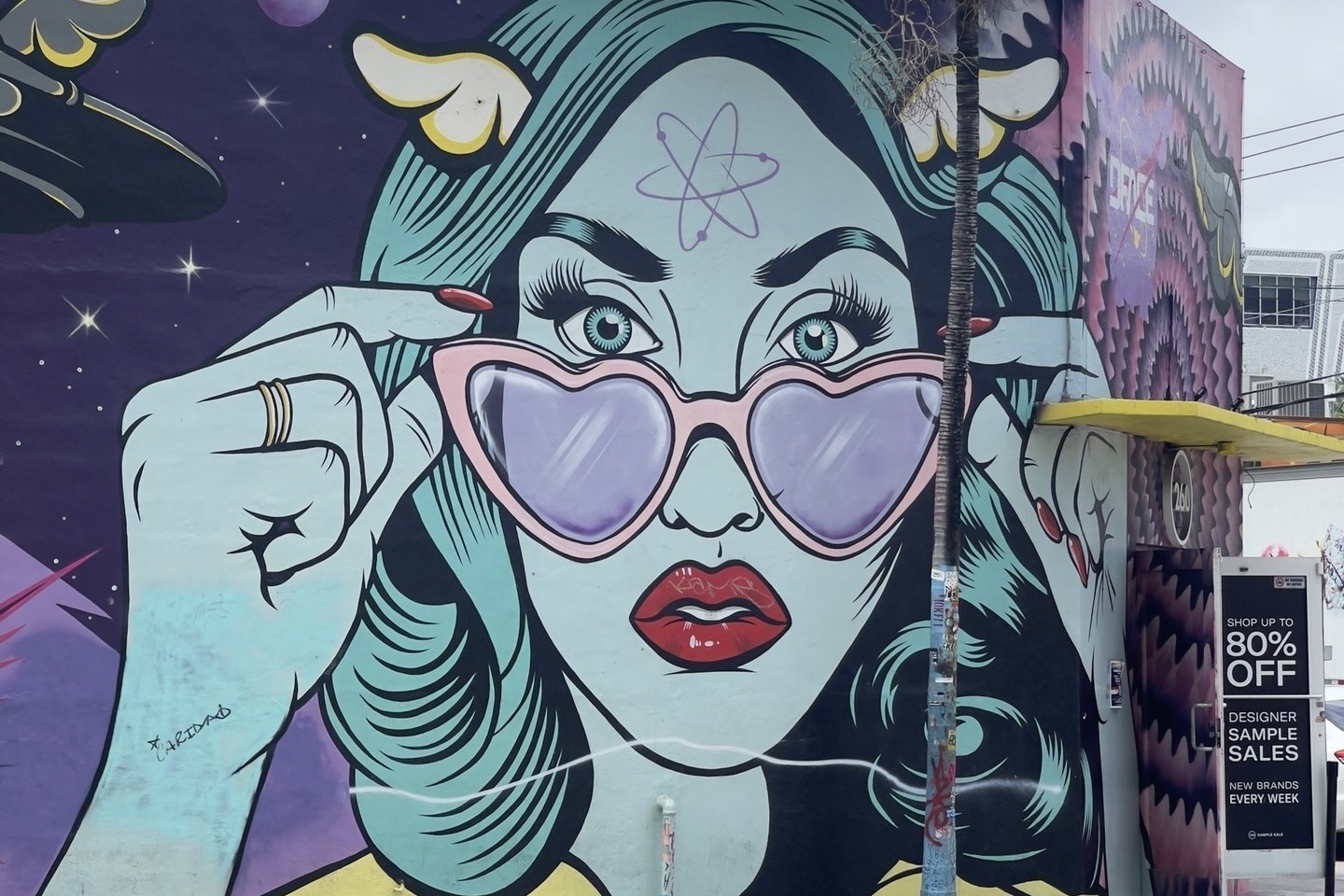
By the time I walk back across the bridge, the light is going. The towers turn to gold, then to violet, then to a thousand lit windows, and the river carries their reflections away like loose paint. New York gave the world a new way to paint: fast, bold, public and young. More than fifty years on, every mural festival from Athens to Miami still carries a little of that Bronx rec room and that 1971 newspaper story inside it.
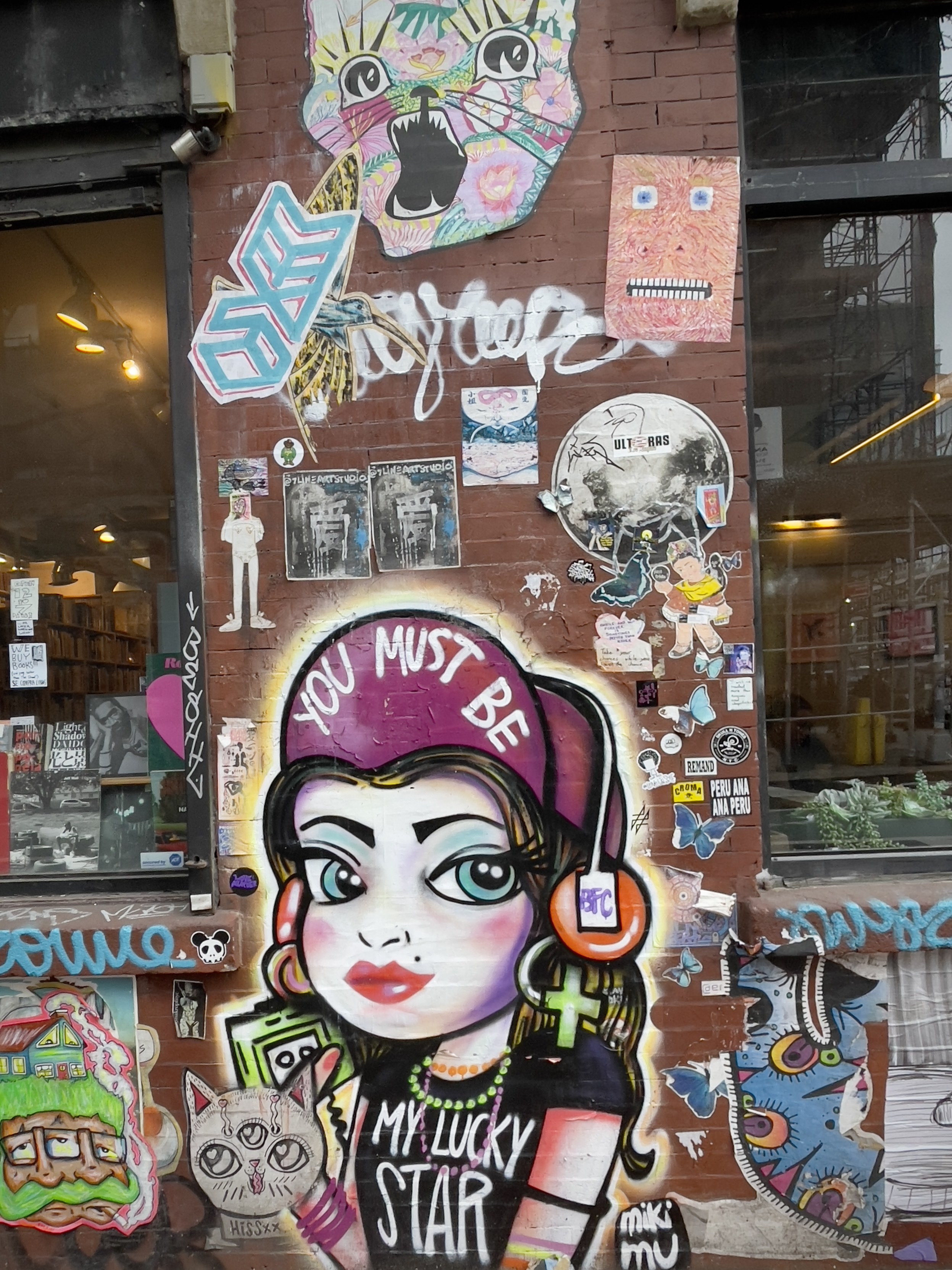 Photo credit© ULTIMATE International Media
 Photo credit© ULTIMATE International Media
My advice: start in DUMBO, under the arches of the Manhattan Bridge, cross to Manhattan on foot over the Brooklyn Bridge in the late-afternoon light, and when you take the subway home, look at the clean steel of the car and picture it as it was in 1973, wrapped from end to end in somebody’s name. If you have another morning, take the L train out to Bushwick and see what the Collective has painted this month.
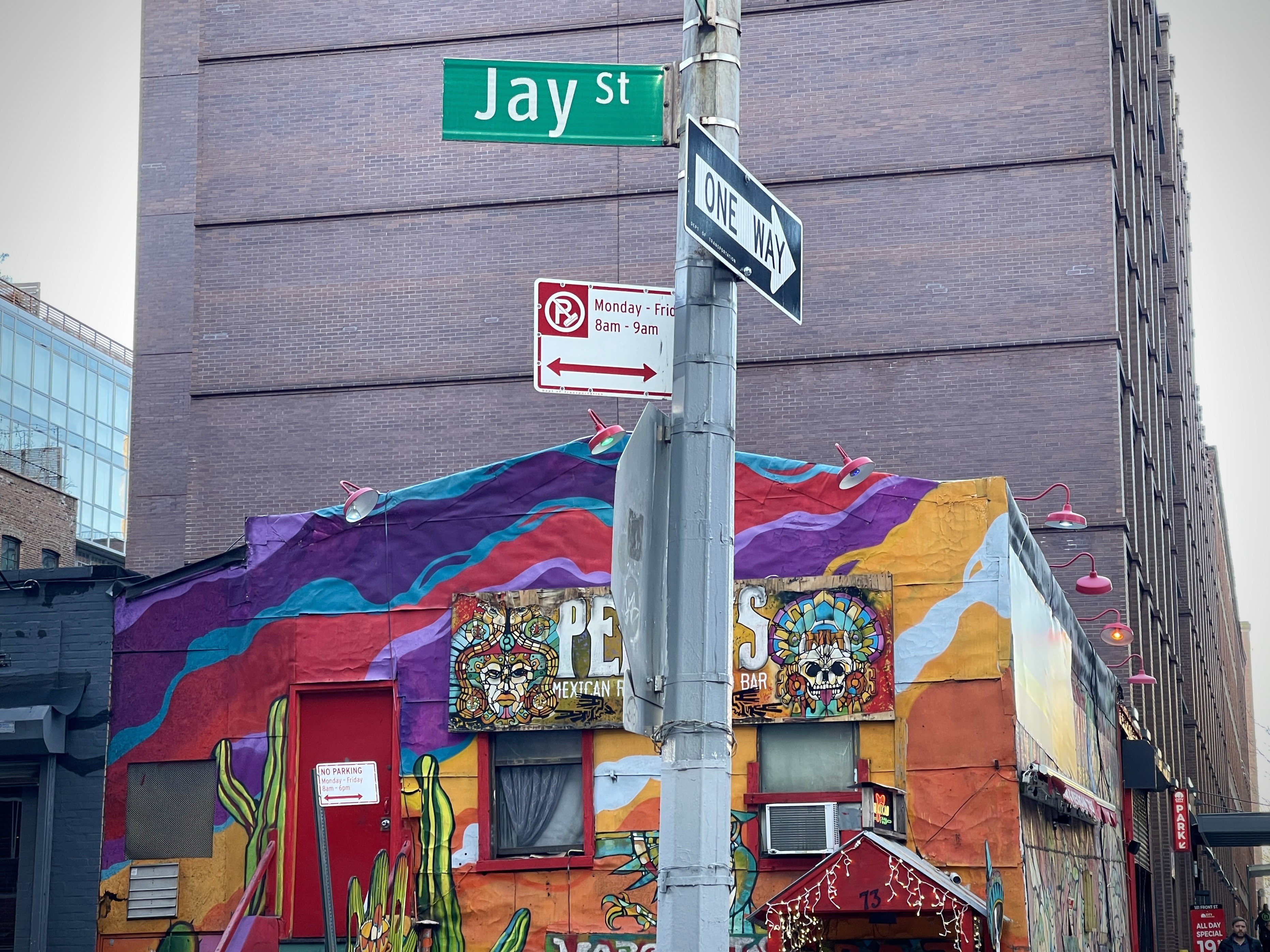 Photo credit© ULTIMATE International Media
Further reading
Jelena Bibić’s work: jelenabibic.com ↗