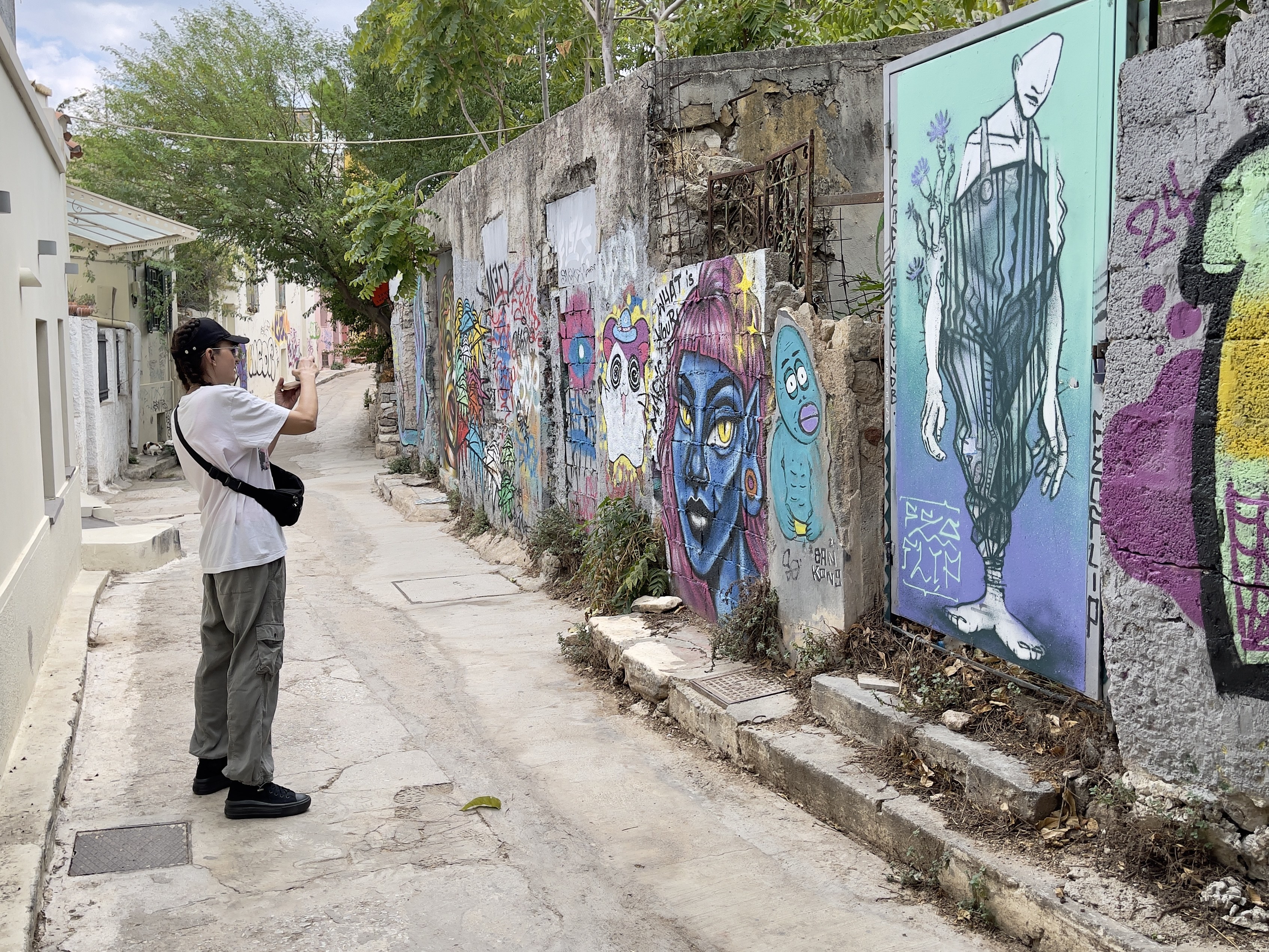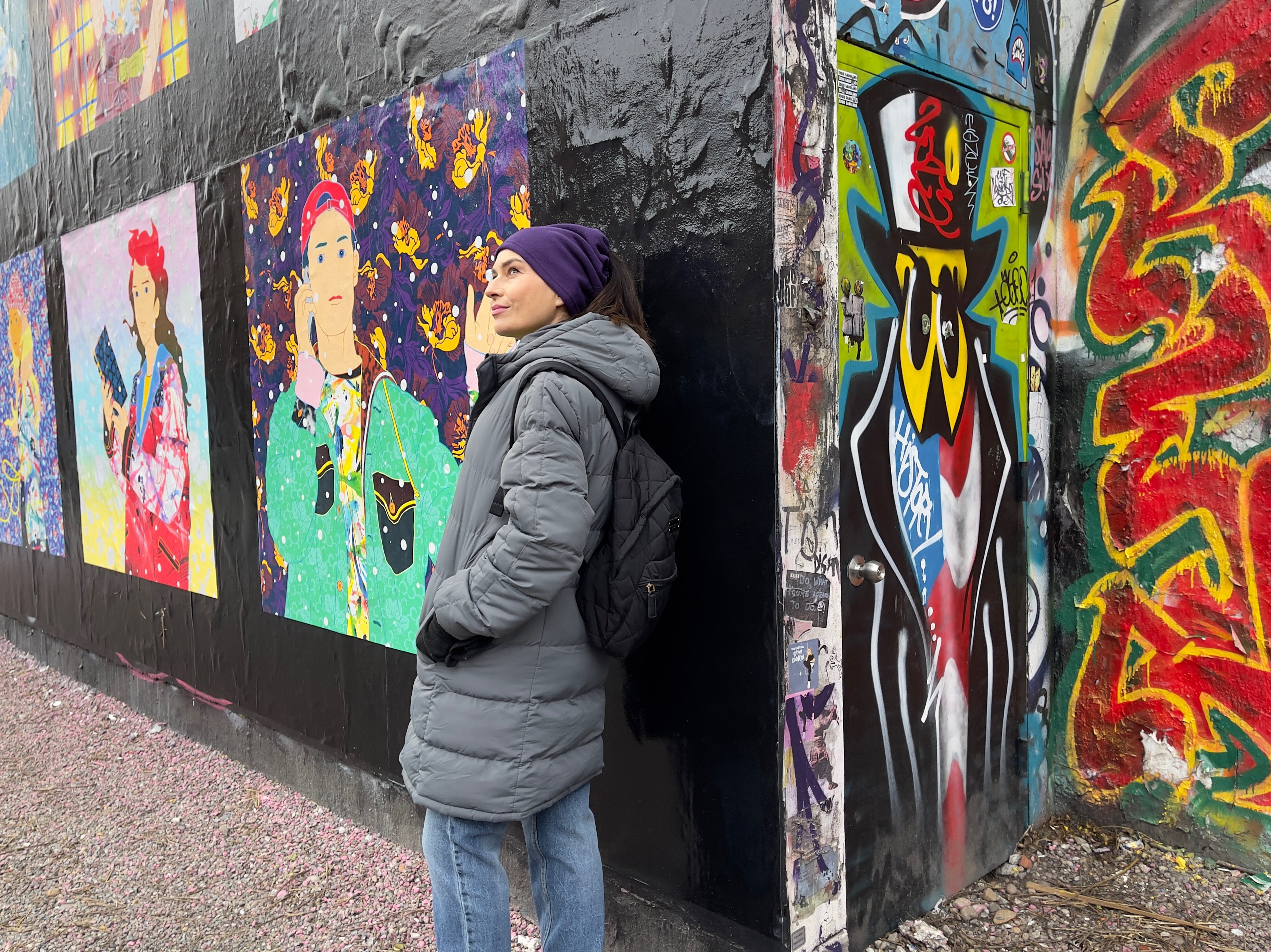
Miami has always been a second studio to me. I feel inspired to paint the moment I arrive: my Idol portraits were painted here, and so was a great deal of my wildlife work, in Miami and across Florida. But whenever I want colour at full volume, I go to Wynwood, just north of downtown.
On a spring morning the air is already warm and thick as syrup. Palms rattle overhead, music leaks from an open shop door, the smell of coffee drifts across the pavement, and every wall seems to be talking at once. Here the city does not whisper its art. It sings it, out loud, in the sun.
A garment district goes quiet
Wynwood began as a working district. In the decades after the Second World War its low warehouses formed one of the largest garment districts in the United States. In the early 1990s the work moved offshore, the factories closed, and the windowless walls were left blank: empty warehouses baking in the heat, with nothing to show the street but bare concrete. To a painter, a windowless wall is not a problem. It is an invitation.
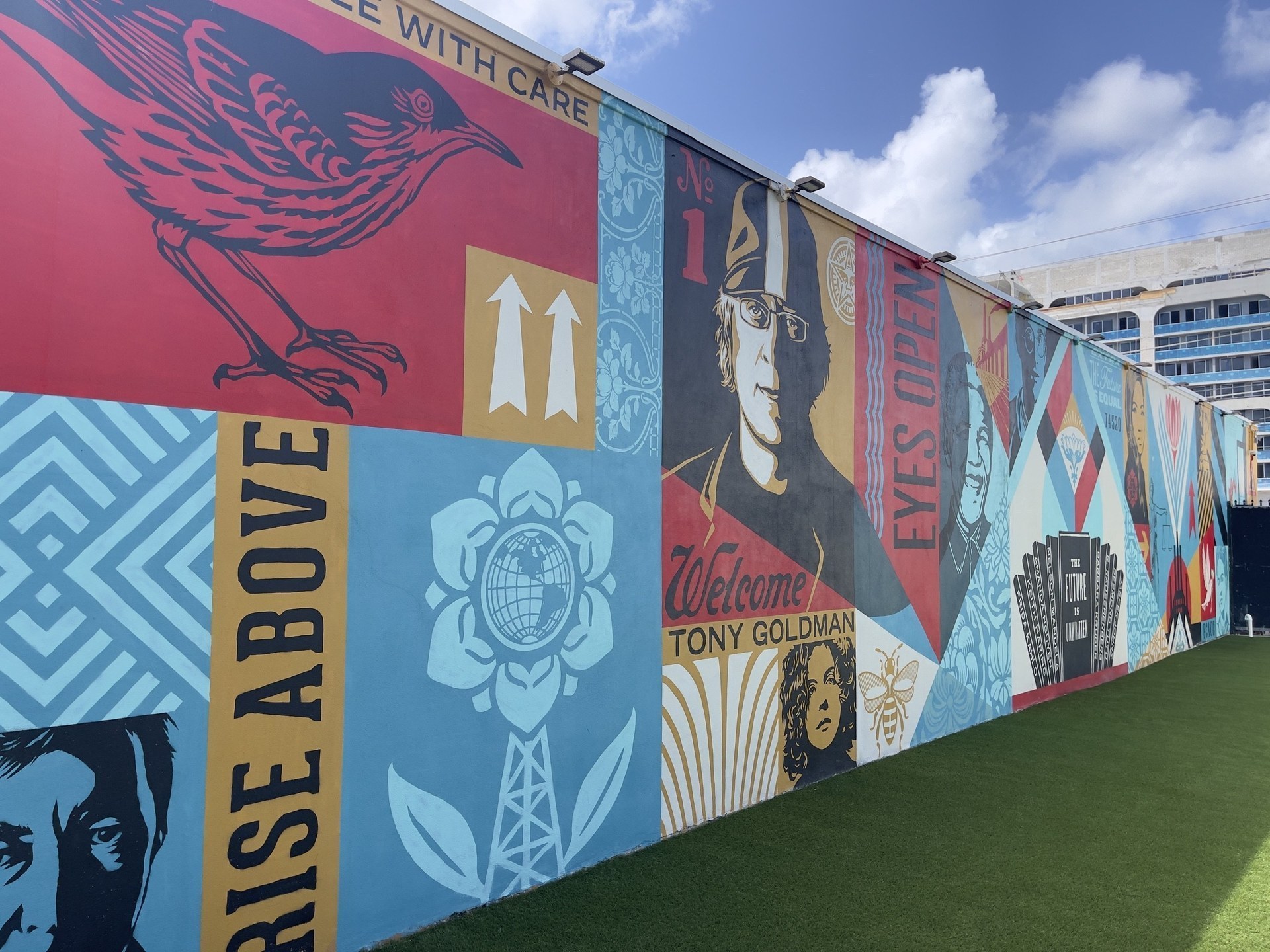
In the early 2000s the galleries moved into the empty buildings, the Second Saturday Art Walk drew people in, and from 2002 Art Basel Miami Beach brought collectors from around the world. Then, in 2009, the developer Tony Goldman had an idea: turn a cluster of those warehouses into an open-air museum. With the curator Jeffrey Deitch he launched the Wynwood Walls, at 2516 NW 2nd Avenue, and its debut during Art Basel Miami Beach drew international attention.
Inside the Walls
His daughter, Jessica Goldman Srebnick, now leads the Walls as chief executive and curator, and since opening they have featured more than 130 artists from over 30 countries. The names on its own pages read like a roll call of the form: Shepard Fairey, Futura 2000, Maya Hayuk, Ron English, Sandra Chevrier, Hebru Brantley.
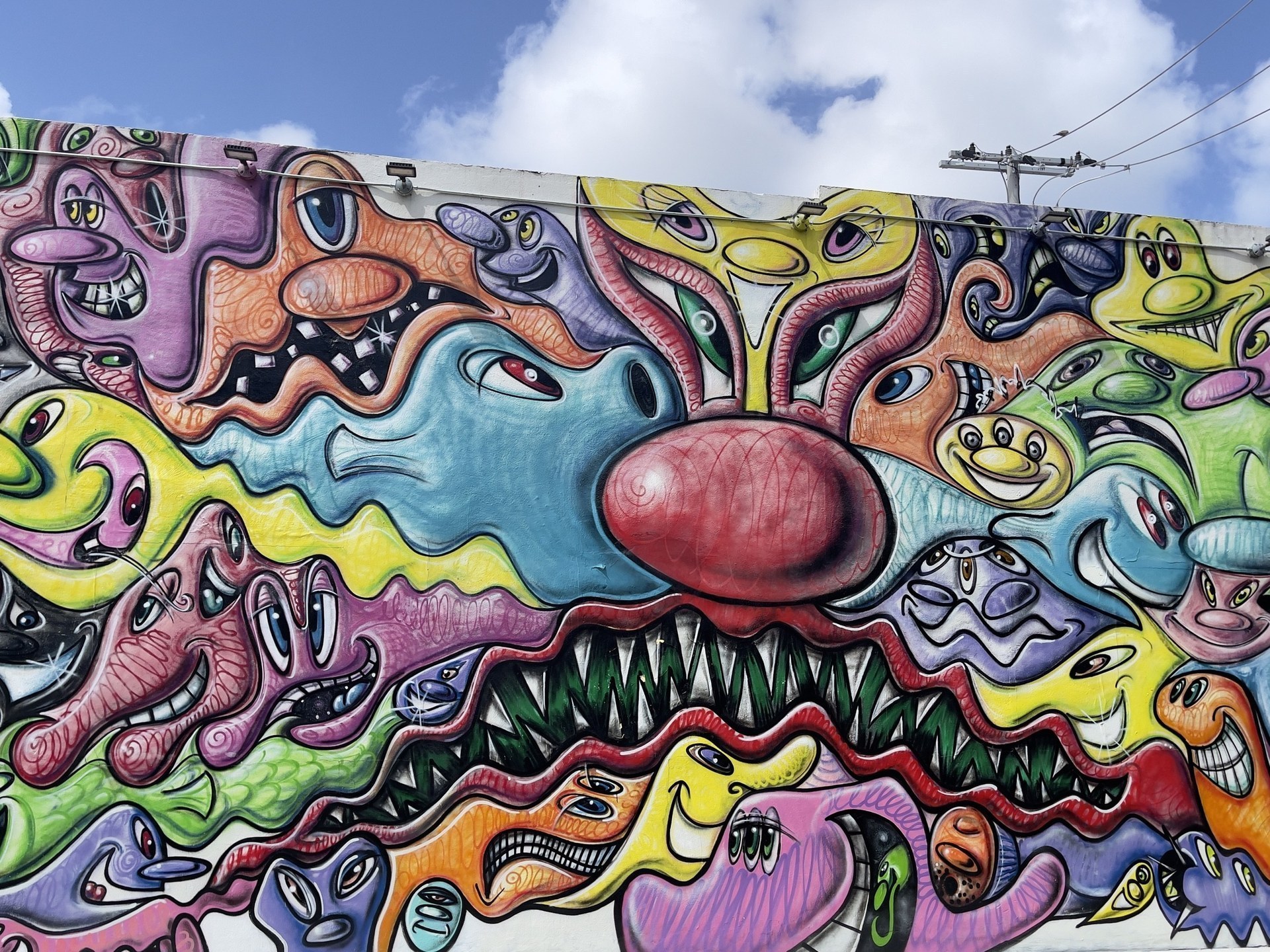
Step through the gate and the noise of the street falls away; what is left is colour, and the walls talking to each other. Here a run of stacked poster panels in red, cream and teal carries the words “Rise above”; a few steps on, a swarm of bulbous faces, eyes and grinning teeth crowds around a glossy red bulb, every colour turned up as far as it will go.
 图片来源© ULTIMATE International Media
 图片来源© ULTIMATE International Media
Then a woman’s face, broken into planes of ochre, rose and violet and threaded with flowers, looks out over the lawn with perfect calm. Three walls, three temperatures. As a painter I would hang them in exactly that order: shout, scream, whisper, the way a good piece of music builds and falls away.
 图片来源© ULTIMATE International Media
Pavement to parapet
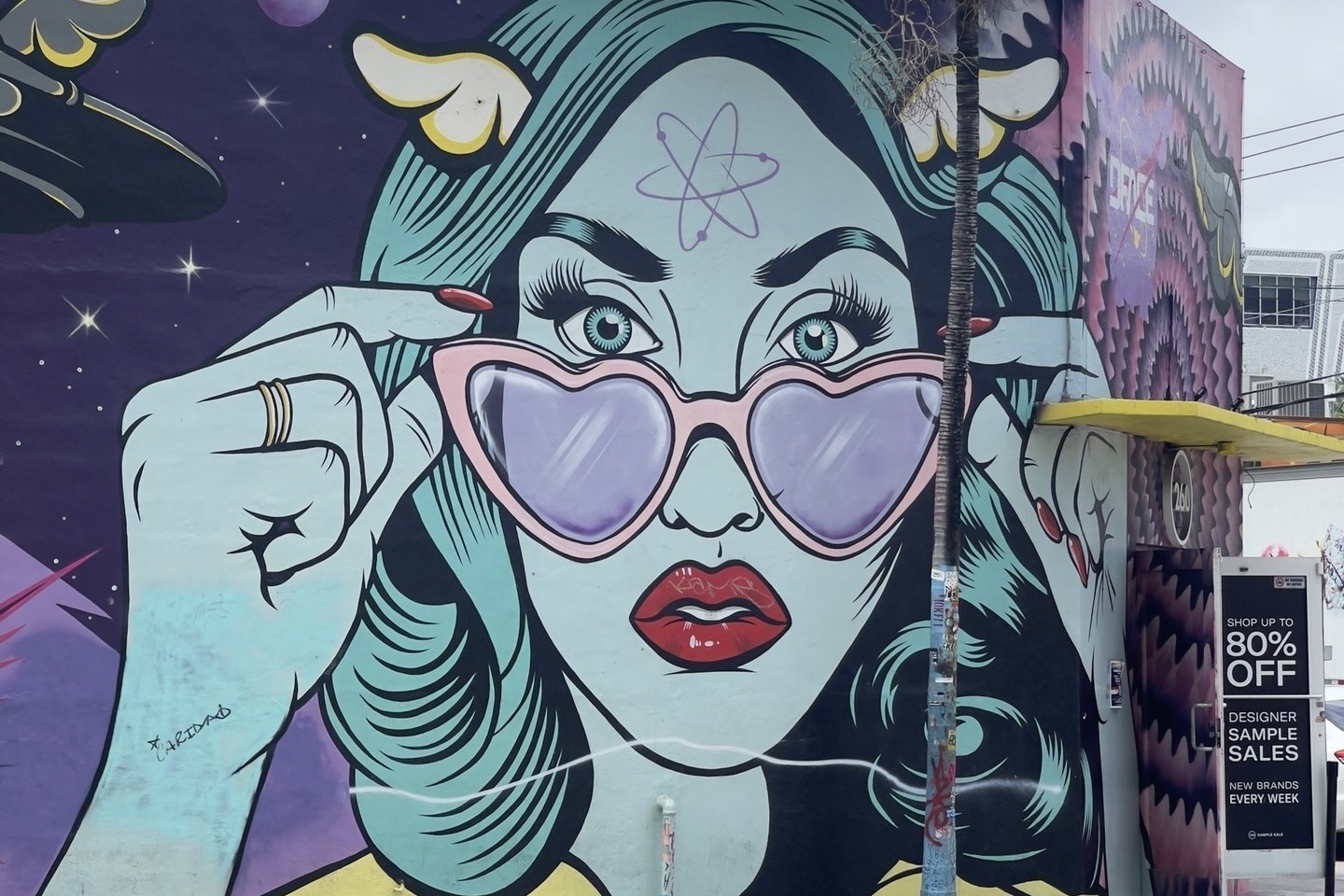
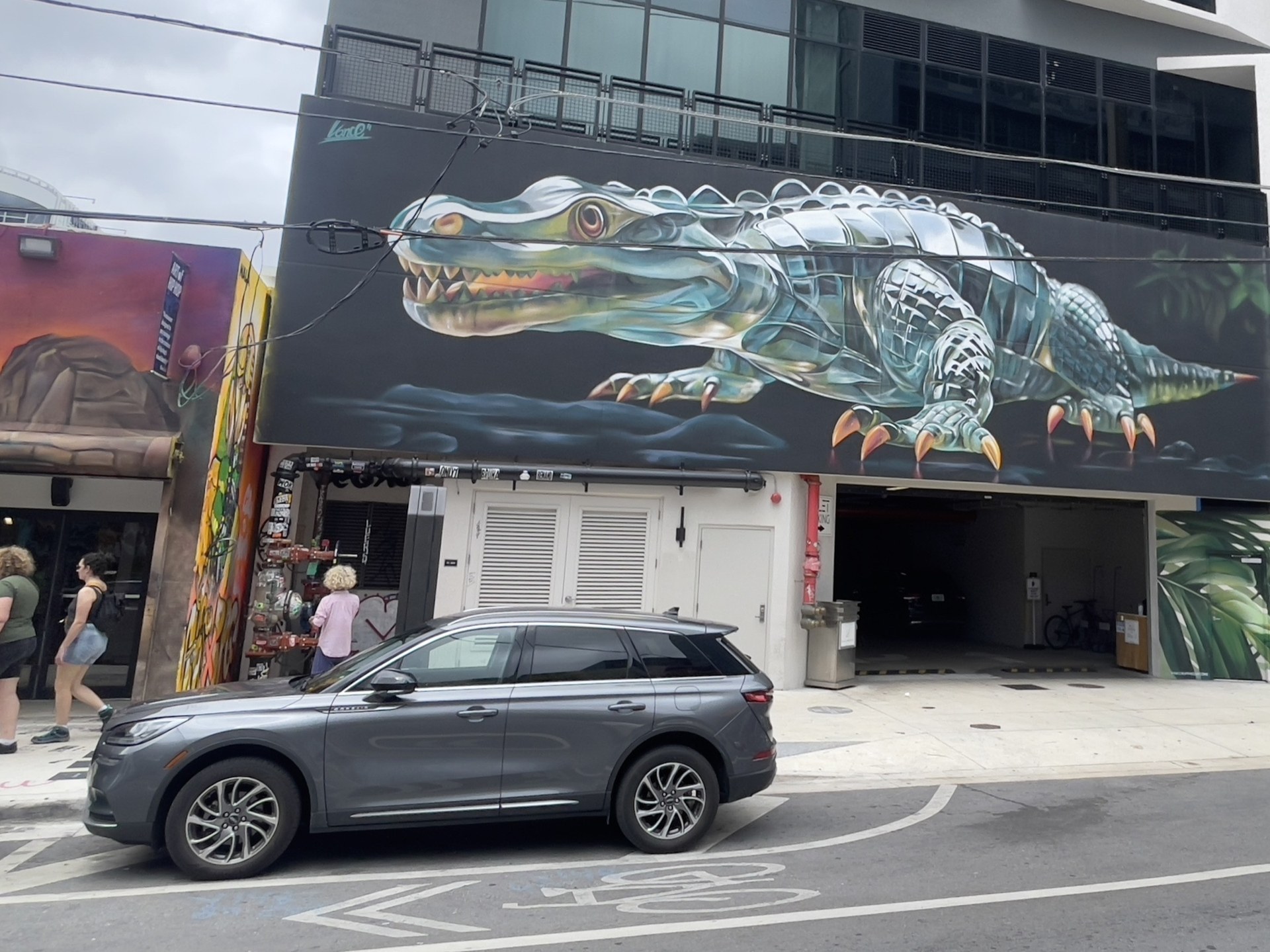
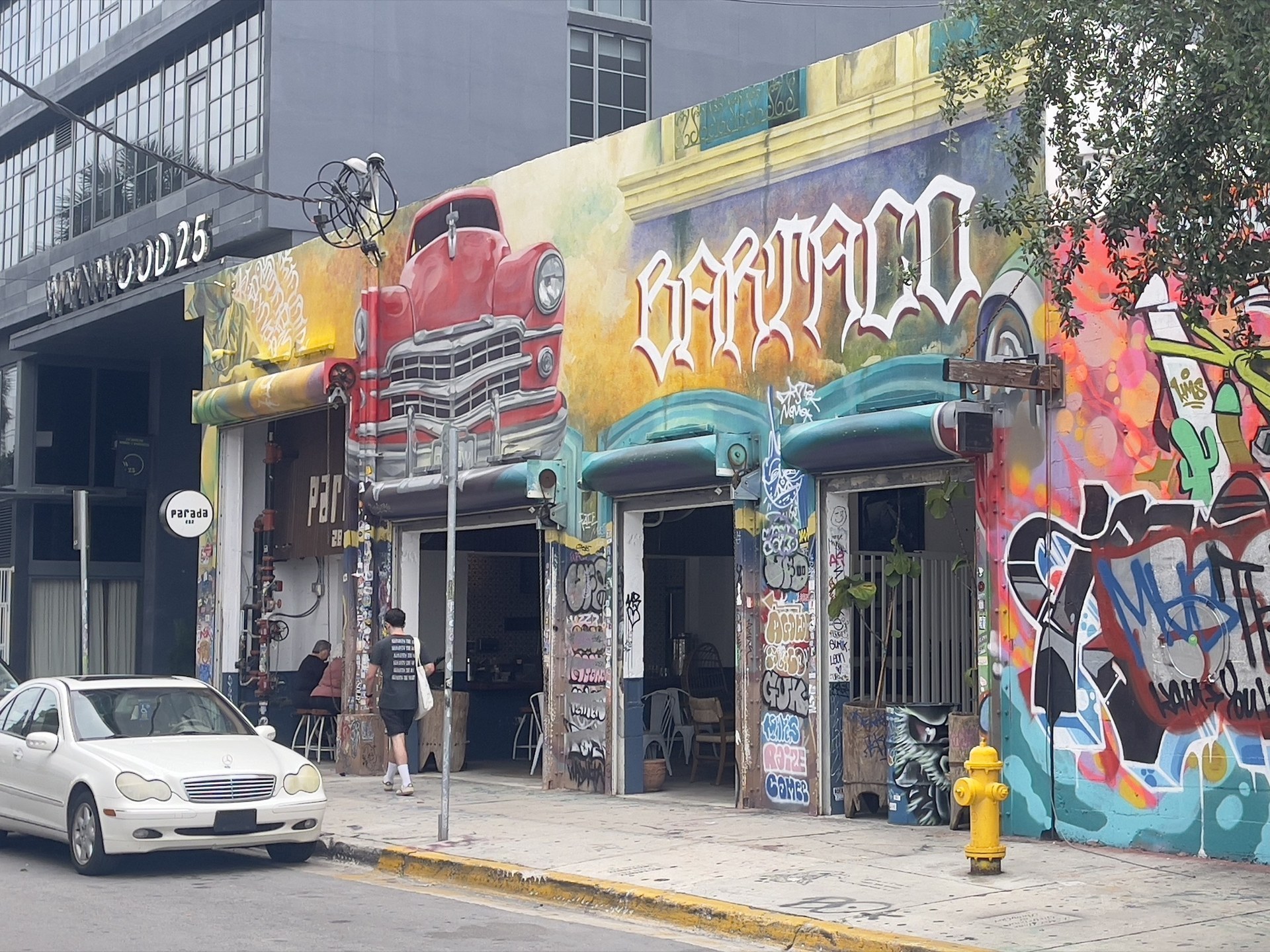
The Walls are only the beginning. The Wynwood Business Improvement District counts more than 200 murals across some 50 city blocks, and along NW 2nd Avenue whole buildings are painted from pavement to parapet. A silver-and-teal alligator crawls across a garage front. A woman with a cigar sits in a halo of dots as fine as beadwork. A pop heroine peers over heart-shaped sunglasses, pleased with herself, as she should be. And a martian in a bubble helmet levels his ray gun across the pavement at whatever happens to park beneath him; the day I passed, it was a gleaming black car, caught mid-beam. Walk the avenue slowly and it reads like a carnival parade that has stopped, mid-step, and climbed the walls.
 图片来源© ULTIMATE International Media
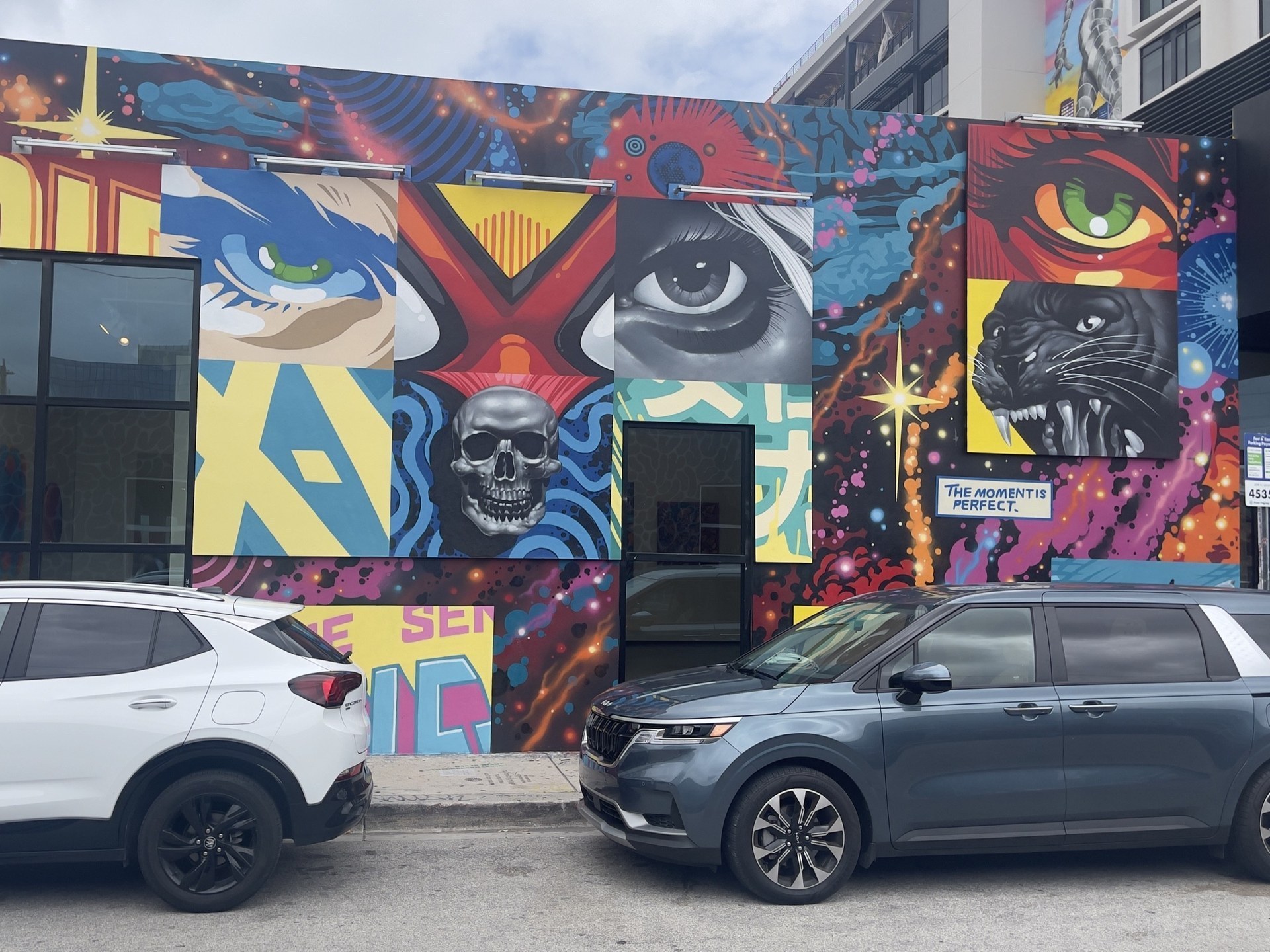 图片来源© ULTIMATE International Media
Miami light is merciless, white and hard as a struck match. It flattens anything timid, and I think that is why the colour here is so loud: anything quieter would simply bleach away by noon. Look at the textures, too. Off the avenue, shutters and shopfronts disappear under layers of paint and paste-ups, so that a single wall can hold years of conversation, one coat on top of the last, peeling at the edges like the pages of a well-thumbed book.
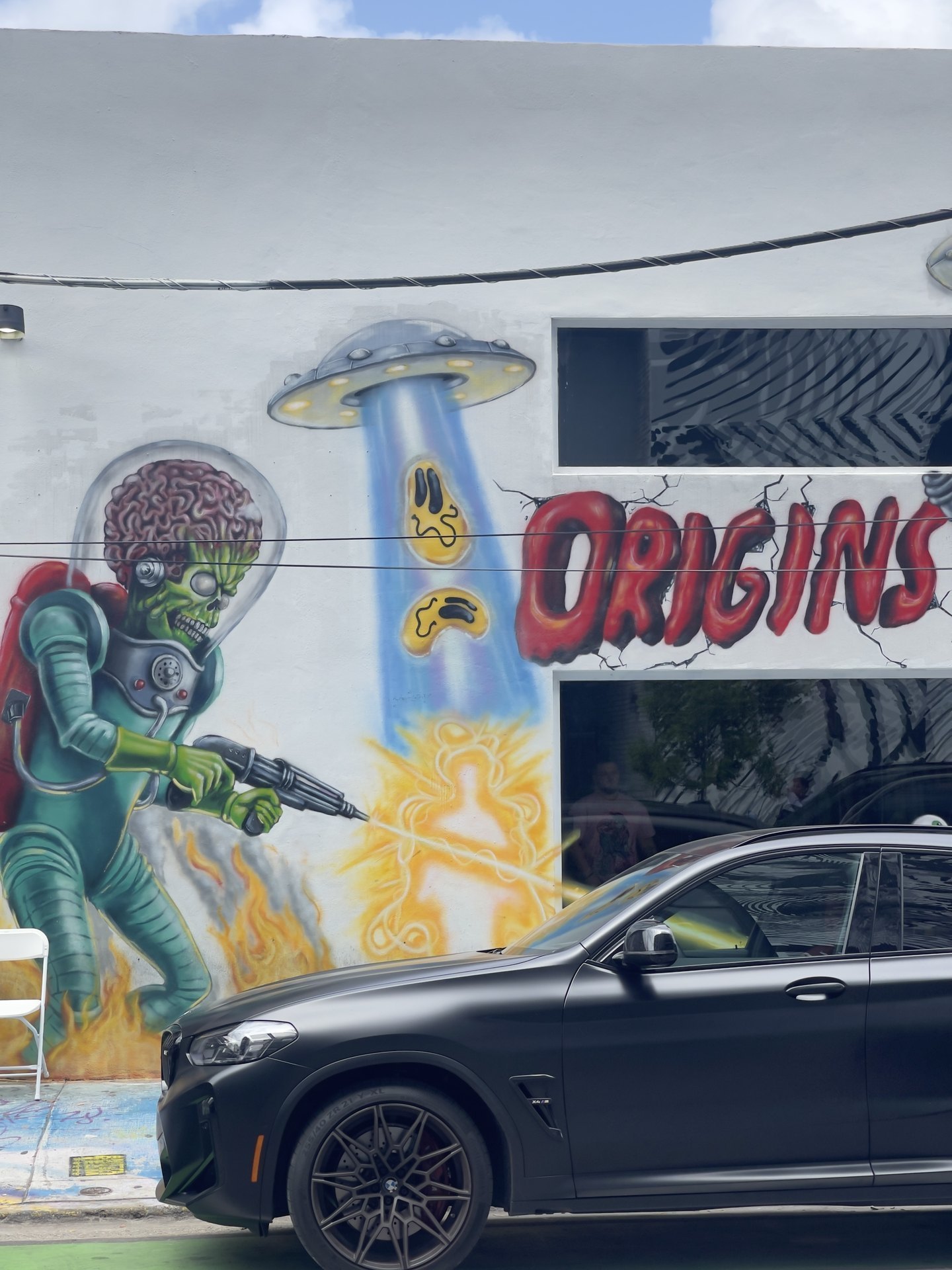 图片来源© ULTIMATE International Media
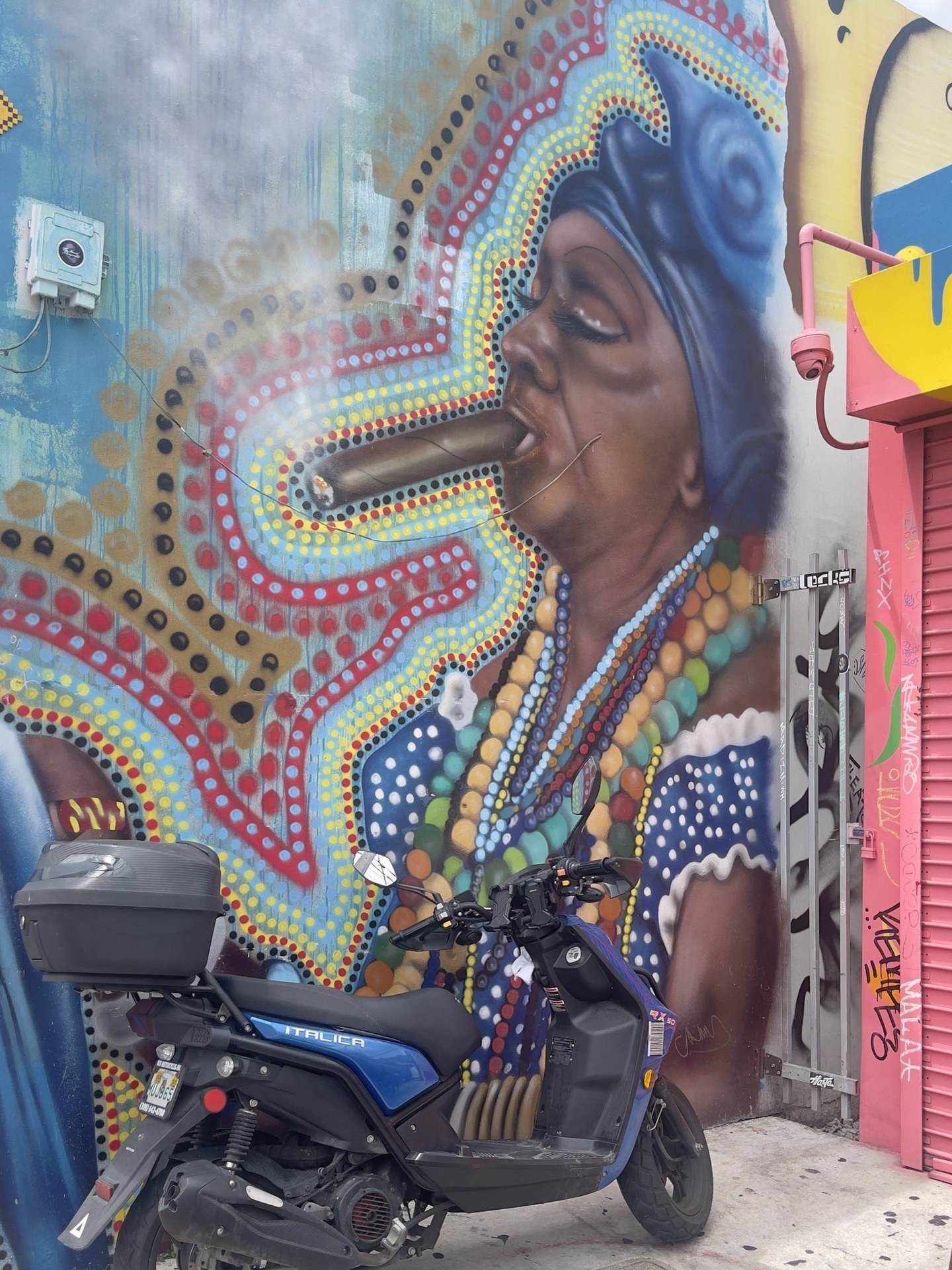 图片来源© ULTIMATE International Media
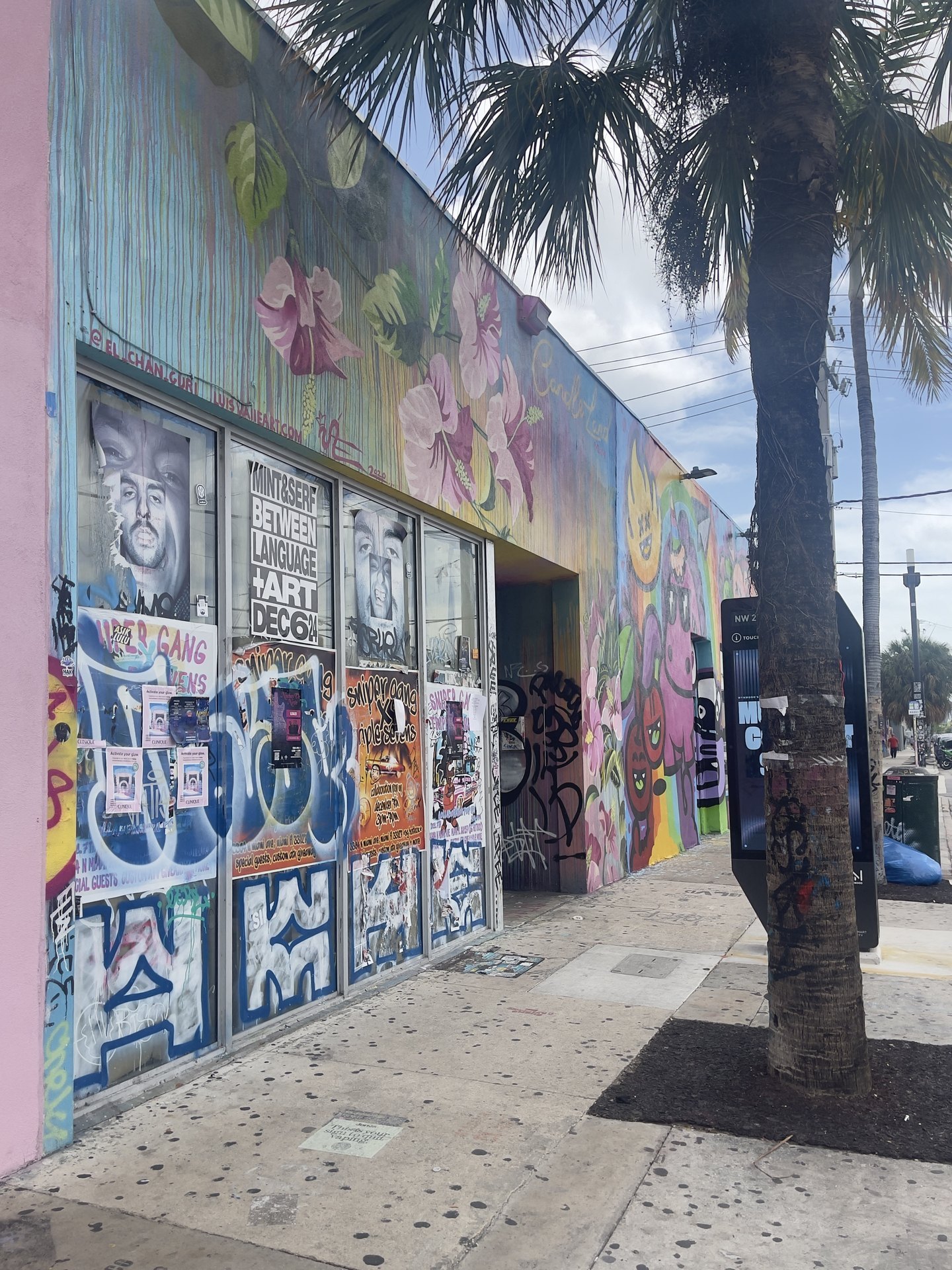 图片来源© ULTIMATE International Media
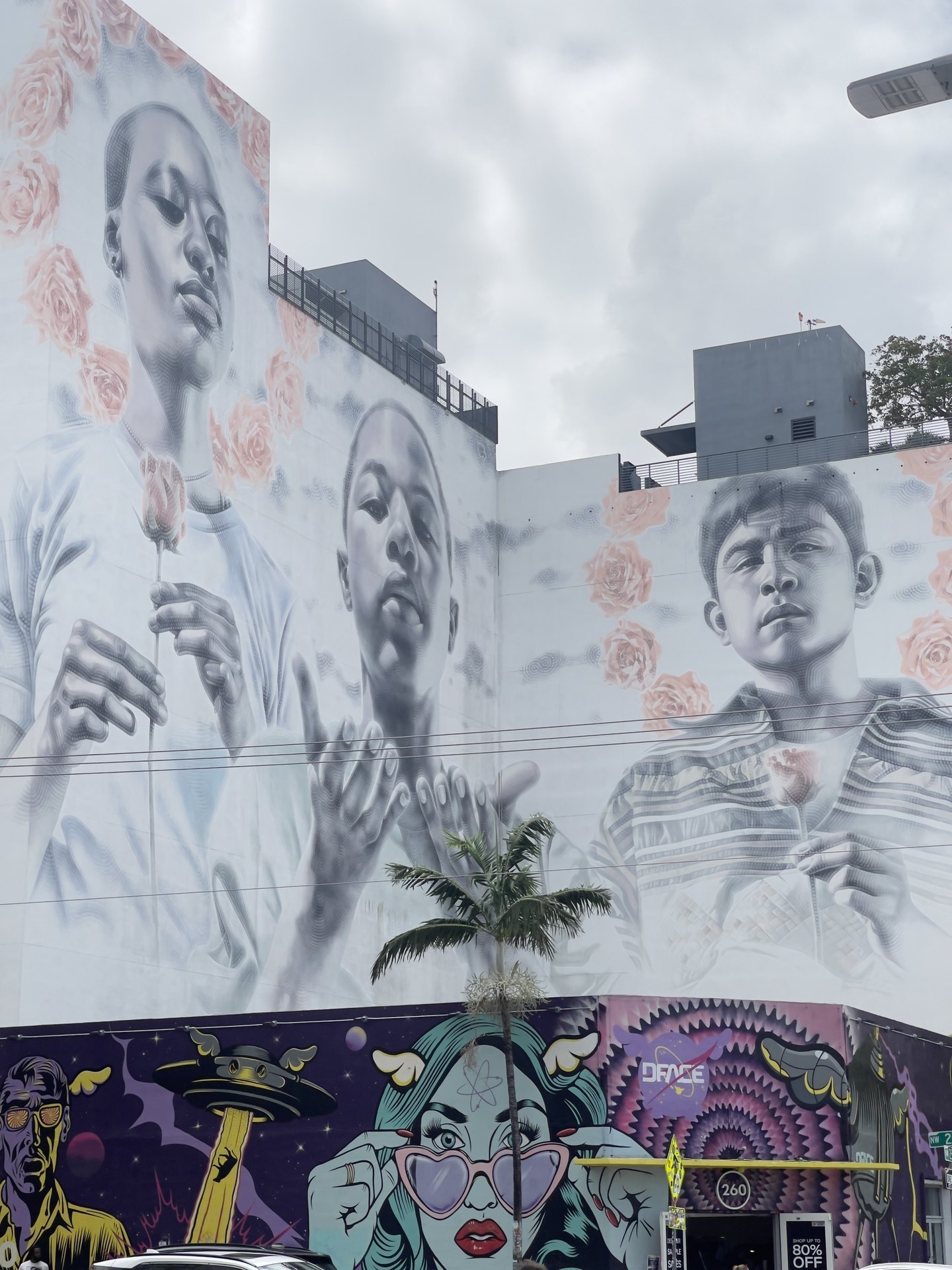
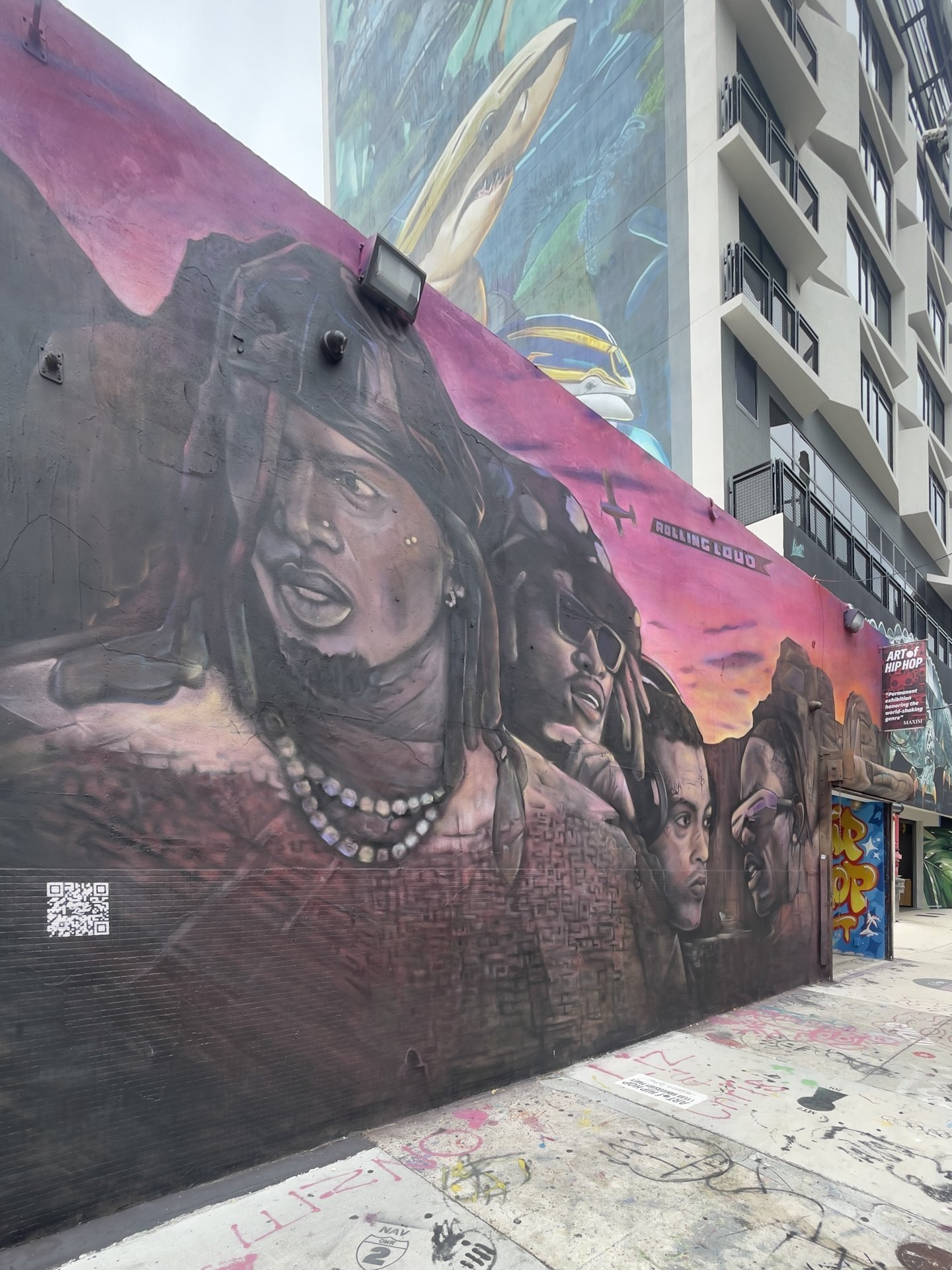
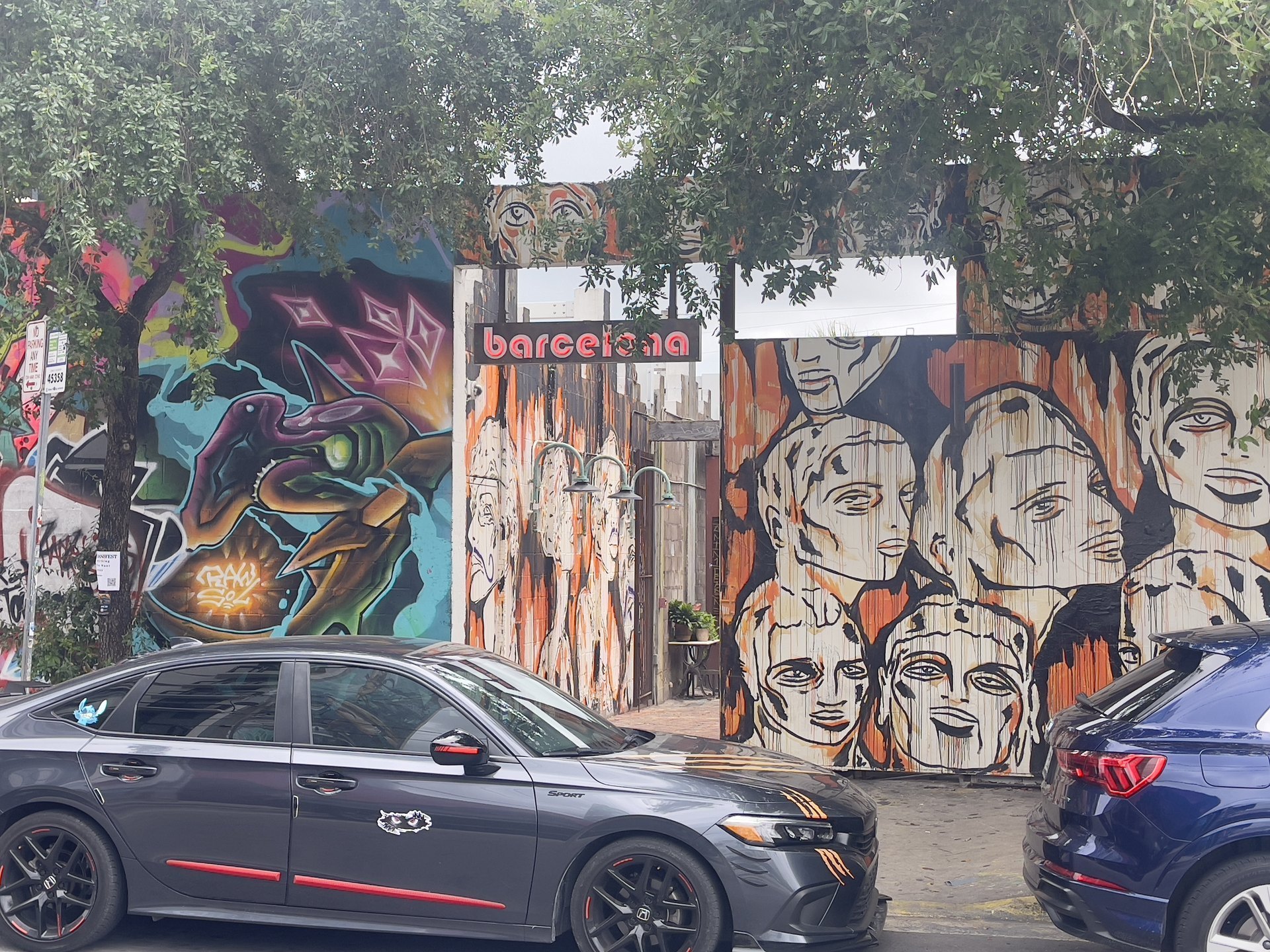
Then there are the faces. High on one building three young men are painted in soft charcoal greys, ringed with pale pink roses, their gaze steady and calm above the traffic. They are tender and monumental at once, like a family album pinned to the sky. Around the corner, along a pink wall, a young man in a beaded necklace leads a crowd of faces in sepia and rose, and across the street a gateway is lined with carved, mask-like heads in orange and white.
 图片来源© ULTIMATE International Media
 图片来源© ULTIMATE International Media
 图片来源© ULTIMATE International Media
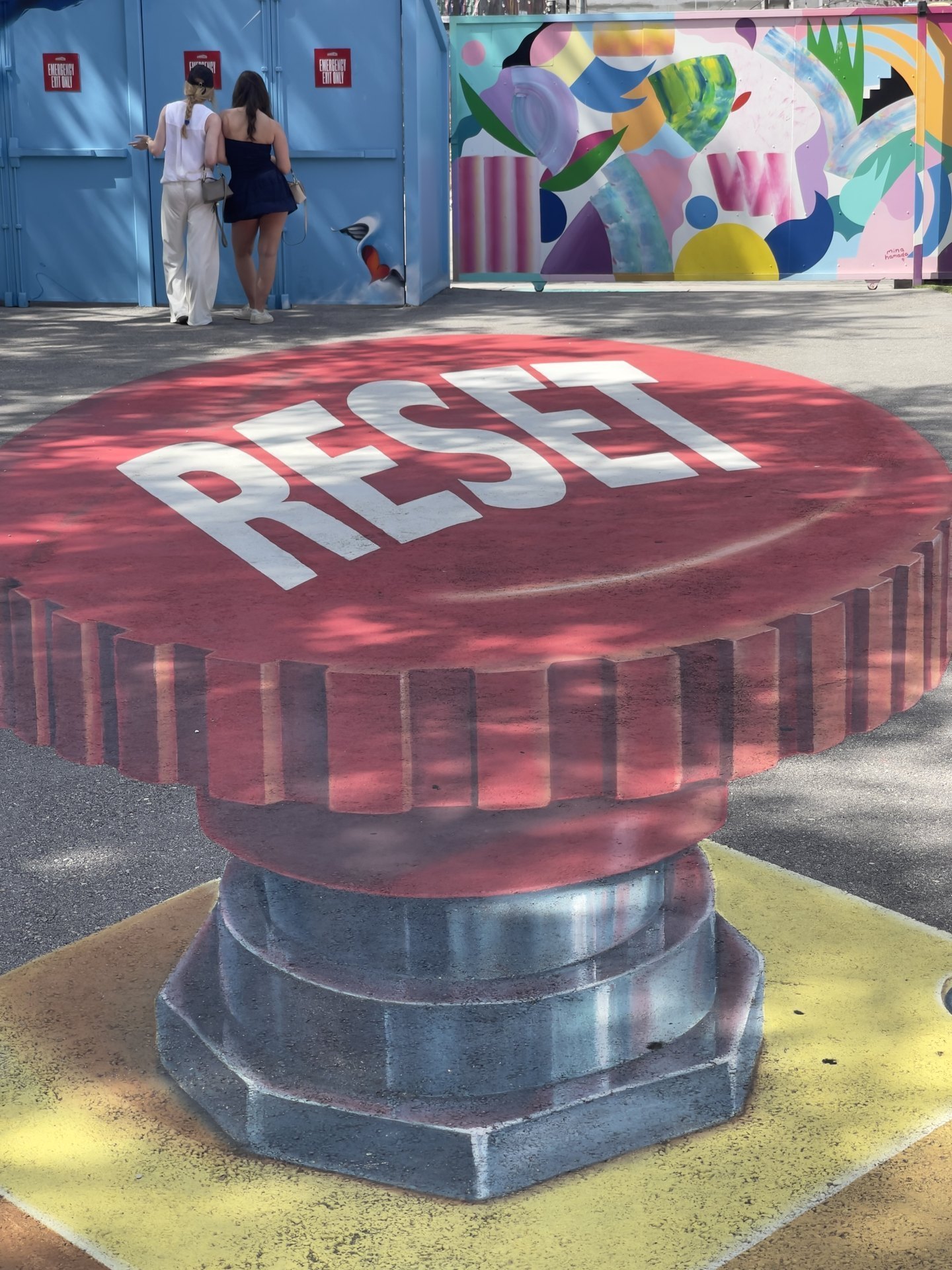
On one pavement a giant red button marked “Reset” seems to rise out of the ground, a trompe-l’oeil painted flat on the concrete. Trompe-l’oeil is one of the oldest tricks in painting, and here it lies under your feet.
 图片来源© ULTIMATE International Media
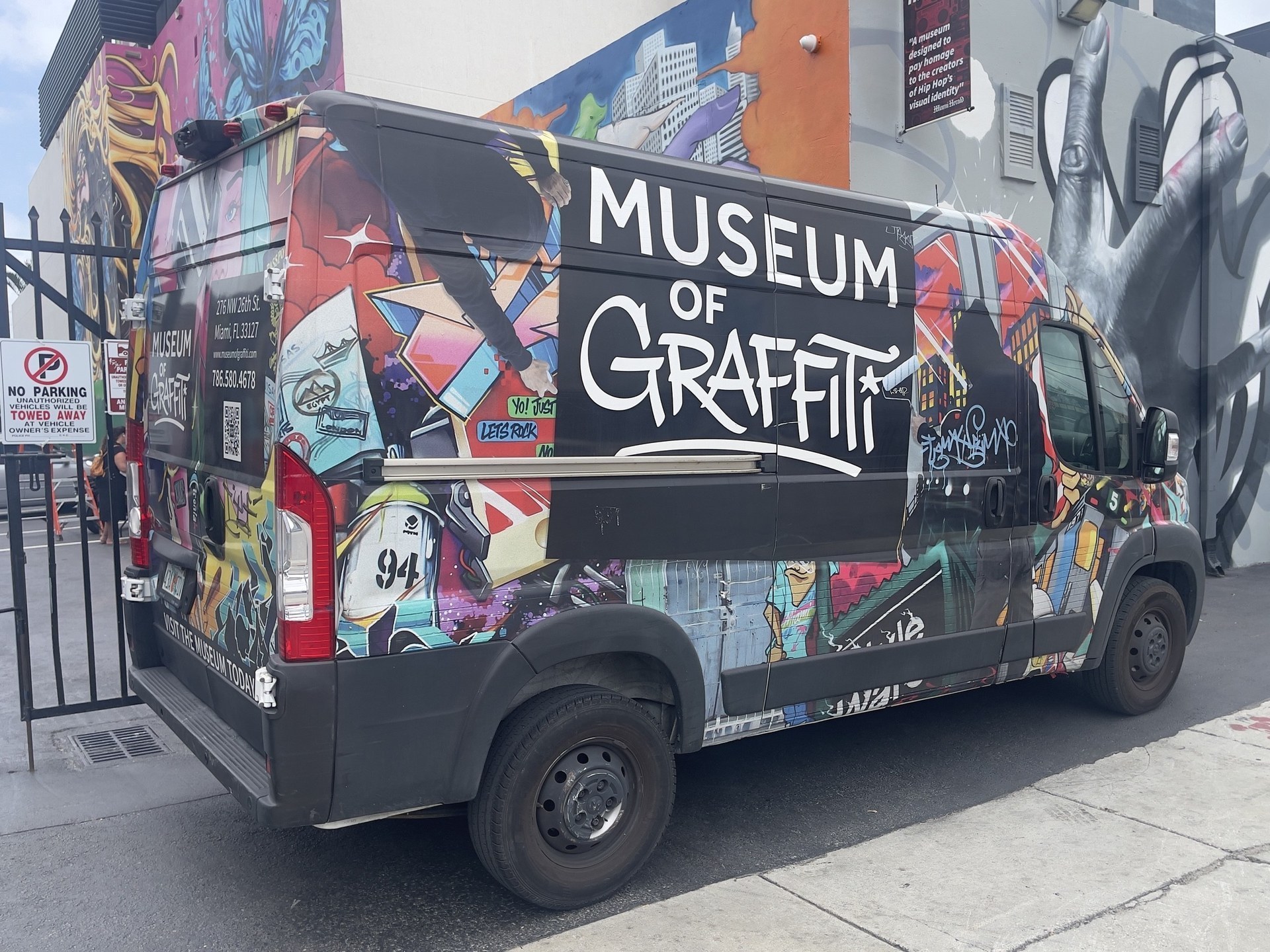
The art form now has a museum of its own around the corner. The Museum of Graffiti, founded by the graffiti artist and historian Alan Ket and Allison Freidin, opened on 5 December 2019, the first night of that year’s Art Basel Miami Beach. Its home on NW 26th Street tells the story of the form, with eleven murals on its own walls.
Colour for the passer-by
Wynwood is the clearest proof I know that paint can change how a place feels to be in. Blank warehouse walls gave nobody a reason to linger. Now people come here simply to walk, and they slow down, they point, they talk to strangers about a wall. The murals speak for a city that has always been a meeting place of cultures: you see it in the faces and heroes painted across whole buildings.
 图片来源© ULTIMATE International Media
 图片来源© ULTIMATE International Media
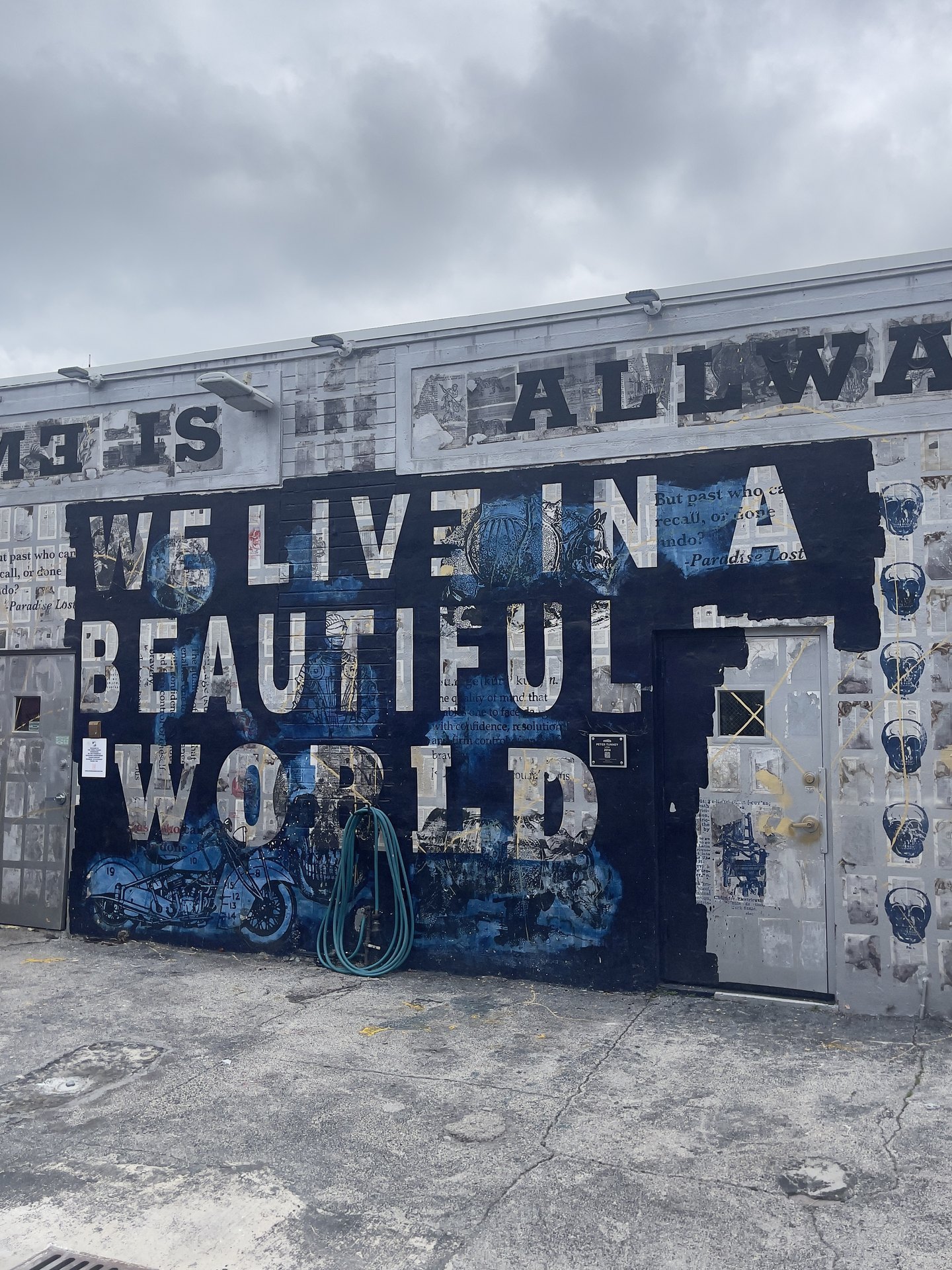
On one warehouse someone has painted, in tall white letters, “We live in a beautiful world”. You could argue with a sentence like that at eight in the morning on the way to work. Nobody does. It is enough that it is there, bigger than the day’s worries, a promise painted in letters taller than you, waiting for you to look up.
 图片来源© ULTIMATE International Media
The street sells
The brands noticed, of course. In 2009 Shepard Fairey, the same name you find on the Walls, designed Saks Fifth Avenue’s spring season, from shopping bags to windows, in his block-letter poster style. In 2014 Coca-Cola built its World Cup cans for Brazil around the São Paulo street artist Speto, and that December Burger King finished a bright mural by Mr. Brainwash here in Wynwood, as a backdrop for passers-by’s photographs.
The line between a mural and an advertisement is the line between a voice and its echo. Wynwood has both, side by side, and half the pleasure of walking it is learning to tell them apart.
Growing upwards
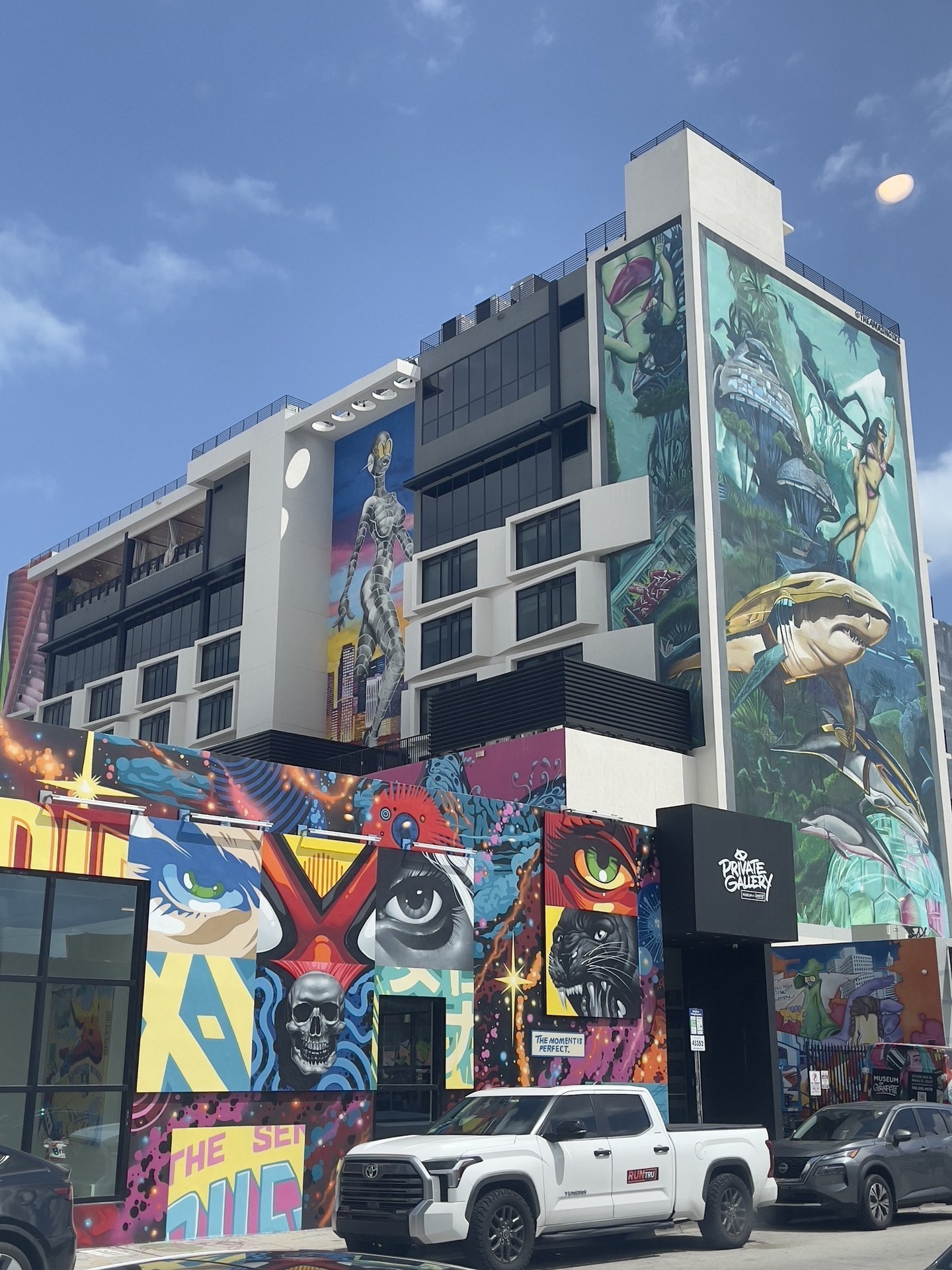
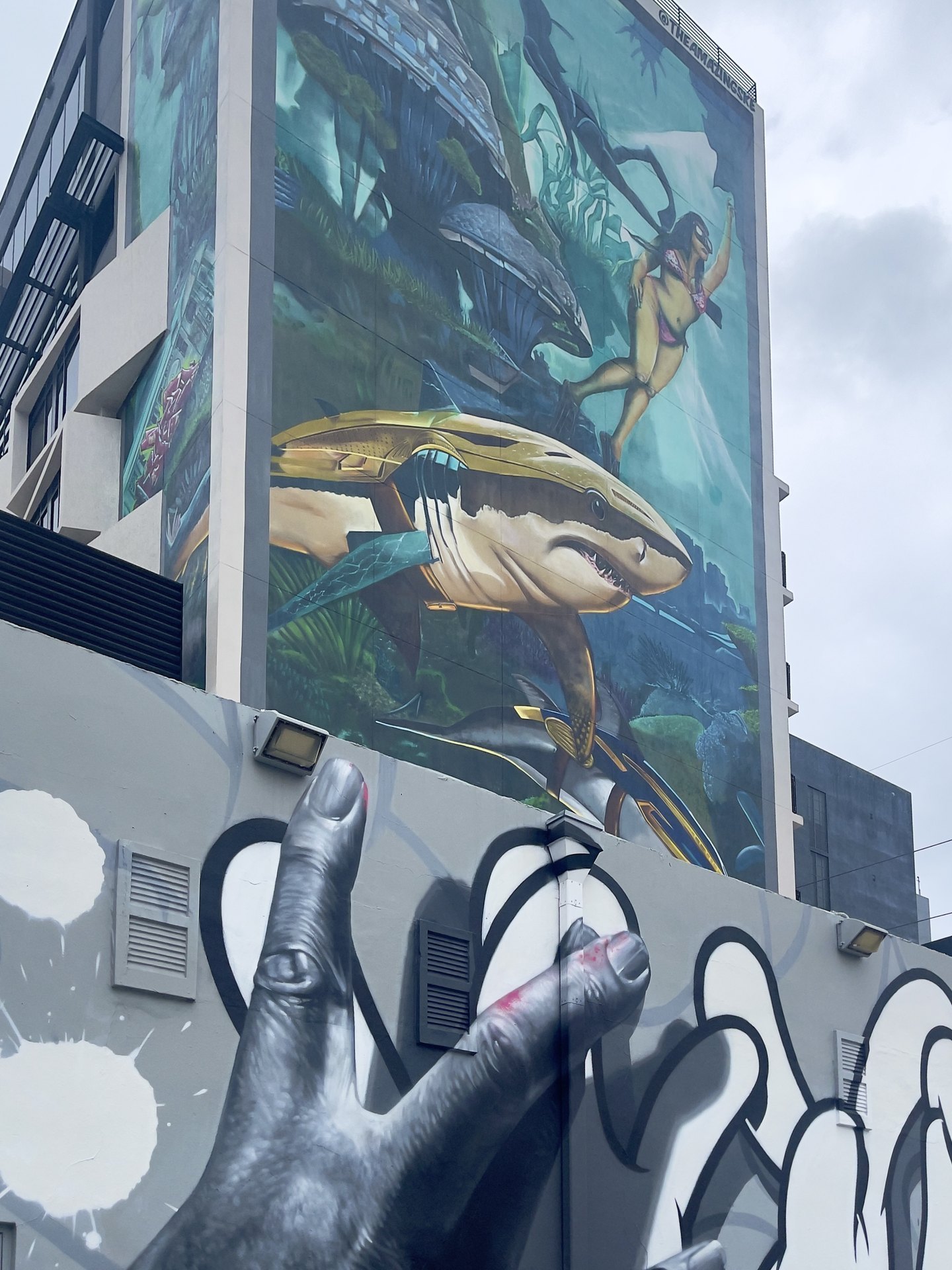
The art that filled the empty warehouses has also drawn new building, and Wynwood is growing upwards. Low painted warehouses now stand beside new apartment blocks, and some of the newest walls are on the towers themselves: a shark several storeys high swims up the flank of one, above a giant painted hand, and on another new block a whole sea of fish, divers and figures in turquoise climbs from the street to the roof, so the tower wears the mural like a skin. Murals here are repainted often, so the district you find will not be quite the one I found, and that is the point.
 图片来源© ULTIMATE International Media
 图片来源© ULTIMATE International Media
Golden hour
Stay until the sun goes down and Wynwood changes key. The light turns to honey, then to rose, then to a purple that settles over the warehouses like velvet. The colours that shouted all afternoon begin to hum instead, the music drifts out of the bars, and the giant faces on the walls take on the look of people at the end of a long, happy day.
How to walk it
Walk early, while the light is soft and the pavements are quiet; by midday the sun is fierce. Come back on the second Saturday of the month for the Art Walk, when the galleries stay open into the evening.
Wynwood was built to make clothes. Now it dresses the city instead, in turquoise and tangerine, in gold and rose, and it does so for everyone who walks past. That is the quiet genius of street art: it gives its best work away to strangers, every day, and asks only that you look up.
My advice: begin at the Wynwood Walls, then wander NW 2nd Avenue and the side streets with no plan at all, stop at the Museum of Graffiti for the history, and finish as the light turns gold, when every wall seems to warm up by a degree.
Further reading
Jelena Bibić’s work: jelenabibic.com ↗