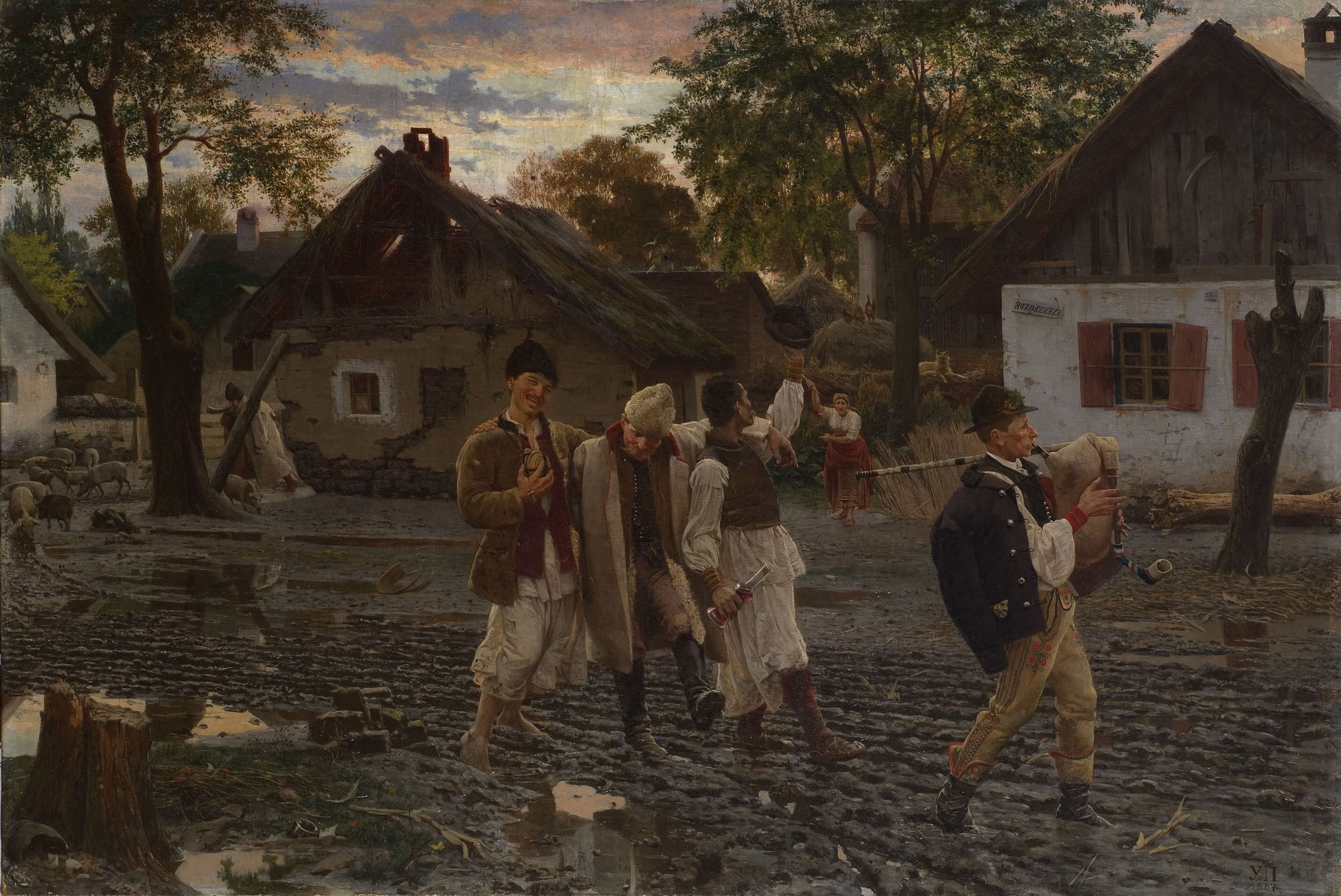
图片来源Paja Jovanović, Public domain
 图片来源Sadko, CC BY-SA 4.0
 图片来源Sadko, CC BY-SA 4.0
 图片来源Muzej rudničko-takovskog kraja u Gornjem Milanovcu, CC BY-SA 4.0
 图片来源Paja Jovanović, Public domain
宏大历史画的大师,《The Migration of the Serbs》的作者,1859 年生于 Vršac。
Pavle “Paja” Jovanović was the son of the photographer Stevan Jovanović, so he grew up among people who made pictures for a living. He studied at the Academy of Fine Arts in Vienna from 1877 under Christian Griepenkerl, then in the master class of the orientalist Leopold Karl Müller, and summer journeys through the Balkans filled his sketchbooks with faces and costume.
Those journeys became the genre scenes that made his name across Europe: The Wounded Montenegrin, an Academy prize in 1881, and The Cockfight, a gold medal in Vienna in 1898. The Migration of the Serbs followed in 1896, and a gold medal in Paris in 1900. He spent most of his long life in Vienna, yet left Belgrade his rooms and belongings, kept by the Belgrade City Museum as if he had just stepped out.