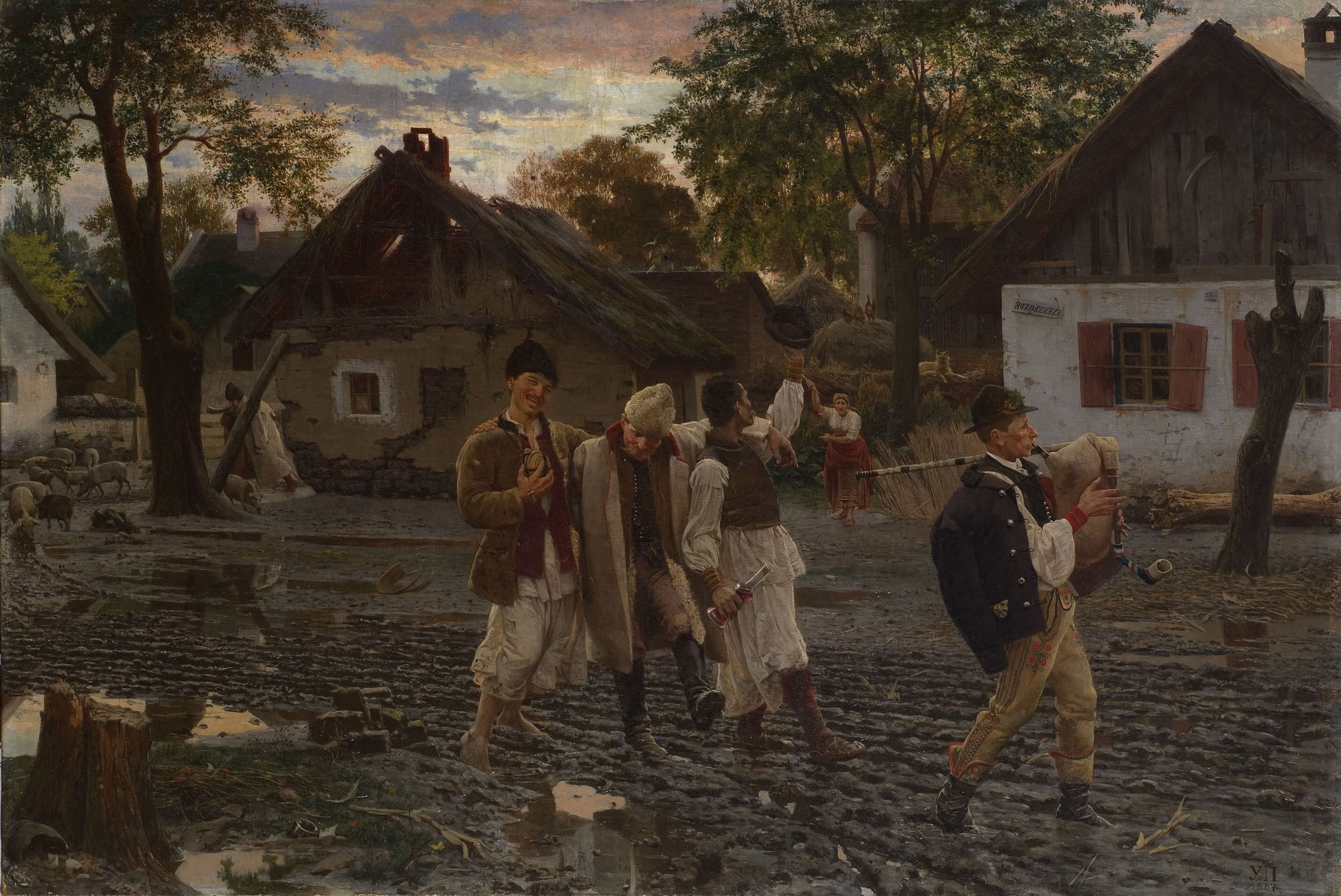
Автор фотоPaja Jovanović, Public domain
 Автор фотоSadko, CC BY-SA 4.0
 Автор фотоSadko, CC BY-SA 4.0
 Автор фотоMuzej rudničko-takovskog kraja u Gornjem Milanovcu, CC BY-SA 4.0
 Автор фотоPaja Jovanović, Public domain
Мастер большого исторического полотна, автор «Переселения сербов», родился в Вршаце в 1859 году.
Pavle “Paja” Jovanović was the son of the photographer Stevan Jovanović, so he grew up among people who made pictures for a living. He studied at the Academy of Fine Arts in Vienna from 1877 under Christian Griepenkerl, then in the master class of the orientalist Leopold Karl Müller, and summer journeys through the Balkans filled his sketchbooks with faces and costume.
Those journeys became the genre scenes that made his name across Europe: The Wounded Montenegrin, an Academy prize in 1881, and The Cockfight, a gold medal in Vienna in 1898. The Migration of the Serbs followed in 1896, and a gold medal in Paris in 1900. He spent most of his long life in Vienna, yet left Belgrade his rooms and belongings, kept by the Belgrade City Museum as if he had just stepped out.