Athens taught me to look up. I once wrote of the Acropolis and its “marble columns kissed by time, / Each stone a verse, a silent rhyme”, and on an autumn afternoon in 2024 the rock was still reciting: the Parthenon holding the late sun like a lantern over the city, the old centre humming below it with café chairs scraping on stone, scooters threading the lanes and a musician somewhere out of sight.
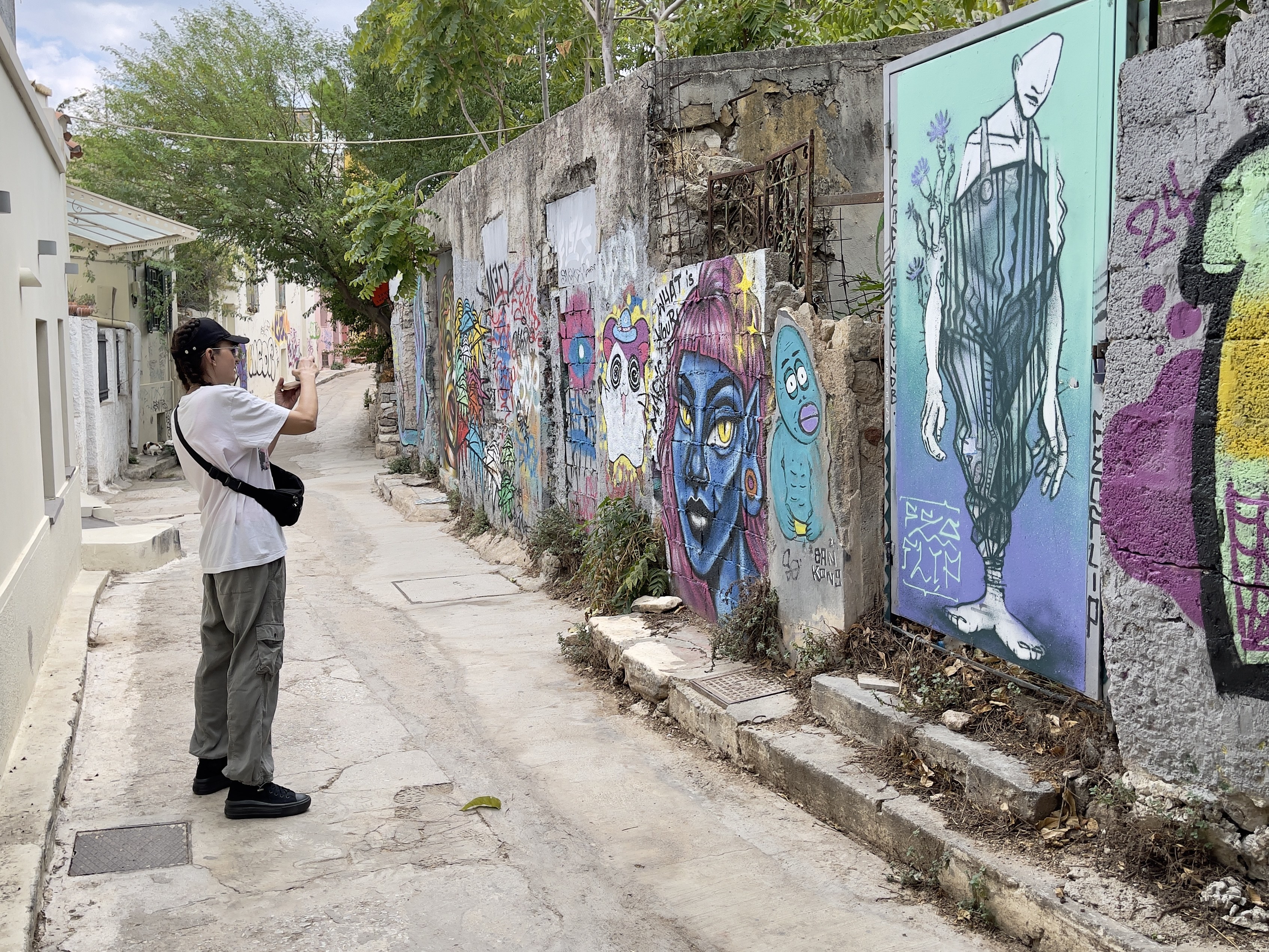
But I had come for the other Athens. Not the verse in marble, the verse in paint: the walls a few streets below the temples where the city writes in spray can and house paint, loud, quick and alive. I filmed it as I walked.
Gods on the old stone walls
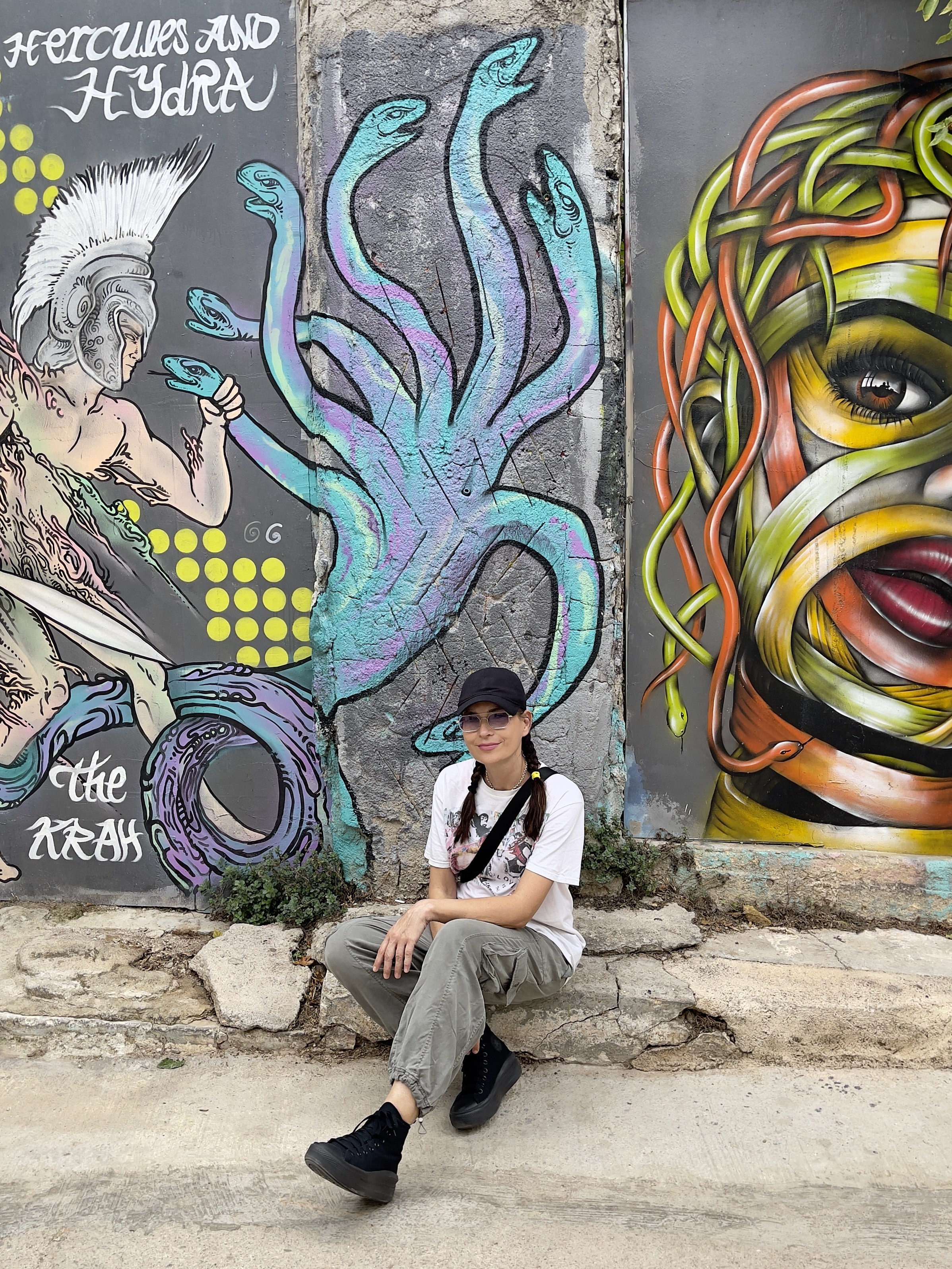
The first wall that stopped me was in upper Plaka, on the lanes beneath the north slope of the Acropolis. A hero in a crested helmet, the crest bristling like a punk’s mohawk, wrestles a serpent with far too many heads, under the painted title “Hercules and Hydra”, signed “the Krah”. I saw the colour before the story: a cold, poisonous turquoise coiling over warm, crumbling stone, the exact colour a monster should be.
Beside it, a face wrapped in snakes stares out of a doorway in gold and red, a Medusa for our century, a short climb from the temples of the gods who gave her that hair. I love that conversation. Athens never stopped painting its myths. It simply moved them from the vase to the wall.
 Автор фото© ULTIMATE International Media
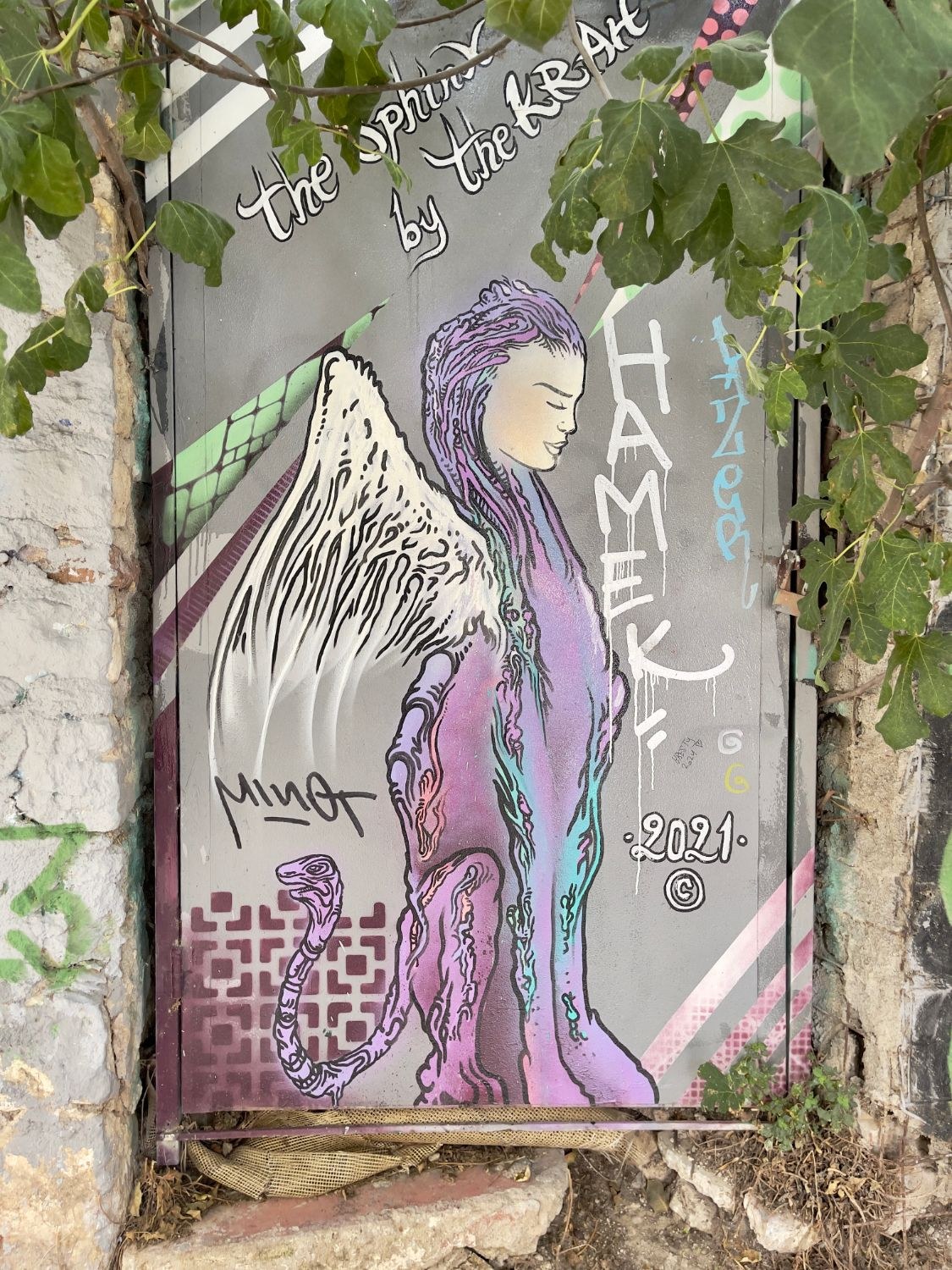
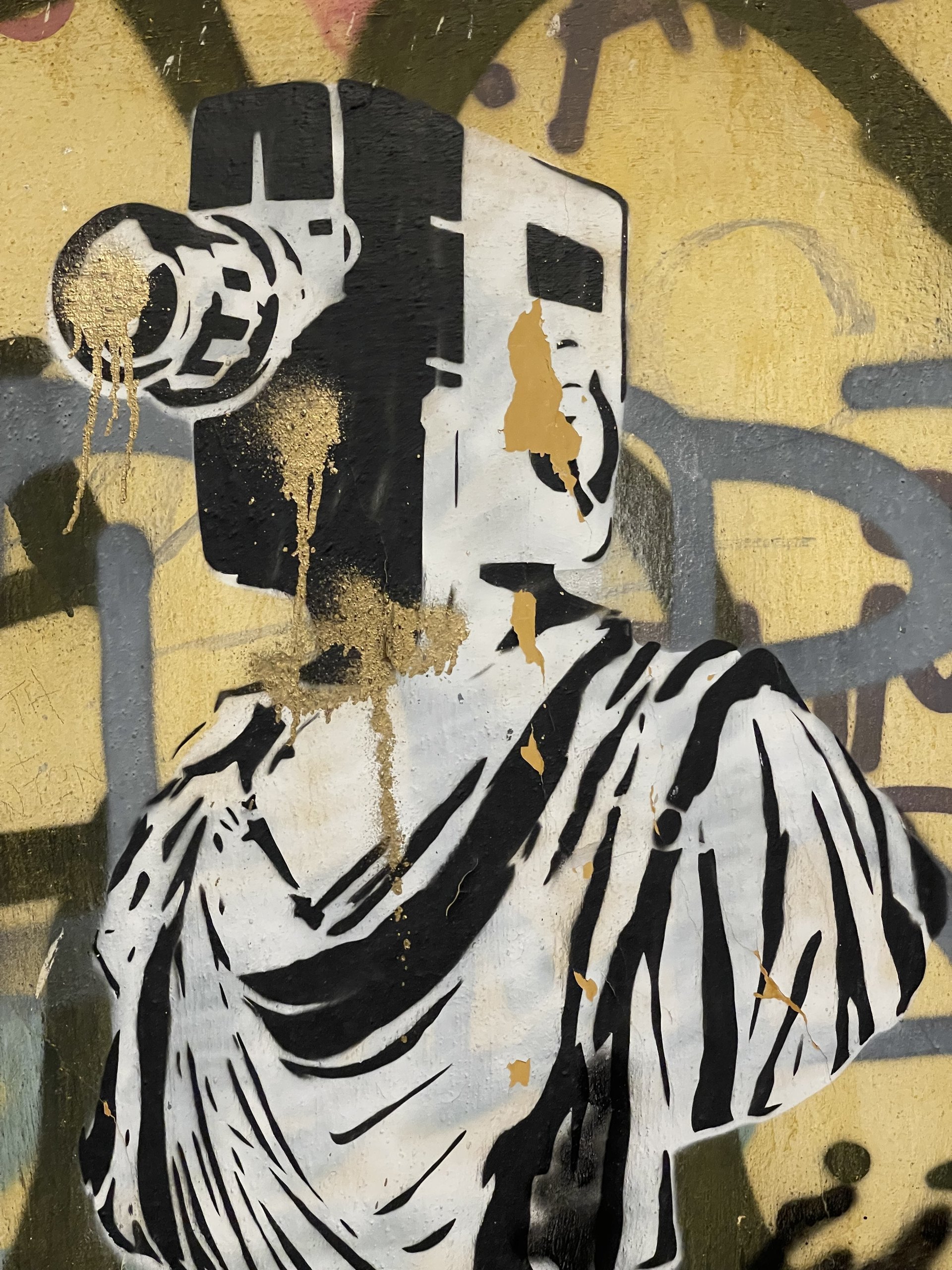
Further down, on a door half hidden by vines, a winged sphinx in lilac and violet carries the same signature and the date 2021. Lilac on a weathered door should look sweet. Instead it looks ancient and faintly dangerous, which is precisely how a sphinx should look. Nearby, a stencilled figure in a striped tunic has an old cine camera for a head: a small piece that made me smile, because good street art does not need size. It needs the right wall.
 Автор фото© ULTIMATE International Media
 Автор фото© ULTIMATE International Media
Psyrri, where the shutters sing
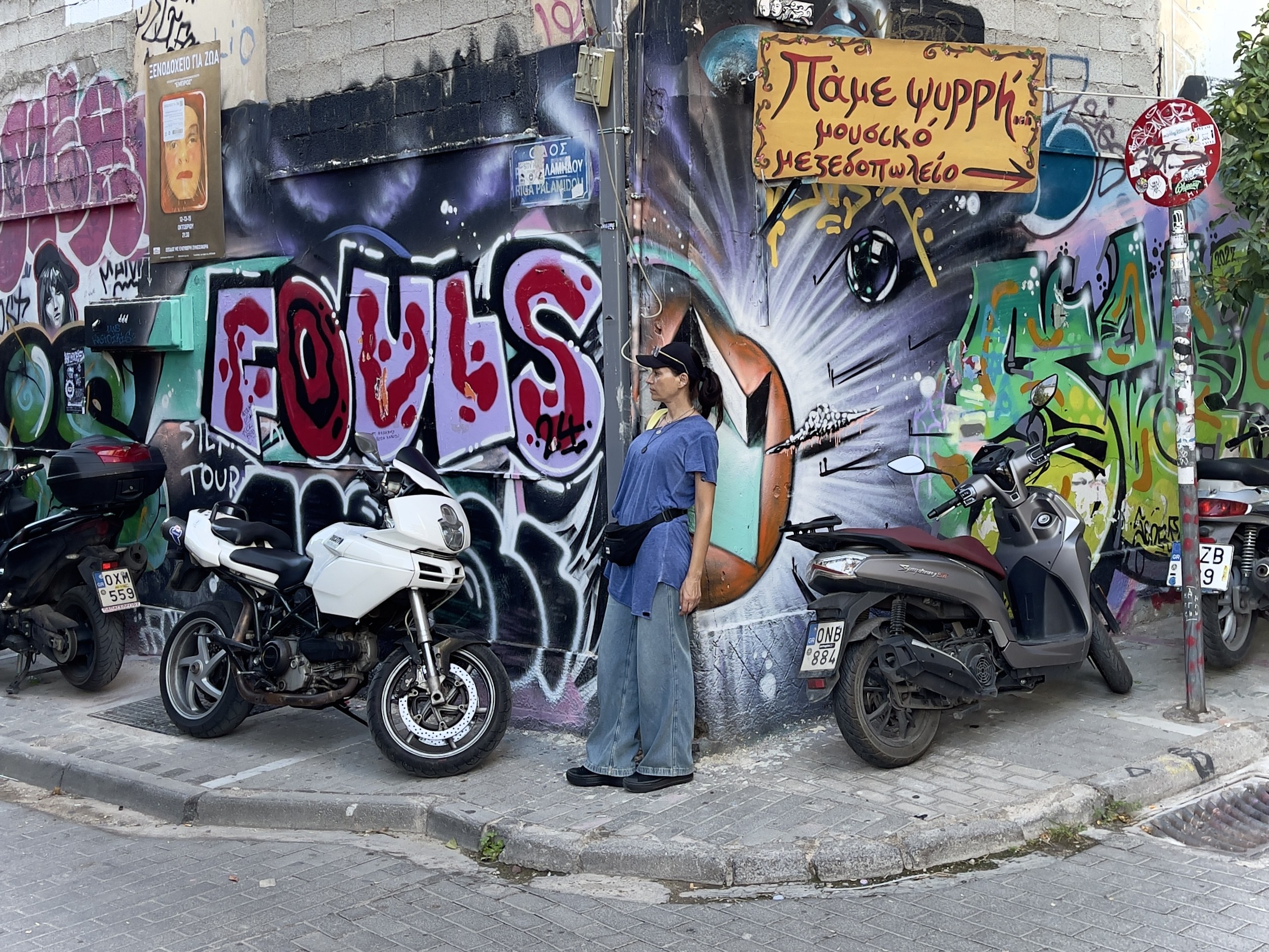
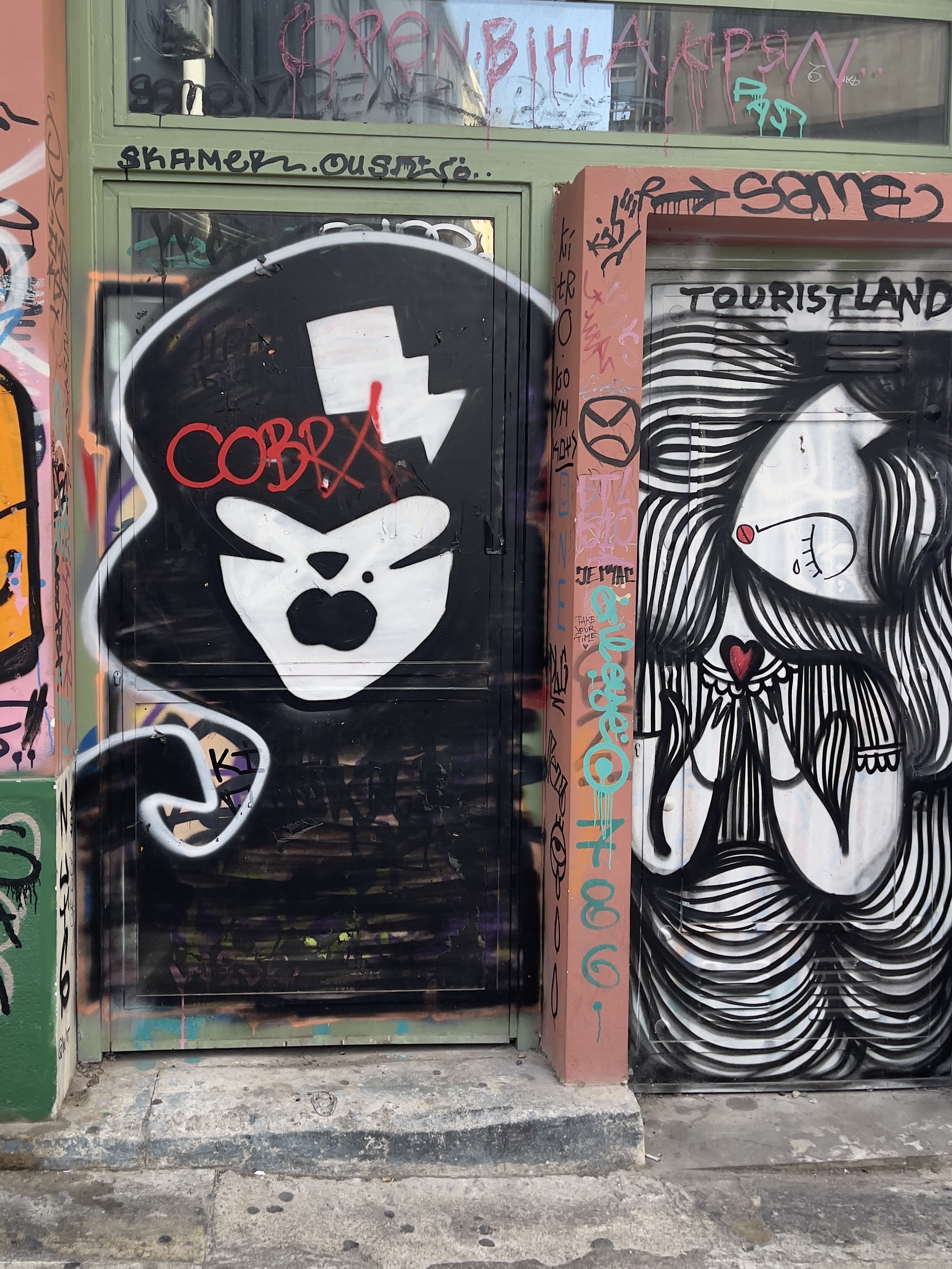
Psyrri, just north of Monastiraki, is the heart of it. This was once the city’s hub of commerce and craftsmanship, and although most of the old workshops have gone, craftspeople are moving back in to make leather sandals. Today its narrow streets of tavernas and bars are lined with painted shutters, and the walls change with the seasons, one coat over the last, like a diary nobody ever finishes.
 Автор фото© ULTIMATE International Media
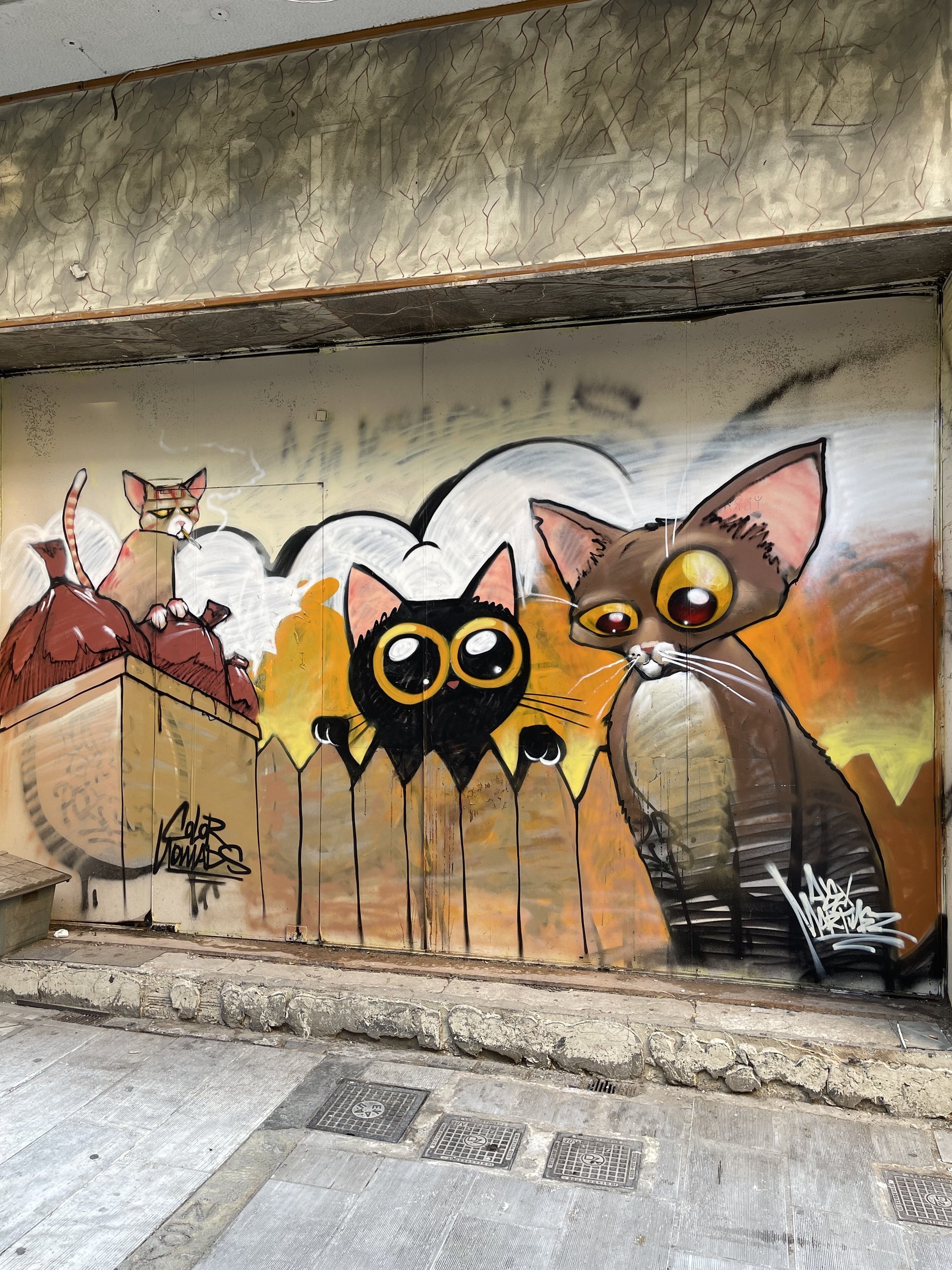
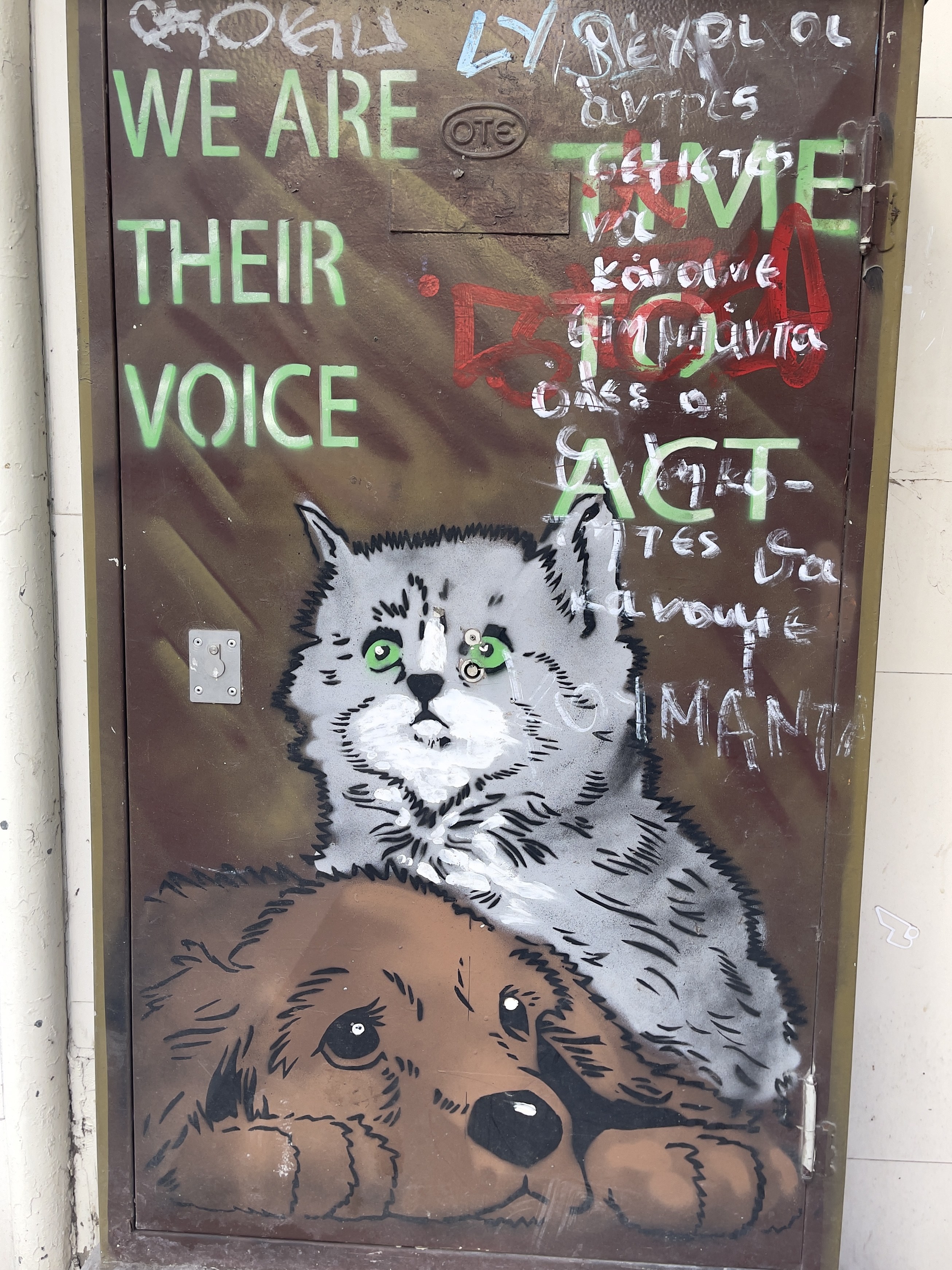
On one shopfront three cartoon cats peer over a painted fence, their eyes ringed in yellow like headlamps, one of them perched on a heap of rubbish sacks. The wall is signed “Color Nomads” and “Alex Martinez”. I have a weakness for street cats, and so, it seems, does Athens. On a utility box I found a stencilled kitten sitting on a sleepy puppy beneath the words “We are their voice”: the city’s strays have friends with spray cans.
 Автор фото© ULTIMATE International Media
 Автор фото© ULTIMATE International Media
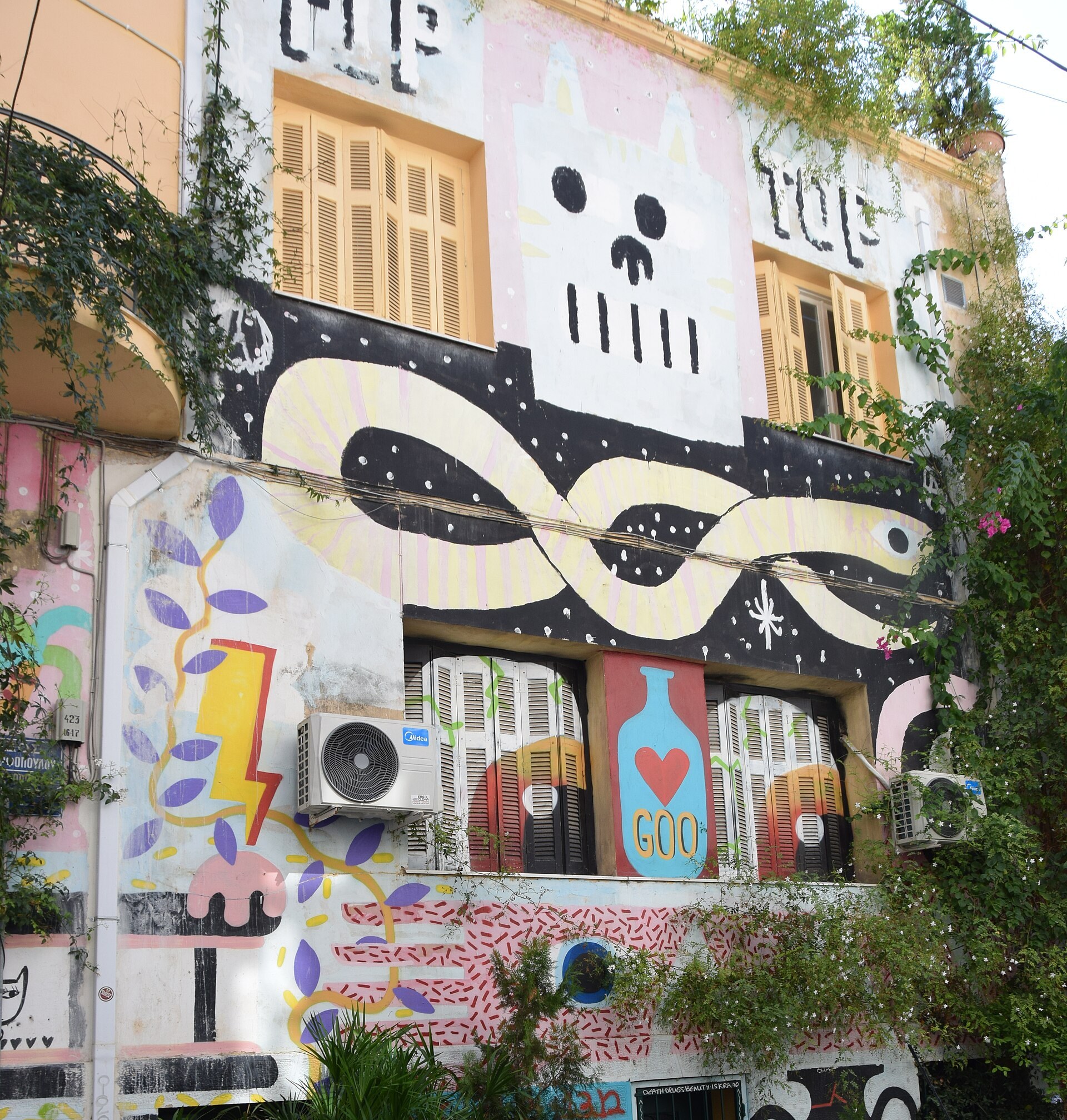
On Evmorfopoulou Street a whole house has been given over to the painters. A grinning skull sits between the shuttered windows, a fat black-and-cream band coils across the façade like a rope of liquorice, and a red bottle wears a heart on its label, all of it in sugared pinks and creams, half swallowed by green vines. It is a building dressed for a party that never quite ends.
 Автор фотоJean Housen, CC BY-SA 4.0, via Wikimedia Commons
When the building becomes the canvas
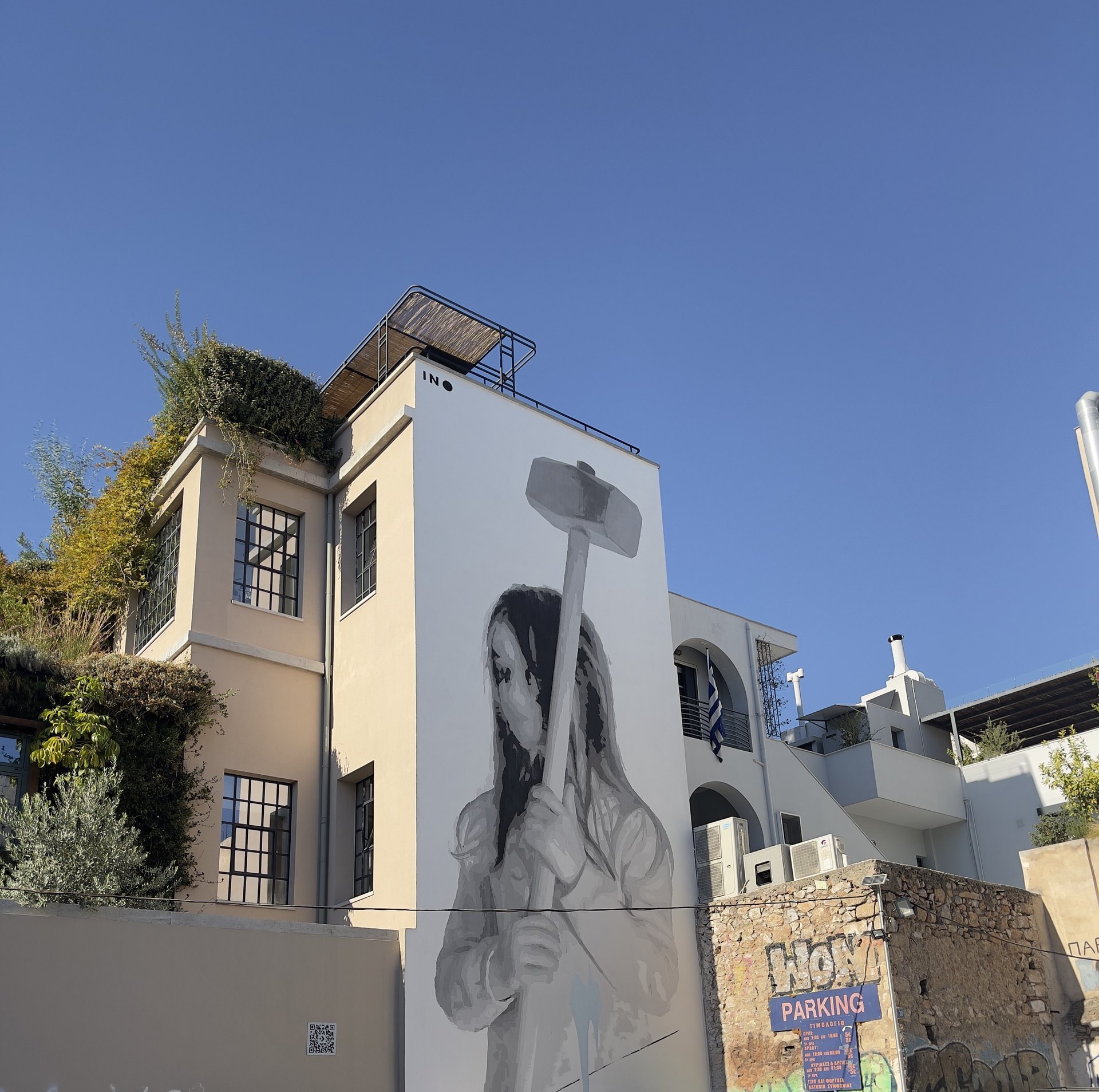
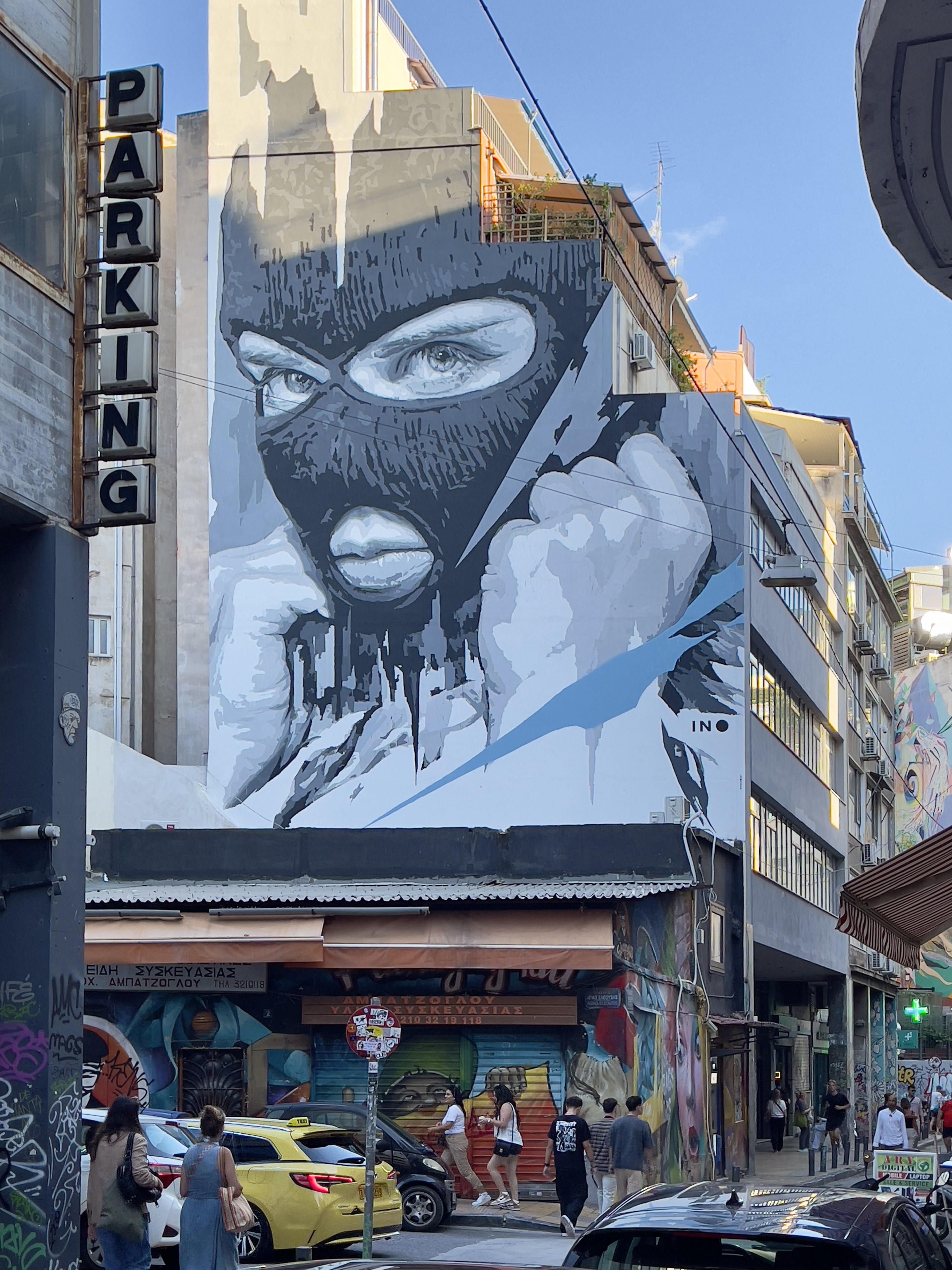
West of Psyrri, towards Kerameikos, the scale changes, and scale changes everything. On the white gable of a house above a car park, a girl in a long dress holds a sledgehammer almost as tall as she is, painted in soft greys and signed “INO”. On paper she would be a drawing. At the height of a house she becomes an architectural fact, quiet and immovable against a hard blue sky.
 Автор фото© ULTIMATE International Media
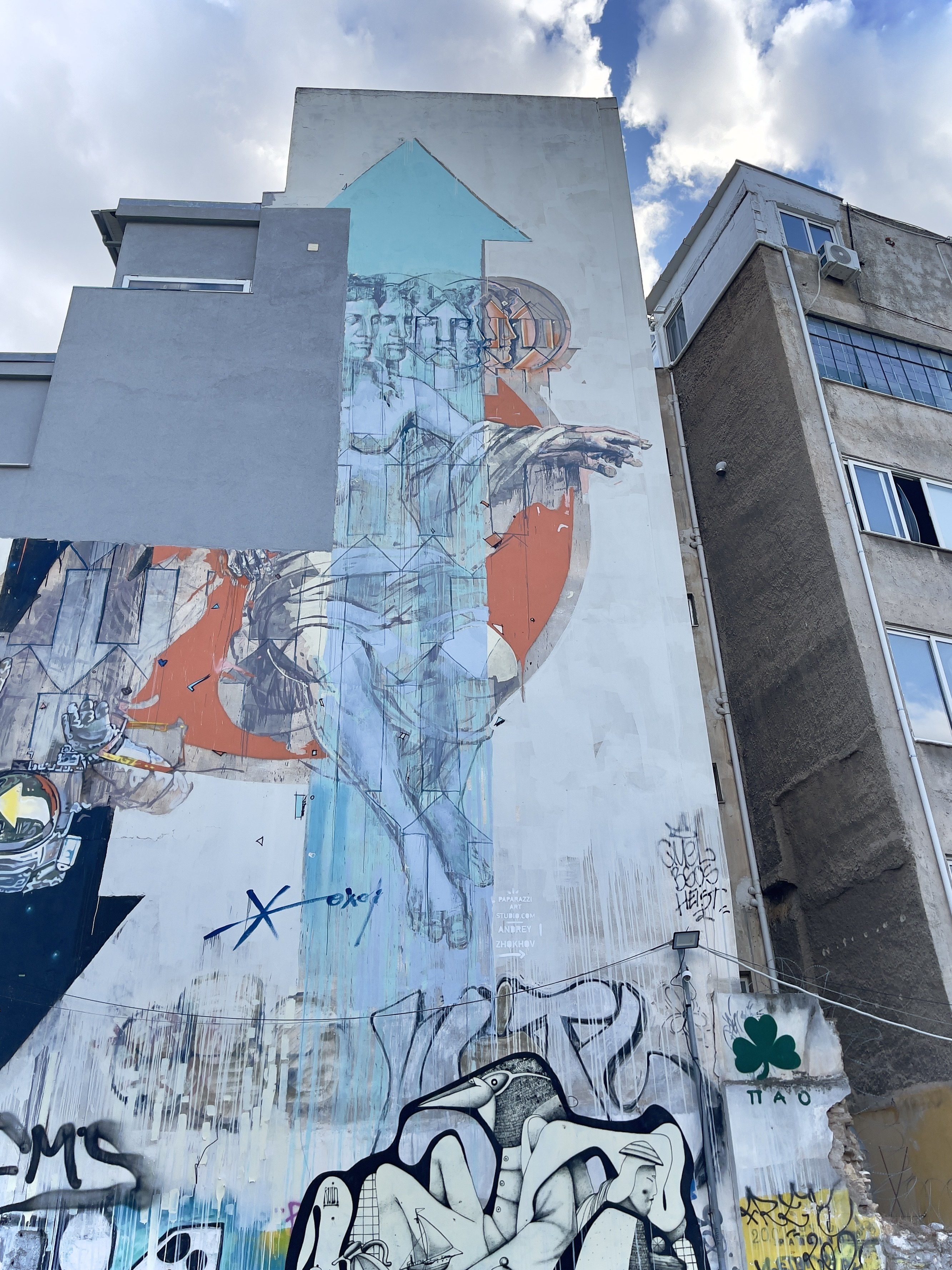
INO’s hand turns up again and again in the centre: a woman in a black balaclava across one gable, a vast line drawing of figures in black and white filling another wall above the traffic. INO works almost without colour, and on streets this busy that restraint shouts louder than any neon. Elsewhere a pair of praying hands, drawn in fine white lines, climbs the side of an apartment block, and an astronaut tumbles past a giant blue arrow, weightless above the rooftops.
 Автор фото© ULTIMATE International Media
 Автор фото© ULTIMATE International Media
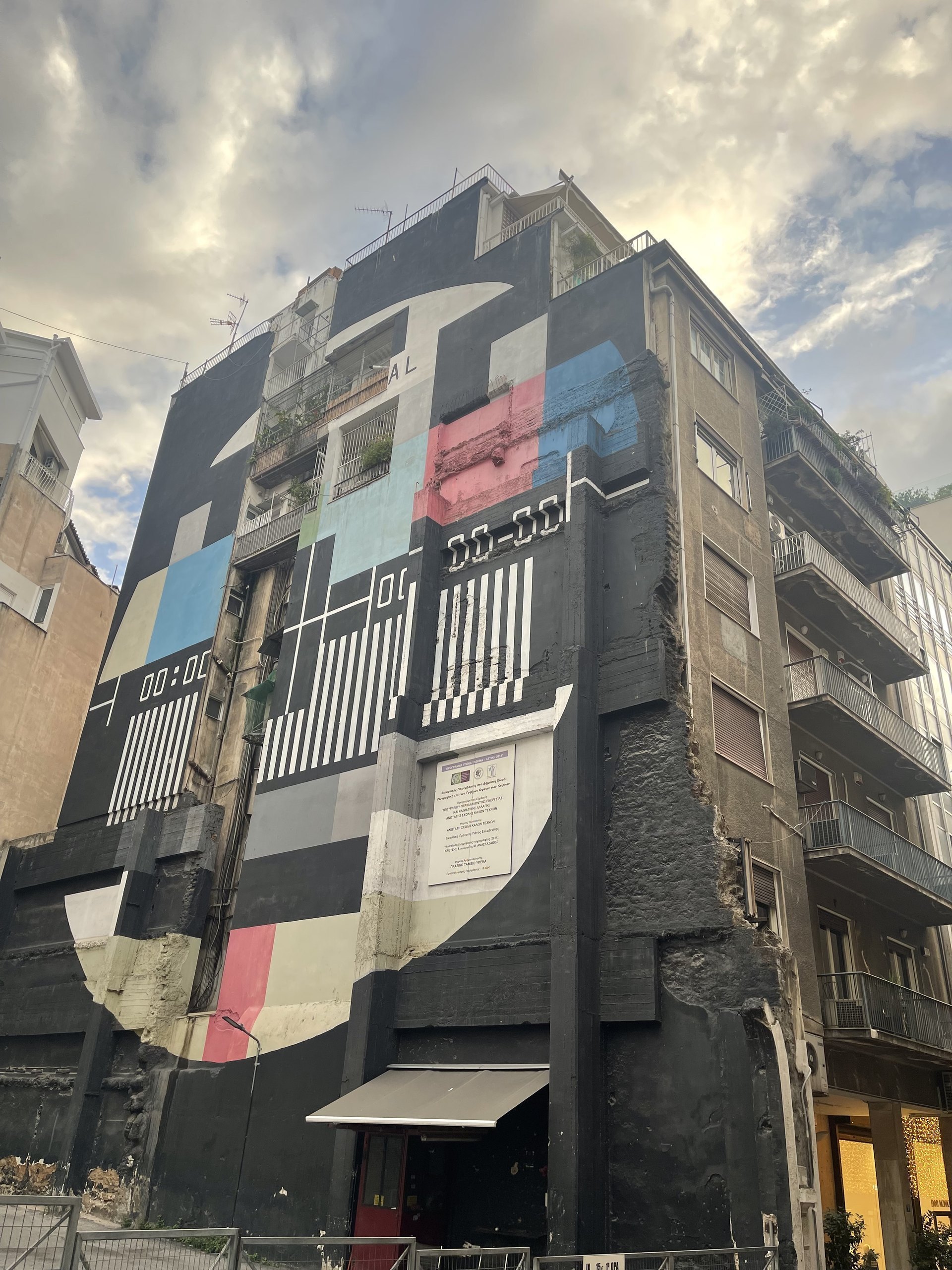
Closer to Syntagma, a whole building front has been painted in black and white blocks with soft pinks and blues, so that the building itself becomes the canvas. My father was an architect, and I grew up watching him draw buildings by hand. I think he would have smiled at this one: a façade that has stopped pretending to be only a wall.
 Автор фото© ULTIMATE International Media
Further west, in Metaxourgeio, a young woman sits reading across the side of a multistorey block of flats: “So many books, so little time”, painted by SimpleG for the Petit Paris d’Athènes festival in 2019. And the City of Athens now commissions walls of its own: in 2022 eight artists covered the walls of the Panellinios gymnastics club on Evelpidon Street with what the city called its largest mural ever, 1,100 square metres of sporting ideals.
When the light goes
Then the day begins to leave. For a while the backstreets are bathed in a gilded, golden light, every turquoise serpent and lilac sphinx glowing as if lit from inside. Then the gold drains away, the dusk turns purple, and Psyrri slips it on like a satin gown.
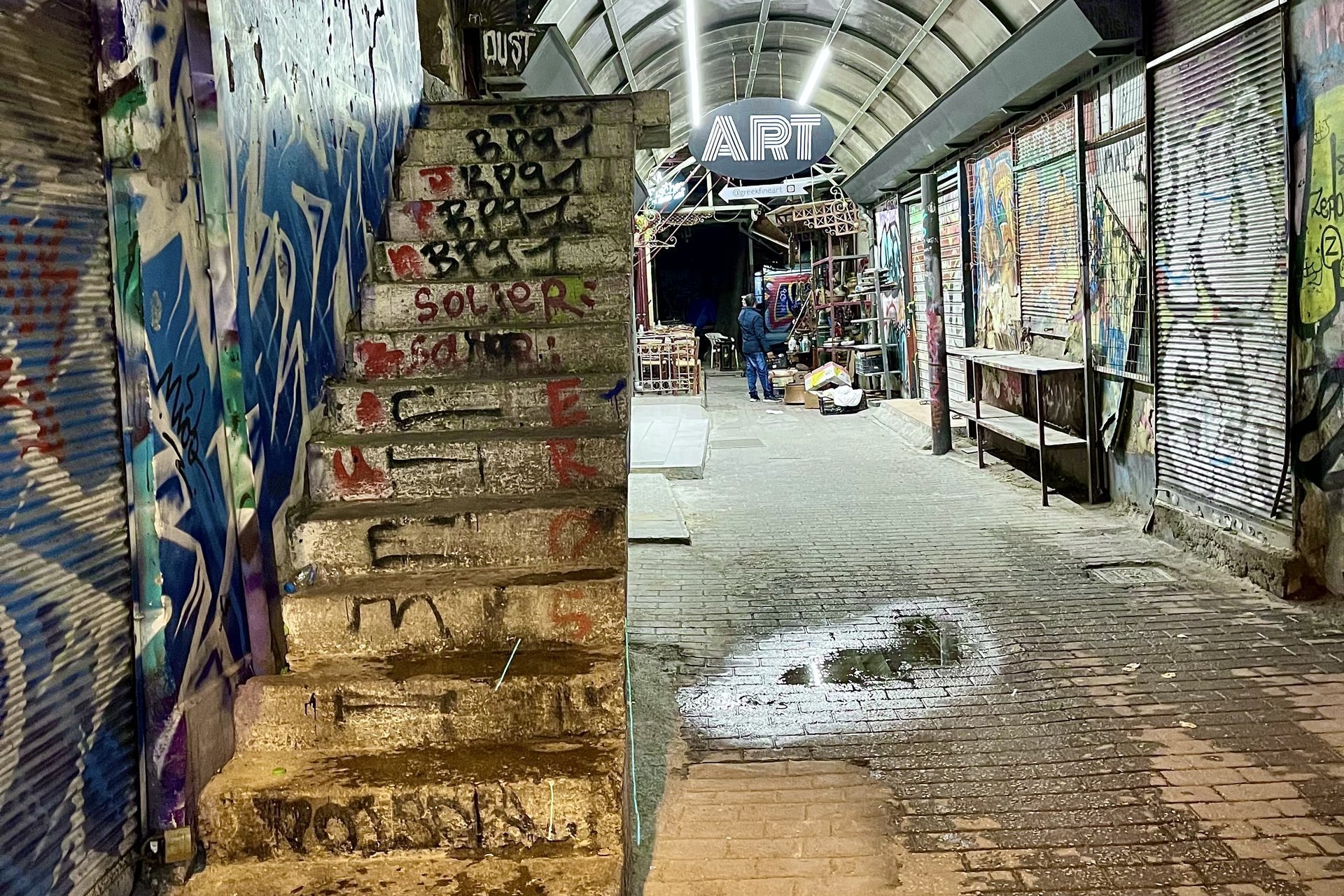
Night changes the walls completely. The shops roll down their painted shutters and, all at once, the gallery is complete: a row of faces, cats and letters lit by street lamps and the thrumming glow of a neon sign. Voices spill from the tavernas, glasses chime, a guitar starts up two lanes away. It is a frantic, vibrant symphony, played out in happy disarray, and the paint is part of the music.
Between Monastiraki and Thiseio a covered passage is painted from the steps to the shutters. By day you might hurry through. At night, under its arched glass roof, it becomes a stage set, and you are the only actor on it.
 Автор фото© ULTIMATE International Media
Colour for the passer-by
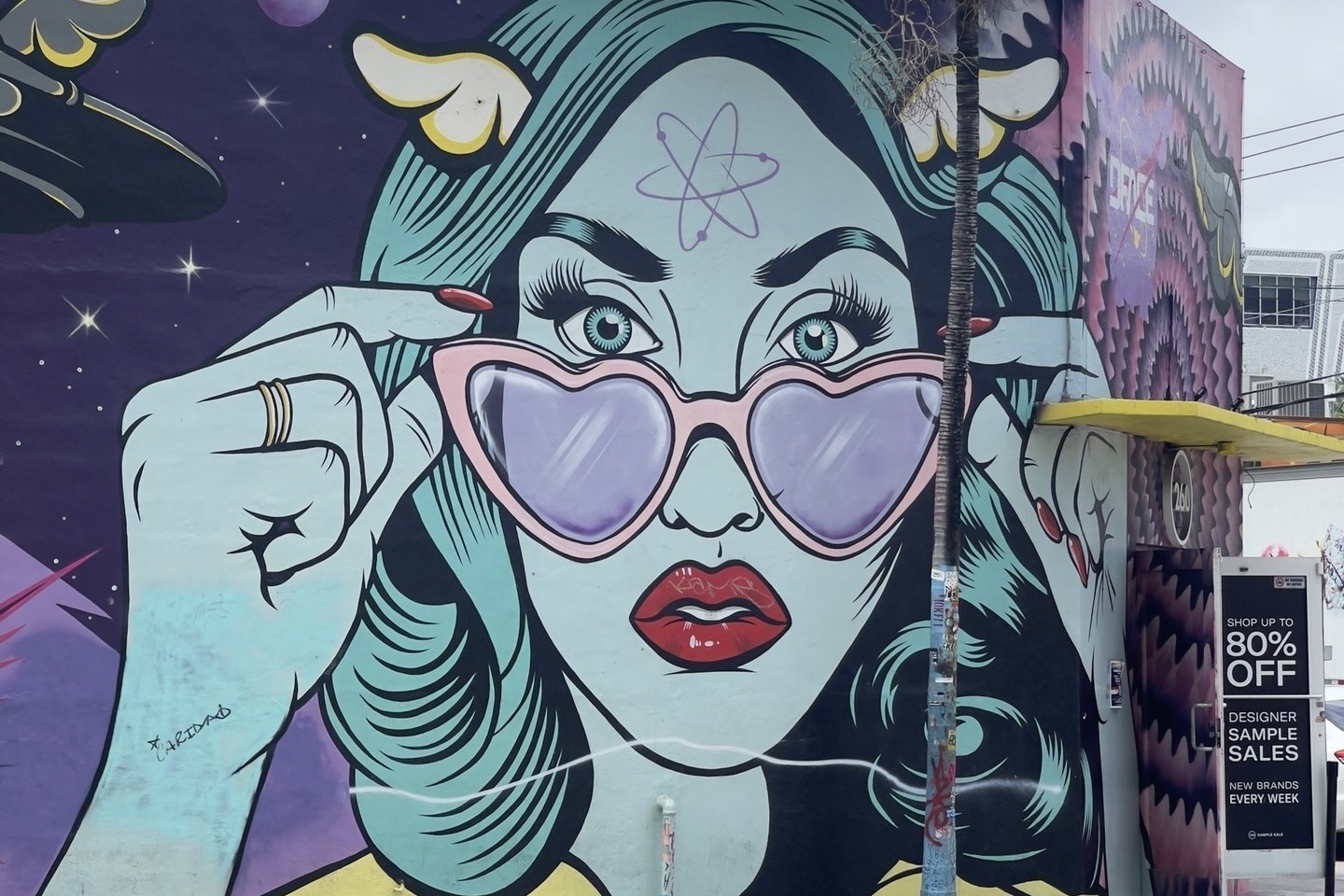
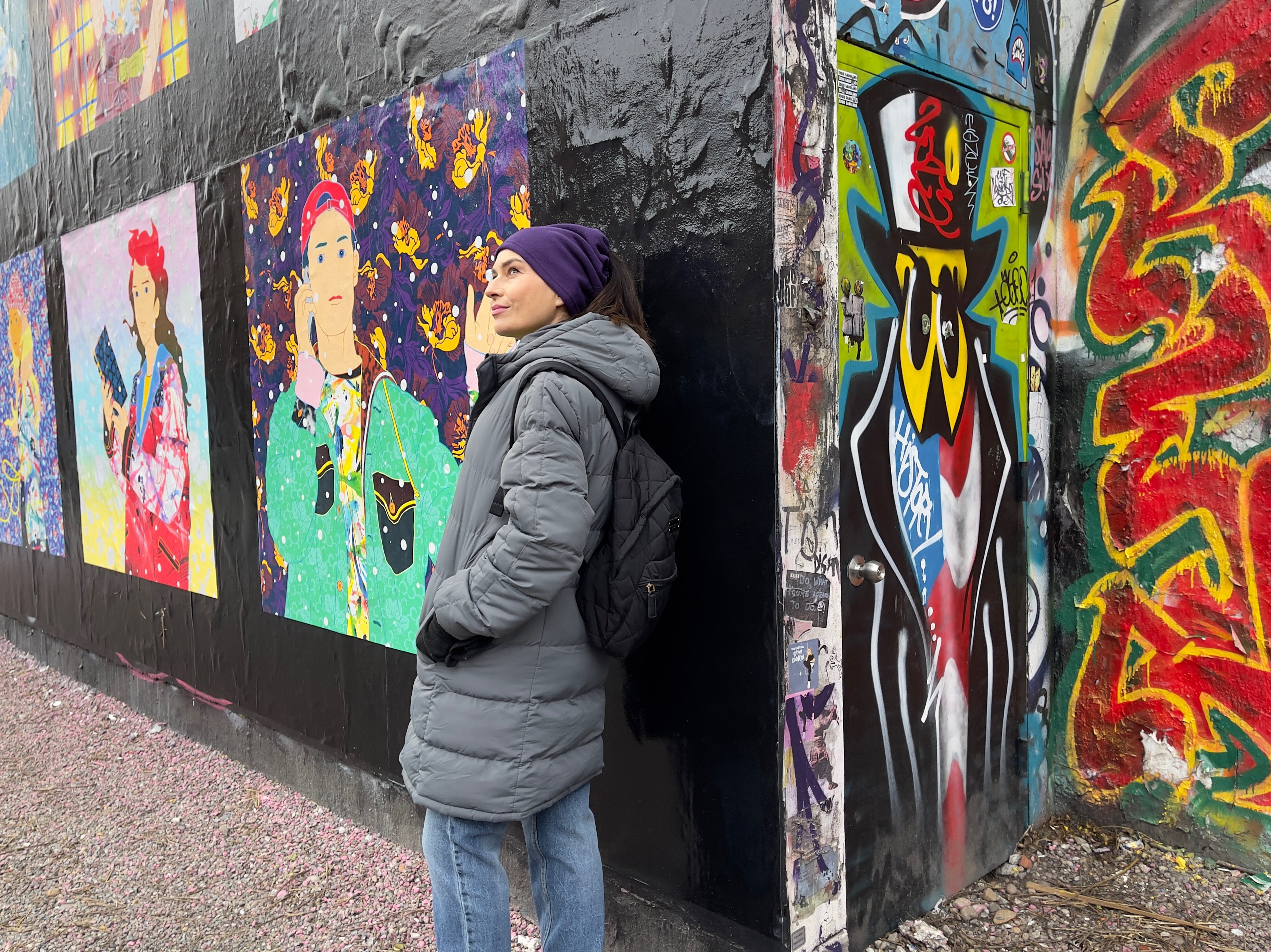
Think about the people who never chose to look at art that day: the woman hurrying to the metro, the delivery rider waiting at the lights, the boy with his headphones on. A gallery asks you to come in. A mural comes out into the street to meet you. A grey wall asks nothing of anyone; a painted one gives something away for free, every hour of the day and night. I could not resist joining in: my hands raised against a grey elephant as wide as a house front, my mouth open beside a wide-eyed girl twice my height.
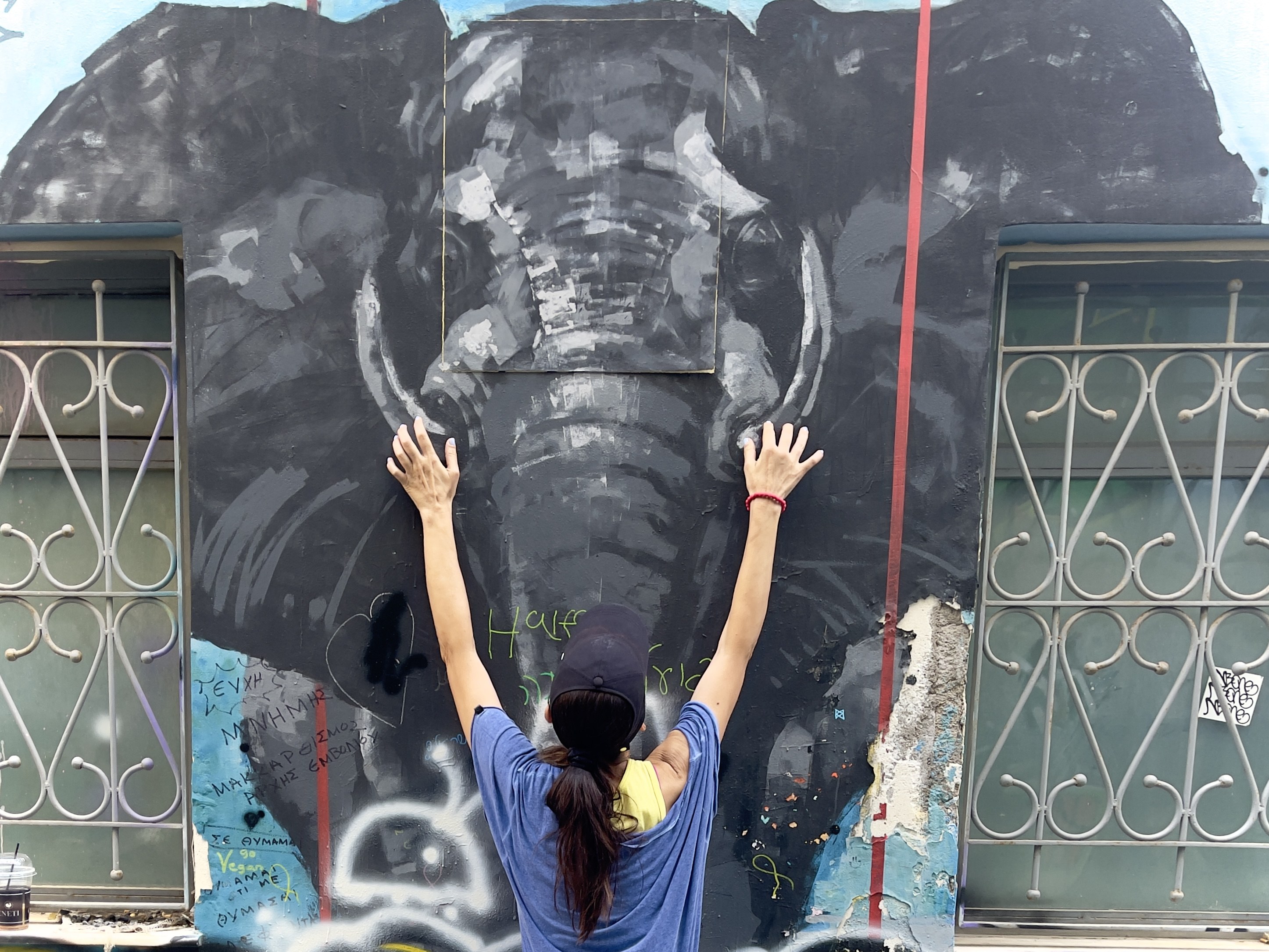 Автор фото© ULTIMATE International Media
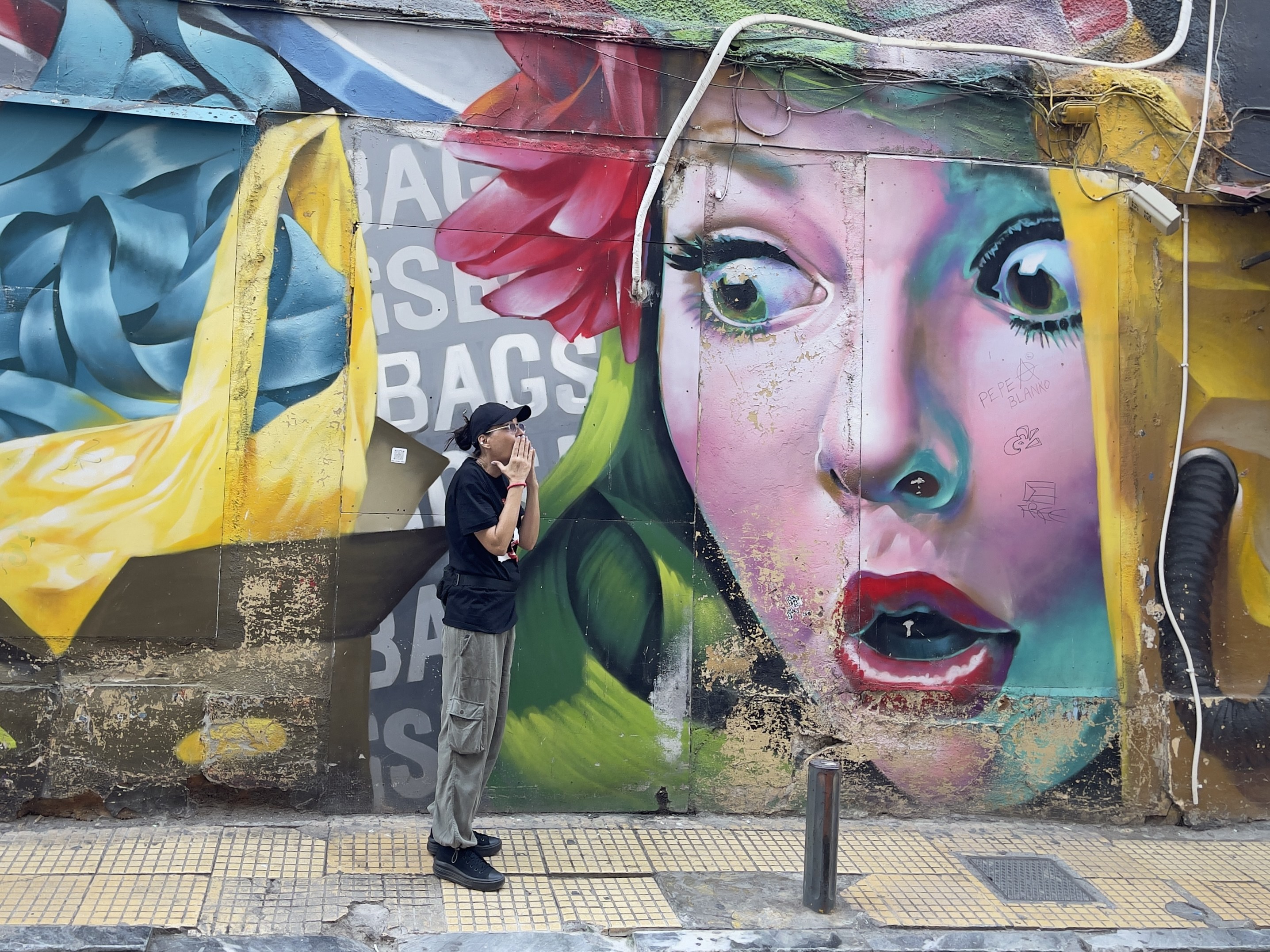 Автор фото© ULTIMATE International Media
After a winter walk in New York I once wrote that street art is “a transformative force”, and Athens proves it again. You slow down. You point. You show the stranger beside you. A street that was something to get through becomes somewhere to be. And the walls tell you what a neighbourhood cares about: its myths, its cats, its sense of humour, the faces it wants to remember.
I trained in mosaic and stained glass, and the feeling a good mural gives me is the one I have when the sun comes through a coloured window. The colour is no longer on the glass, or on the wall. It is in the street, on your face, and for a moment it belongs to you.
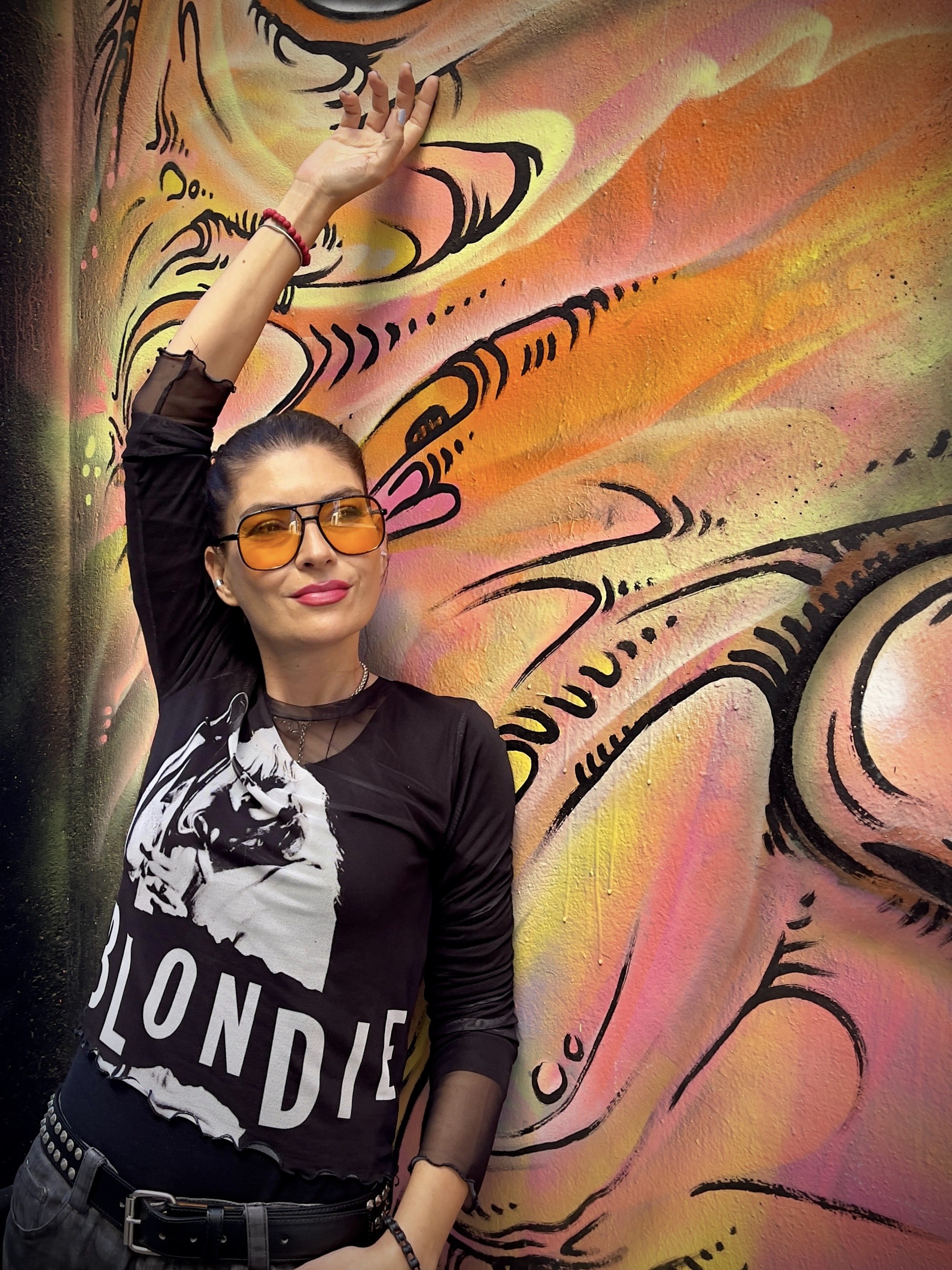 Автор фото© ULTIMATE International Media
From the wall to the shop window
Street art spent its youth being painted over. Now the brands come looking for it. In 2024 Coca-Cola, a company famous for guarding its logo, built a campaign out of the unofficial, hand-painted versions that shopkeepers around the world had made of it, which made me think of every painted shutter in Psyrri. The artist KAWS has made collection after collection with Uniqlo since 2016, and in 2025 the company named him its first Artist in Residence.
I have no quarrel with any of that, as long as the artist keeps the voice. A brand can buy a wall. It cannot buy the nerve it took to paint the first one, and in Athens you can still find that nerve, signed and dated, on an old door in Plaka.
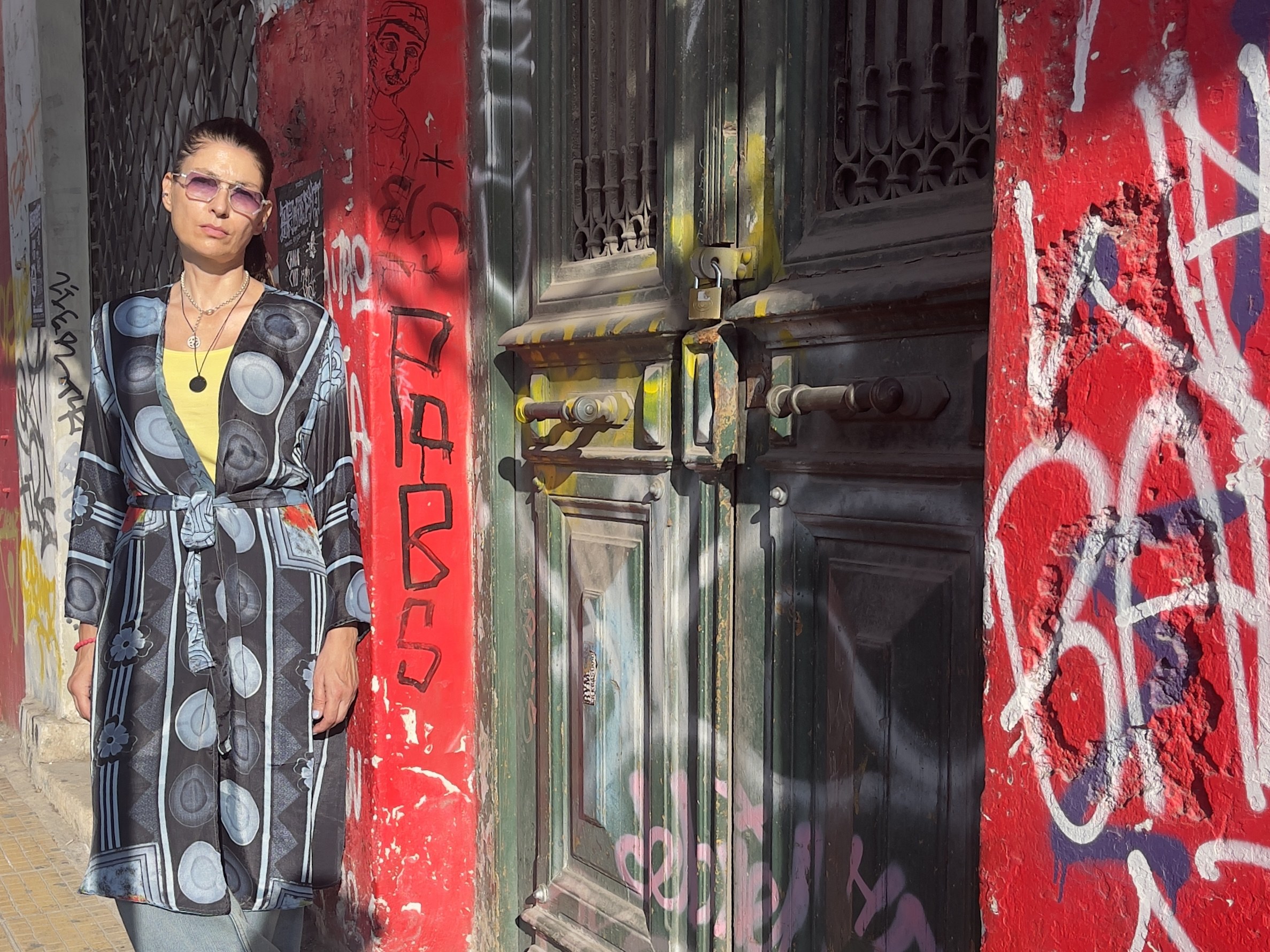 Автор фото© ULTIMATE International Media
 Автор фото© ULTIMATE International Media
How to walk it
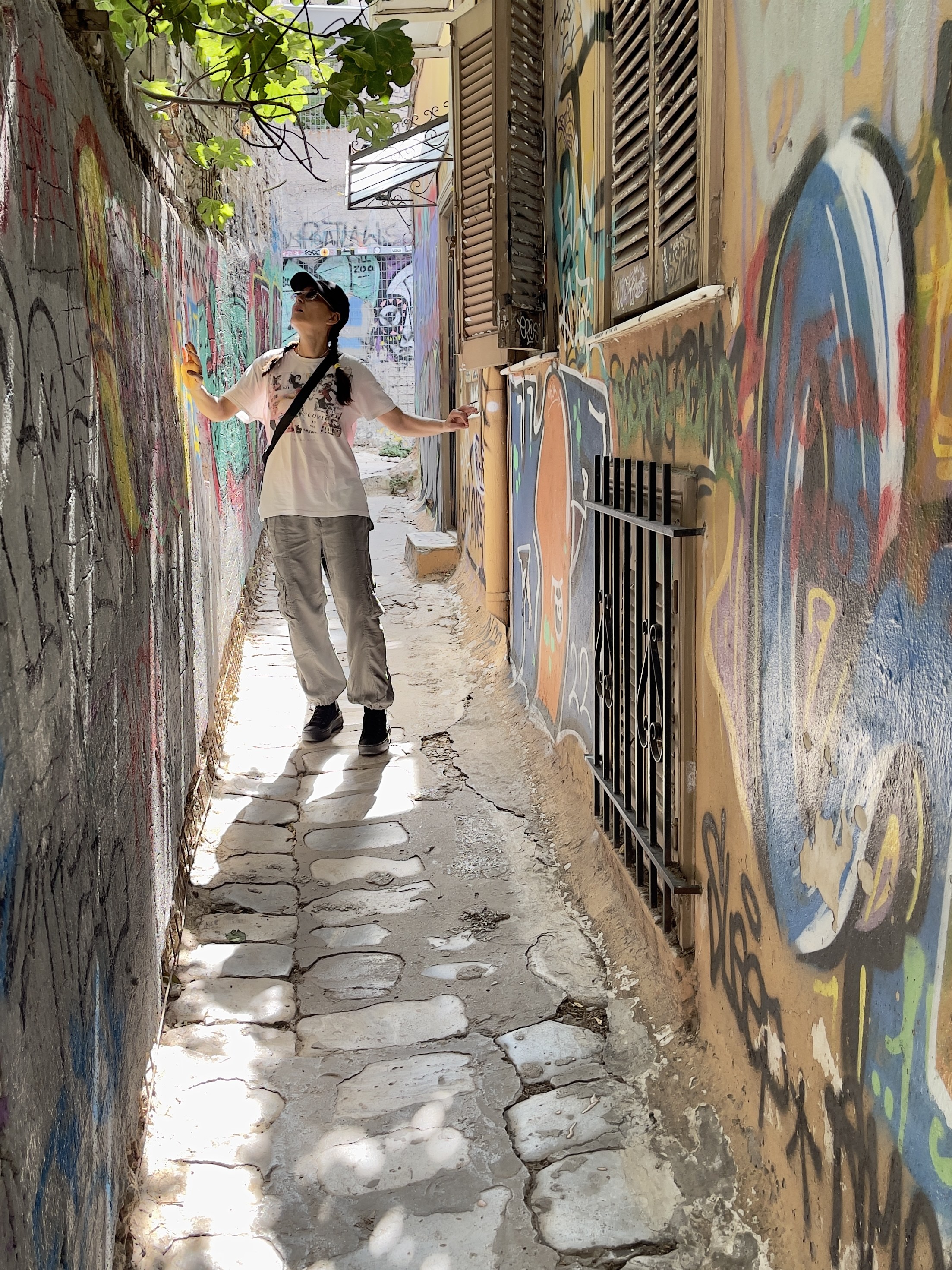
Street art is the least permanent art in any city. Walls are repainted, shutters change hands and new pieces appear over old ones, so treat any list, this one included, as a starting point and walk with your eyes open. The late-afternoon light is the most generous: it reaches deep into Psyrri’s narrow streets and warms the turquoise and the gold. Stay on after dark, when the shutters come down and the second gallery opens.
 Автор фото© ULTIMATE International Media
If you would like company, the City of Athens’ own This is Athens programme runs a street-art walk led by volunteer Athenians, through the Historic Centre, Exarchia, Monastiraki, Psyrri and Plaka.
In the same poem I wrote of the “Streets of Plaka, narrow and bright, / Where past and present dance in the night.” I meant the music and the lamplight then. Now I would add the paint. Athens has spent two and a half thousand years telling its stories in stone; its street painters are simply adding the next verse, in colour, at the height of a house, for anyone who happens to walk by. That, to me, is not decoration. It is the city talking to itself, and inviting you to listen.
My advice: start below the Acropolis in upper Plaka, drop down through Monastiraki into Psyrri as the sun gets low, keep walking west towards Kerameikos to see INO at full height, then come back to Psyrri for dinner as the shutters come down, and let the night show you its gallery.
Further reading
Jelena Bibić’s work: jelenabibic.com ↗