 Photo: Uroš Predić, Public domain
 Photo: Uroš Predić, Public domain
 Photo: Uroš Predić, Public domain
 Photo: Uroš Predić, Public domain
 Photo: Uroš Predić, Public domain
 Photo: Orjen, CC BY-SA 3.0
 Photo: Uroš Predić, Public domain
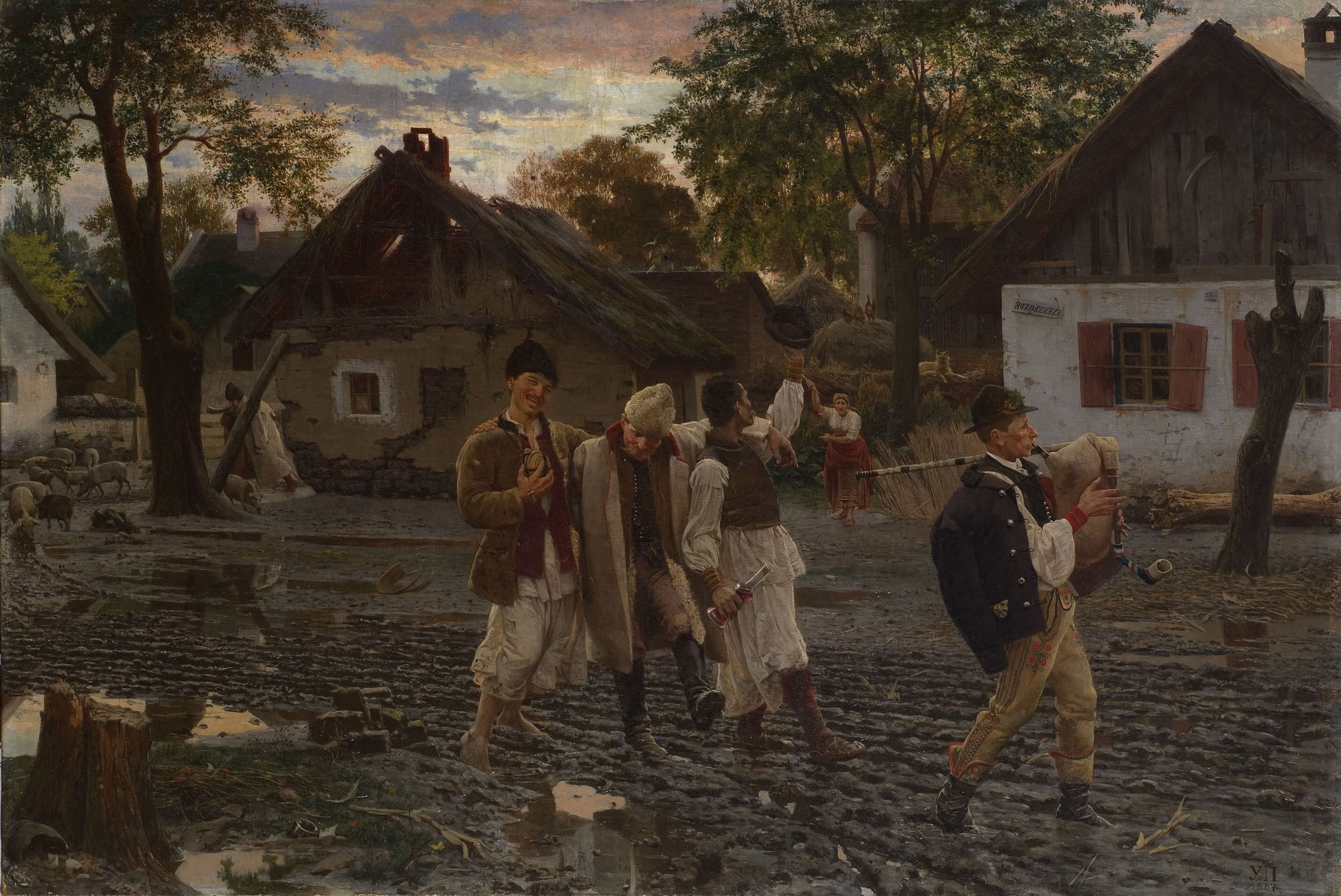
The Banat realist of Happy Brothers and The Kosovo Maiden, one of the most familiar painters in Serbian art.
Born in Orlovat on 7 December 1857, the son of the village priest, Predić graduated from the Vienna Academy in 1880 in the class of Christian Griepenkerl and stayed on as his assistant, helping to paint mythological scenes for the frieze of the Austrian Parliament.
Back home from 1885, he painted the life around him: Happy Brothers (1887), Orphan on Mother’s Grave (1888) and Refugees from Herzegovina (1889). The Kosovo Maiden, from 1919, hangs in the National Museum of Serbia, and in 1919 he became the first president of ULUS. Portraits of Belgrade society and iconostases for Orthodox churches filled a very long career.